Disappearing Words

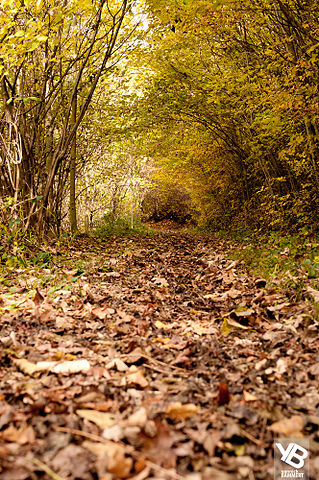
When I was a teenager, I read a newspaper column about a myth related to the autumn equinox. After all these years, I can still see the kitchen table where I was sitting, and see which side of which page the column was on. I remember that it was about a Germanic pagan goddess of second chances who opened a path that was only visible on the night of the autumn equinox, a path seekers could take to redo a mistake or regret in their pasts. I made an effort remember her name and wrote it down, although I was confused as to whether it was Llobrodga or Llobrogda. Having had a short story published in a teen magazine, I already thought of myself as a writer, and I knew I would have to create a story about this myth someday. An image of the goddess’s twilight path of golden leaves stayed with me. When I finally wrote the story decades later, she didn’t exist. I looked up everything I could think of about goddesses of second chances and pagan mythology and the autumn equinox and found nothing. I can’t explain this. But I hope you enjoyed A Night in Betsy Gap.

The title came about a few years ago during a training session for professors who were teaching a first-year seminar class. One of the presenters was named Betsy, and she didn’t use all her allotted time, so someone referred to the open space in our schedule as the Betsy Gap. I said it sounded like some place out near Naked Creek (a real town in that part of Virginia) and we all started joking about the way things are done in Betsy Gap. The name stuck with me as perfect for an obscure place where a traveler could get stuck. Then I saw a prompt for a short fiction contest in which the theme was crossing a line, and it had to include the word six-pack and another which I’ve forgotten. The idea for a short story about Edie had been brewing in the back of my mind for a while, since she’ll never be onstage in the Mae Martin series. Her only role is in Hubert’s past. I was surprised when Will Baca showed up in the story, but this other-world experience prepares him for the big changes he goes through about ten months later in Ghost Sickness. (Not that he remembers.)

If you read the short story before it disappeared,  you know something Mae and Hubert don’t know, since Edie cut off contact with everyone she knew in Cauwetska, intentionally making herself hard to find. Her fate won’t show up in the series for a while. But in the September before the events in Ghost Sickness, she spent a night in Betsy Gap.

*****

A Night in Betsy Gap will return eventually, either in a short story collection or here next fall, after dark on the equinox.

Alternate Routes

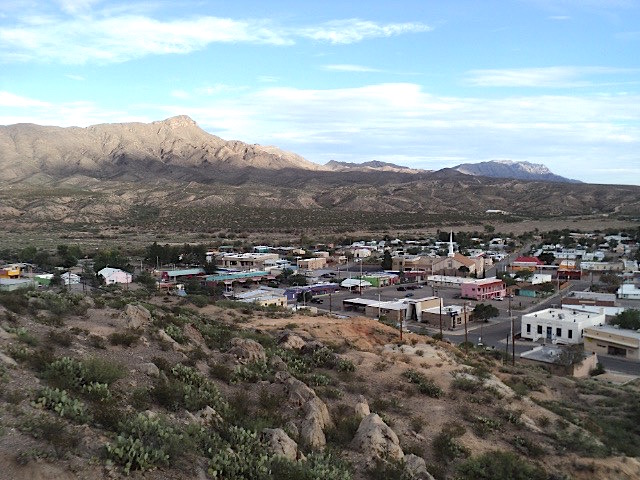
While my car has been away on an extended health retreat, recovering its ability to recognize its own key, I haven’t been able to drive to the nearby state park where I like to run the trails, so I’ve been running on a dirt road along the Rio Grande instead. It has a flatter terrain, a harder surface, and not as much wildlife, but it offers a view of the river and of T or C’s magnificent landmark, the sleeping turtle formation atop Turtleback Mountain. For a second choice, it’s not bad.

On an unfamiliar route, though, I don’t know where all the lumps and soft spot and other hazards are, and I can get distracted by the scenery—and yet it totally surprised me that I tripped and found myself scraping my knees and elbows in the dirt and gravel before I’d even gone half a mile.

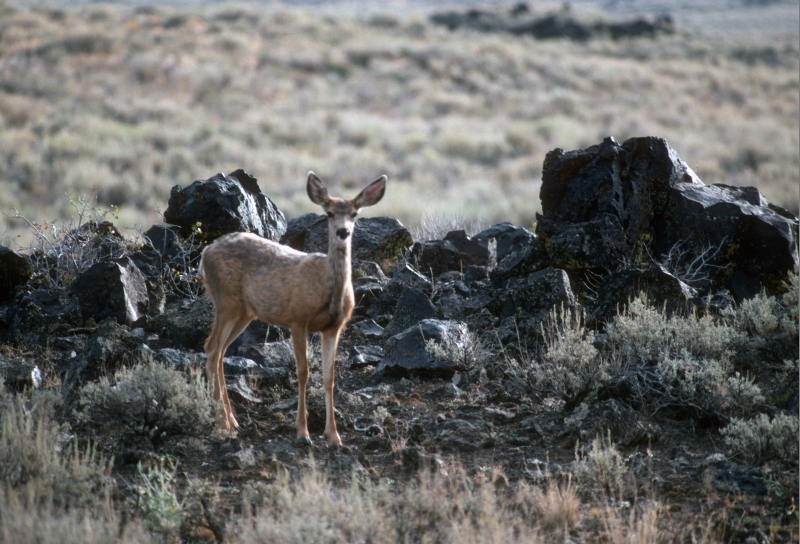
I jogged back home, cleaned up, bandaged my gashes, and decided to take a walk rather than sit around getting stiff from the fall or frustrated about not running. The route I chose took me to the highest point in town, the hill crowned by the water tank, where you can see to the edge of town in all directions. The tank features one of the town’s best murals, an image of Apaches on horseback coming to their traditional healing place, the hot springs along the Rio Grande. When I descended to downtown, I continued on to Ralph Edwards Park, one of our two riverfront parks. On the opposite bank, in the wild area across the river, a mule deer stood with her feet planted on the steep slope, her head lowered to the water, drinking in a position that would have caused a human to flop head first. She sustained her balance at such an angle it was like getting aerial view, revealing the subtle brown stripe on her back, a marking I’d never been able to see on a deer before. Four legs and hooves, I thought. It would be nice to have hooves. Her fine pointy feet enabled her to turn on a camber in a tight little clearing and angle herself uphill to browse the shrubs without a stumble. If my big ol’ size nines hadn’t stumbled, though, I wouldn’t have seen her. I’d have been somewhere else.

If my personal training business in Santa Fe hadn’t crashed, I wouldn’t have taken a job as health educator at a fitness center in Northeastern North Carolina. While I was working there, they needed a yoga teacher and none was available, but I had decades of yoga practice and offered to go to teacher training. It changed my life as well as serving their needs. Teaching has deepened my yoga practice profoundly and brought me in contact with some of my most valued friends. I found the setting for The Calling in that North Carolina town, and met the young woman who inspired the character of Mae Martin. If I’d stayed in Santa Fe, where there’s an excess rather than a shortage of yoga teachers, none of this would have happened. I can’t regret the alternate route. It was better than the one I’d planned on.

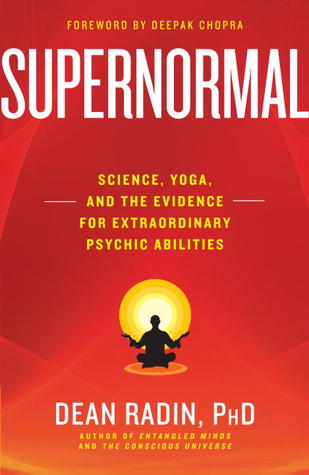
Review: Supernormal by Dean Radin

Some people approach the topic of psychic phenomena from a standpoint of immoveable conviction. There are those who believe psi events happen, and no science or statistics would convince them otherwise. On the other side are those who believe such things do not happen, and no evidence from even the best quality research could convince them otherwise. It’s like politics. Minds seldom change. But that doesn’t mean they never do. Science progresses through study and replication and further studies, and the word “proof” is seldom used outside of mathematics. This book should interest readers who would like to assess the evidence with an open mind.

Having said that, I think it may be useful to preface this review with the author’s credentials, taken from http://www.deanradin.com/NewWeb/bio.html:

“Dean Radin, PhD, is Chief Scientist at the Institute of Noetic Sciences (IONS). Before joining the research staff at IONS in 2001, he held appointments at AT&T Bell Labs, Princeton University, University of Edinburgh, and SRI International. He is author or coauthor of over 250 technical and popular articles, three dozen book chapters, and three books including the award-winning The Conscious Universe (HarperOne, 1997), Entangled Minds (Simon & Schuster, 2006), and the 2014 Silver Nautilus Book Award winner, Supernormal (Random House).”

The author works hard to make statistical analysis and research methodology accessible to a reader without a background in those fields. Having spent the last ten years of my academic career helping first-year college students learn to comprehend the language of scholarly journals, I have mixed feelings about this “translation.” Would it have been better to teach his readers the terminology, or was paraphrasing it the right choice? I don’t know. Sometimes he tries too hard to funny, like a professor who attempts to lighten up his lectures with strained jokes, but that’s a minor issue. Overall, I found the book well-structured and thoroughly researched. (384 sources are listed in the back, exceeding the number of pages in the book.)

Supernormal is primarily about how scientists study psychic abilities, not about spectacular events, so anyone wanting to read amazing, colorful anecdotes won’t find them here. It’s not essentially about yoga, either, though it will have more meaning to a reader who has studied yoga philosophy, and Radin has some good quotations on that subject. In yoga, the siddhis are not, as I understand it, as important as simply achieving awareness and quieting the cravings and cluttered noise of the mind. The siddhis can happen, but they are not the purpose or goal of practicing yoga. Nonetheless, in Radin’s research and in studies by other scientists, subjects with a regular meditation practice performed significantly better in experiments testing clairvoyance, precognition, and other psi abilities, so there appears to be a correlation between meditation and being psychic. An impressive number of well-designed studies support this. (My own experience fits the pattern. When I began yoga and meditation at age twelve, I began to have precognitive intuitions and dreams.)

I’d recommend this book to a reader who wants to get “down in the weeds” in the labs where these studies are done and examine the designs, the methods, and the analyses without going to the original scholarly journals. It’s a solid summary of what’s been found so far. The questions raised about the nature of reality and the nature of mind and consciousness are intriguing. How did the future find a crack into my dream and appear in perfect detail? Some of Radin’s studies address the emotional aspect of psychic material. He set up one study using long-term couples with one partner who was ill as subjects, and included the emotional bond and loving intentions as part of the design. Why does this matter? As with any other sense, we may be constantly filtering out irrelevant information and focusing on what is salient. It’s only when we dream that a friend is about to die or hear a voice warning us of something dire for a loved one that we let the psi phenomena take central focus. Otherwise, our psychic sense’s input can be ignored as background noise, the way unimportant input from our hearing often is. Perhaps if we learned to tune into this sense and trusted that it was real, we might act with more awareness and wisdom.

Much of what happens in psi is small—a sense that something is about to happen, or that one is being stared at—so we pay no attention. Radin studies all of these phenomena in minute detail, even documenting patterns of brain activity. I could go on, but that would be a spoiler, if there can be such a thing in science.

Radin almost pulls the rug out from under himself when he drifts off into a page or two of speculation on unrelated phenomena such as UFOs and crop circles that the skeptics and debunkers (some who rail against his studies) have actually already done good job explaining. Even though he doesn’t say he believes in these things, and uses them as a take-off point for ruminations about reality, they have no natural connection with psi ability and probably don’t belong in in a book on that subject. (I suspect that editors sometimes don’t tell famous authors—whether they are novelists or established scientists—to “kill your darlings.”) Nonetheless, as a yoga teacher, a long-time consumer of the scholarly literature on psi research, an individual who has occasional psychic experiences, and of course as the author of a mystery series featuring a psychic, I found this to be a worthwhile read.


Just go!

There’s a difference between the desire to do something and the inner voice that urges me to act. If you’ve had this experience, maybe you know what I mean. Today, I wanted to go to yoga in Albuquerque, really wanted to take that class, but I knew I was too tired and shouldn’t drive. That was a pro and con discussion within my rational mind. No mysterious inner voice telling me to do one thing or the other. I didn’t sleep well because I suspect I’ve been overtraining—yes, while in book prison, I was also reviewing a textbook on plyometric training and of course experimenting with the exercises on top of my usual running, yoga and strength training—so with those odd aches and poor sleep that said “overtraining, back off,” I had no intention of taking a walk tonight. I’d already done a gentle yoga practice, walked a few errands, been to the pool … but it was sunset and the bats would be out. I love the bats. They make me insanely happy for no reason, just pure blank bat-joy when they fly past me and around me. The urge was powerful, as if some other force was tying the laces of my walking shoes. Go, just go.

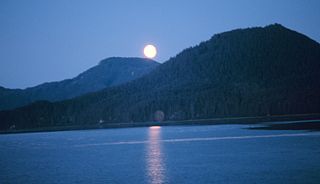
Bats danced erratically in and out of alleys and across the faded blue and orange of the evening sky. It was a little late to see them dipping along the Rio Grande, drinking from the river in flight, but they flittered in the wind above the water and I felt rewarded for my walk. Then a crest along the ridge of Turtleback Mountain, a few notches below the Turtle itself, began to glow from behind. The moon. The light brightened, and then a slice of the full moon appeared, so intense it looked bright green around the edge and orange in the middle where the buffalo is kicking. (Can you see this instead of a man-in-the moon face—a buffalo kicking the moon?) Alone in the park except for the bats and some jumping, plopping fish, I watched the turning of the earth and its night partner. Then a car pulled in. I didn’t move from the prime spot with the view until the moon was fully revealed. And the people in the car actually waited, as if they knew they would ruin a moment by driving up to the water’s edge. When the moon and I were done, I left the park and the car pulled up the river and people and dogs got out.

The timing was perfect. When the voice says go, just go.


“Book Prison”

Greetings from my cell. No worries, I like it here, and I do get out for exercise, social contact, and to teach yoga. The view of Turtleback Mountain from my back window is beautiful, and the cell is quiet. It’s my apartment. “Book prison” is a phrase I’ve heard other authors use, but I’ve never experienced it this way before. I have to get final revisions done before the next Mae Martin mystery goes to my editor in mid-September, and I keep finding more things I want to fix. Though I’ve done all the major revisions based on my critique partners’ input, I’m discovering things they missed, especially those pesky over-used words. I’m also making a few cuts and obsessing on getting the chapter-ending and chapter-opening lines just right. After that, I’ll need to read the whole thing again to make sure I didn’t change anything that affects the clarity and continuity of the plot. I have sketches of many unfinished blog posts in my “yet-to-post” file, but no time to polish them until I let myself out. Au revoir. My inner warden is telling me to get back to work.

Untold Stories

Certain people print their images on my mind like photographs, unforgettable:

Three orange-robed Buddhist monks in Albuquerque painting the iron fence of their compound bright turquoise-blue. One was wearing a cowboy hat.

A green-haired teenaged girl in shredded black tights and dramatic make-up playing heavy metal electric guitar for tips outside an art gallery in Deming. Her tip jar was labeled “encouragement.”

A fiddler playing outside the movie theater in T or C as people lined up and went inside. After they vanished, he kept fiddling, practically dancing to his own music. He didn’t need encouragement.

A platinum blonde woman on the edge of the dance floor at Santa Fe Bandstand, wearing big sunglasses, tight denim capris, a white shirt, black spike heels, red lipstick and a red scarf, holding the leashes of a pair of fluffy little dogs in pink and blue harnesses. For reasons known only to her, she came to hear Native drum groups and then Levi Platero’s Hendrix-style blues in her 1950s Marilyn Monroe persona.

A white-haired, white-bearded man on a bicycle hauling a small wagon covered with orange reflective material and loaded with what appeared to be all his worldly goods, traveling slowly through Nutt, New Mexico. Nutt has a lot of wind turbines and solar panels, but a population of twelve. What was he doing there? I first saw him on the way to Deming with a friend. Hours later, on our way back to T or C, we passed him again, still in Nutt, only a tad further along. Two weeks later, we saw him yet again, this time on I-25 North about a third of the way to Albuquerque. Needless to say, we remembered him and wondered about his life.

Of all these memorable people, he’s the one I wish I’d stopped to talk with. The one whose story is the biggest mystery. I can guess that “Marilyn” had fun dressing up in her retro style. It’s not unusual at Bandstand for half the audience to be so colorful they’re as much a part of the show as the musicians. The monks, the heavy metal girl, and the fiddler also seemed happy, doing things that were meaningful to them. There’s a story behind each of them and how they chose to be where they were, but they didn’t raise as many questions in my mind as the bicyclist did. Is he mentally healthy or unwell? How far does he travel in a day? Where does he sleep? How does he get food? It’s possible he’s engaged by choice in an eccentric yet purposeful life, but more likely he’s pushing his way through, doing the best he can after a series of set-backs or a disaster.

Whether he’s on a spiritual journey, a lost, homeless trek, or another kind of trip I can’t even guess at, I hope he travels safely. Perhaps I’ll see him again and pull off to learn his story.

Observations on being a full-time writer

    • It doesn’t feel like a job.
    • I’m writing while it’s still light out, not just after nine at night the way I did when I had a structured day job.
    • I now live where my protagonist does. Result: Everything gives me ideas.
    • The town changes faster than my fictitious version of it can, but the essence stays the same.
    • I don’t need a job to structure my life or keep me busy. There’s so much to do, from music events to dancing at Sparky’s to Art Hop to teaching yoga to just getting out in nature, the challenge is telling myself no, stay in and write. I was more productive when it was 108 degrees in June. Less temptation to go out.
    • Depending on which of my friends is making the introductions, new acquaintances may be told that I’m a writer or that I’m a newly retired professor. If they hear the latter, it’s hard to redirect their first impression, and they tend to suggest things I could do to keep busy, including—I cringe at the thought—adjunct teaching. I think of myself as a writer and yoga teacher, not a retired professor—the person I am today, not the role I used to play. It’s an important distinction.


Conscious Listening

Sound can be noise, it can be distraction, it can be enjoyable, beautiful or soothing, and it can also be a direct route to clearing the mind. Sound reaches the brain faster than thoughts, faster than images or sensation. So, if you listen mindfully, you can silence the inner chatter and be. I recently attended a concert of healing music, a sound bath, in a St. Paul’s Episcopal Church in Truth or Consequences. It wasn’t religious music, but it was sacred. I started out with thoughts of writing, of possible scenes and settings, since one of my ongoing characters is a musician who composes healing music. He would have loved the event (writers think this way about their characters), but I forgot about him during the performance. The beauty of the experience was getting past verbal thought altogether and into pure sound—bells, electronic tones, rain sticks, non-melodic music created to promote a meditative state or an inner journey. The composer/performer encouraged the small audience to close their eyes and go inward, and I did. The music came through eight speakers in patterns that gave it a spatial structure and a quality of movement that triggered flowing abstract color visions in my mind, and yet I was always grounded and present in my body, aware of my own energy. The next morning I still had a lingering sense of deep clarity, as if I had been meditating. And that is not the way I normally feel before coffee!

Recommended listening: Tom Montagliano

If you have a chance to hear his music in person, don’t miss it.

My Neighbor’s Peaches

Out my back window, across the alley, I have a view of a white trailer with chain-link fence around a typical T or C back yard of dirt and gravel. In it is a peach tree, full of fruit that I have watched ripen over the summer, and no one is picking any of it. If you don’t know the desert of New Mexico well, you might be surprised at the way fruit trees thrive here, soaking up sun in the heat of June and water in the downpours of July. Three pomegranate trees, heavy with fruit, bow toward the street on my route to the pool. In front of my apartment, a shrub-like fig tree is producing a massive crop, some newly ripened, many green and still growing. When I lived in Santa Fe, I knew where to find apricots falling to the sidewalks and parking lots, so abundant no owner could possibly pick and eat them all. I have a crisper drawer full of gift peaches from a friend’s neighbor’s tree. As small and velvet-skinned as apricots and just as dense, they are super-sweet, as if growing in a desert made them work harder to become peaches. Still, I look at the ones across the alley behind the fence and see one lying in the gravel, a perfect yellow-and-pink sphere, and it bothers me. A moment someone missed and can never have now, knocked down by yesterday’s storm. It’s not that I want their peaches. I want them to have their peaches.

What aspect of my life is that fallen peach? What is ripe that I am not picking?


Rain Salutations

I know I can’t make the sky rain. It’s like trying to make someone love you. When the right conditions have arrived, the change comes. Sometimes, however, I think it fails to rain when the world is out of balance, and that it takes dancing and meditation, yoga done as rain salutations, people showing compassion and affection and listening to each other with their hearts, to invite rain. Love and care for the earth will call rain. Earlier today, it rained in the alley behind my apartment for one minute. I went for a short walk at sunset, and a massive blue-black cloud was flashing lightning out toward Elephant Butte, revealing the rain as a sheer curtain in each orange flare. I did a little dance, spinning and then running backwards, asking the storm to follow me home. It did, but I don’t take credit.

When I was running in the desert around noon today, I encountered a mule deer. They often look you in the eye before they run. If they even run. We circled a juniper, checking each other out, making eye contact through the branches, then she turned her back to me, did two full springs straight up in the air with a graceful tuck of all four legs, and trotted off. If anything had the power to call the storm, she did. The deer did the rain dance.

*****

Unrelated, but perhaps of interest: The Calling, book one in the Mae Martin series, is on sale for 99 cents on all e-book retail sites through July 21st. If you’ve enjoyed my books, tell a friend. Thanks.