Seeing a Ghost

ghost

As research for the seventh Mae Martin book, I recently read a book on paranormal investigation techniques by a professional skeptic. It reminded me of this post I wrote three years ago, which some of my current blog readers may not have seen, so I’ve updated and recycled it.

Once in a while, writing paranormal mysteries, I need to introduce a character who is no longer alive.* In Shaman’s Blues, Mae has no concept of ghosts at first, but Jamie, an anthropologist’s son, assures her that every culture has them.

Ghosts fascinate us, even when we don’t believe in them. People sign up for ghost tours of historic districts, and some choose the option to get the presumably haunted room at a B&B. Part of the attraction in ghost stories is the curious pleasure of safely experienced negative emotions. There is something frightening about an encounter with the dead, and most ghosts are said to have fallen into the place between worlds through tragedy. By seeking out ghosts, we can dip into terror and sadness for a quick swim and come back out, invigorated by the plunge.

It’s different for the ghost. Stuck in the crack between two worlds, attached to earthly life yet incapable of living it, looking, perhaps, for one particular soul, the ghost must be frustrated, bewildered and lonely. No wonder they behave badly sometimes. It can’t be much of an afterlife.

I say that lightly, but at the moment that I met a ghost, I was scared to the bone. It was quite some time ago, but I can still feel her when I think about her.

The cold is what made her frightening.

I was a college student on Christmas break visiting my sister and her husband, and my boyfriend and I stayed in the attic bedroom of their old house. In the dark before dawn, the alarm went off, and my boyfriend got up to go to work. We spoke briefly, kissed goodbye, and he left. Wide awake, I stayed in bed under a heap of quilts and blankets, hoping I could go back to sleep. Our shared body heat had made a cozy nest of the bed and I didn’t want to get up early on my vacation.

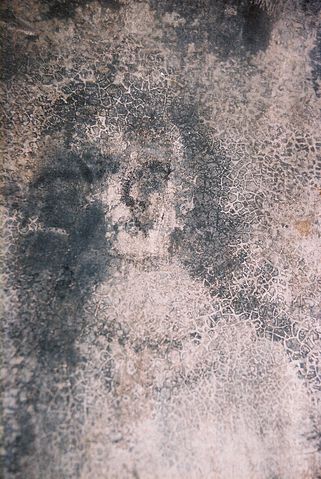
I snuggled the blankets around me—and was suddenly chilled. I wasn’t alone. A woman’s head and shoulders floated on the far side of the room. She stared at me, her face stern and judgmental over a high-collared dress, her hair pulled back in a severe tight bun. I was terrified, not by her apparent resentment, but by the deep, unnatural chill. At the same time, I thought her features were like the country comedian Minnie Pearl. I’ve cited Stephen King’s Danse Macabre in a book review before, and it fits here: comedy and horror go hand in hand. I pulled the blanket over my head until the cold went away.

Prior to that, I didn’t believe in ghosts. I’m not sure I do now, either, but it’s like what anthropologist Michael Harner says about shamans not believing in spirits. They don’t have to. They know.

*****

*My books containing characters who are ghosts or spirits are Shamans’ Blues and Soul Loss.soul ebookshaman


The Fascination of What’s Difficult

I memorized this poem years ago when I was working in theater and also pursuing a degree in a new field. It struck me as the perfect fit when I used it as the introduction to a research paper on stress and  health. To me, it describes the reaction of the human spirit to the demands of work—work we once chose with idealism and commitment but which now consumes us. William Butler Yeats, no doubt, rewrote the poem many times to achieve such simplicity and strength, yet the words seem to rush out in a flow of passion.

My father was my role model in many ways, the kind of person I aspire to be, with his gentleness, humor, open-mindedness, warmth, community engagement and enjoyment of the arts. He retired early from his management job to run his own small business selling specialized supplies to bird watchers. In many ways he was a cautious person, but he had the courage to risk a change when it was time. People tell me I’ve been glowing since I decided to retire early. Revisiting this poem after I’ve acted on the need it expresses, I get more out of it than ever.

How does it speak to you?


The Fascination of What’s Difficult

The fascination of what’s difficult

Has dried the sap out of my veins and rent

Spontaneous joy and natural content

Out of my heart. There’s something ails our colt

That must, as if it had not holy blood

Nor on Olympus leaped from cloud to cloud

Shiver under the lash, strain, sweat and jolt

as though it dragged road metal. My curse on plays

That have to be set up in fifty ways,

On the day’s war with every knave and dolt,

Theater business, management of men.

I swear before the dawn comes round again

I’ll find the stable and pull out the bolt.

Shrines

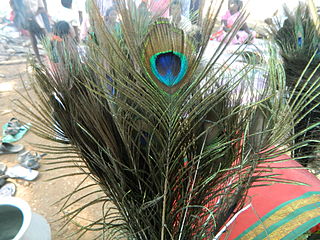
peacock-feather In Martyn V. Halm’s one-of-a-kind suspense novel, In Pocket, the narrator Wolfgang, a pickpocket, begins to doubts the motives of a young woman who befriends him because her shrines don’t seem authentic. He says that in his observations of women’s homes, they make shrines. He doesn’t mean religious ones but highly personal arrangements of objects that honor special aspects of each woman’s life.  When I think of friends’ houses and apartments, the most common shrine is the family pictures shrine, but I’ve seen idiosyncratic ones. I recall a friend who had peacock feathers and other objects arranged around a mirrored dressing stand on the hall landing, her shrine to I know not what, but it had a kind of art deco bordello feeling to it.

Some people’s kitchens are shrines, arranged to honor the gods of nourishment and conviviality. My academic colleagues’ offices are shrines to scholarship, with diplomas and books and journals—but also softened with mini-shrines to family. In my books, I’ve used this kind of imagery—Charlie’s door and office in The Calling are the most vivid example—as a way of revealing character and also implying a mystery. Why do people  build the shrines they do?

I have so much meaningful art around me that my whole home is a shrine. And then I look at the clutter, the heap of writing reference books, the heap of journals on alternative medicine, the stack of books and magazines I’m reading, the notes on my work in progress spread on the left side of my desk, and I think—that’s not clutter, those are shrines. Shrines to reading and writing.

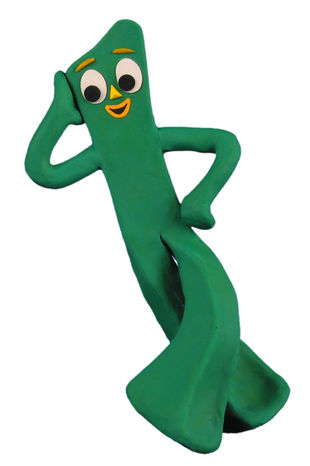
When I move to a smaller space, I’ll be parting with slice-of-life shrines, eccentric random gifts with stories behind them. A Roswell NM alien-face paper fan a friend gave me at the Mescalero ceremonies many years ago. A Gumby one of my yoga students gave me. A stuffed toy tree frog. I’ll trust my heart to store the people and memories I echo back to myself with things like these little green creatures. Sooner or later, we all part with everything we own. Practicing non-attachment seems abstract at times, but not when I am taking down my shrines.gumbyleaning2

Everyone is my Teacher

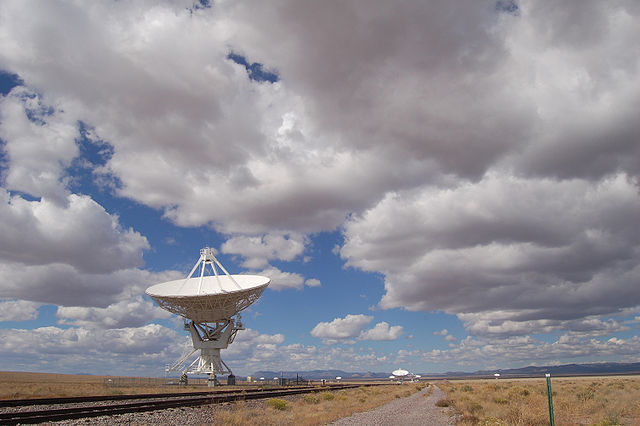
640px-very_large_array_cloudsIt’s surprising what you can have in common with someone when at first it seems there might be nothing. At a friend’s birthday dinner party, I was seated next to a graduate student in astrophysics who specializes in radio astronomy, a young man whose hobbies include ice climbing. All these things are fascinating, but far out of my realm of experience and expertise. We  managed to make conversation, though, and somehow discovered a mutual interest in meditation. I’m not sure how we got there. Perhaps from talking about his childhood in Vietnam and how he’s not a practicing Buddhist but follows the philosophy without the religion, or perhaps from talking about my work teaching yoga. “I can learn from you,” he said. “Everyone is my teacher.”

I didn’t feel as though I taught him anything. However, he did, through example, teach me. He was so enthusiastic about adopting daily meditation, so aware of its benefits in the stressful life of a Ph.D. student. I’m older and have been practicing longer, but his deep gratitude for the effects of this simple commitment reached me. Yes, I also practice daily, but how mindful has my mindfulness been? Could I take a little longer, become a little quieter?

His work in radio astronomy is listening—finding ways to hear the universe. It works for me as a metaphor for meditation and for everyone being my teacher. What subtle signals have I not yet heard?


Reflections on Commitment, Listening, and Free Speech

On Saturday Jan. 21st, I got up at four-fifteen in the morning to drive through heavy fog to meet a bus with thirty-four other riders on it and found that so many people wanted to travel from this one small Virginia city that there were two buses at this site. More buses loaded at other locations. All over the country, people made trips like this, and many rose earlier and traveled farther.

On the trip, I sat with one of my yoga students, a retired teacher with years of experience herding middle-schoolers on field trips, and she was an inspiring as well as organized and helpful traveling companion. She has coped with her profound sadness about the election outcome by getting active, not only with calls and letters and donations, but by volunteering to help resettle refugees and to help feed the homeless. Every week she does something to remind herself that the world can be made a better place. Wherever we went Saturday, she radiated gratitude. She thanked the police and National Guard who were on security duty. She thanked the employee of the portapotty company who was cleaning a row of units where we stopped. She hugged our bus driver at the end of the trip.

A series of signs quoting Martin Luther King Jr. greeted us in almost all the front yards we passed as we walked from RFK stadium to the national mall. “I have decided to stick with love. Hatred is too great a burden to bear.” “We must accept finite disappointment, but never lose infinite hope.” And many more. People waved from their yards. One played motivating classical music on speakers from upstairs windows. When we were dispersing later in the day, some residents came out in support again. One man brought a keyboard out in front of his townhouse and played for us.

Sometimes people give up and think their vote won’t matter or their voice won’t be heard, but the march was a visual illustration of the fact that every person does count. Hundreds of thousands of people decided, “I’ll show up,” and went to great lengths to do it. A Native Hawaiian group came all the way to D.C. If large numbers of the marchers had had said, “My presence doesn’t count. Someone else will show up and that will be enough,” the impact would not have been the same.

I’ve never seen so many people in one place with the same purpose, moved by their ideals and convictions. The pussycat-ears hats were ubiquitous, on men and women (and one very happy baby). Maybe that’s part of why everything was so upbeat and peaceful. Sending a message by wearing a funny-looking pink hat may keep you from acting like a big bad warrior. The major themes of the signs protesters carried were women’s rights, respect for all people, inclusiveness, opposition to bigotry, support for the Affordable Care Act, reminders that climate science is real, and inspiration and humor.

Inspiration: They thought they buried us, but they didn’t know we were seeds.

Without follow-up action, this is just a parade. No. Today is day one.

Build bridges, not walls.

“Those who can make you believe absurdities can make you commit atrocities.” (A quotation from Voltaire.)

Love trumps hate.

Humor: There’ll be hell toupee.

Putin Free.

I’ve seen better cabinets at Ikea.

My personal favorite: Remember facts?

It can sound clichéd to say how diverse a group is, but this one really was. It included men and women, people of all ages from children to elders, people with disabilities, members of all races, people who were gay, straight, trans—you name it, they were there, and harmonious in each other’s company. I saw no uncivil behavior even when we got stuck in human gridlock on the mall for I don’t know how long—two hours? No violence, no arrests, and an amazing level of patience in a situation that could have brought out the worst in human nature. I was too far from the stage or the Jumbotron to hear a word the speakers said, but those of us on that part of the mall stayed upbeat and engaged. Aside from occasionally chanting “start this march” when we didn’t yet know we were too numerous to do it as planned, we passed our gridlock time making friends, reading the signs around us, singing and dancing and stretching and laughing. A popular call-and-response chant went like this: “Show me what democracy looks like.” “This is what democracy looks like!” This is what America looks like, too.

 People who disagreed with us were civil. Real life isn’t like the hostile land of social media. I didn’t notice any harassment. Non-marchers just walked on by. A group whose banner proclaimed they were Bikers for Trump had set up a small stage on a green off Pennsylvania Avenue. They didn’t have more than twenty people in their audience, mostly young women in the pink pussy hats who had—unwisely, I think—chosen to debate with them. We older and maybe wiser folks observed that the young women should just have left those guys alone. The bikers had as much right to be there as we did and they weren’t attacking us, just having their say. A genuine conversation with them could have been worthwhile, but understanding-focused dialogue is a learned skill.

Unskilled argument digs opponents in deeper. Maybe what the country needs next is a massive rally for listening, in which people from the various political islands can build bridges and have constructive dialogue. It would take courage. Participating in the mean-meme world of Twitter trolls takes no courage at all, no critical thinking, and no real attention, but meeting a fellow human face to face with commitment to show respect and compassion does.

One demonstrator’s sign bore a message I think all sides could agree with: Read More Books. The young man holding it was smiling.


Two Desk Drawers: Works on Paper

320px-spiral-bound_notebooks

Last Saturday, I planned to clear off another bookshelf, sorting the keepers from the yard sale material, but on that shelf was a tiny Acoma pottery cat that needed to travel to a friend in New Mexico. Wrapping it meant that I ended up clearing out a desk drawer instead.

I have a treasure-chest drawer of wrapping paper and all-occasion cards. I found what I needed, then ruthlessly cut my stash in half, but I kept a good quantity nonetheless. The cards are important. Ordinarily, I do little on paper. I prefer e-books on my Nook to paperbacks, and I have students submit work through an online course management system. All files for my job are electronic. But once in a while, an object made of paper means more than anything electronic could. The postcard a friend sent me of a double-rainbow over Turtleback Mountain has a life story. Time and touch went into it, and even travel. I look at it where it sits magnetized to the fridge far more often than I do any pictures stored electronically.

After the cards drawer, I decided I could do one more drawer. I thought it held old journals I could recycle without a second thought. However, I double-checked inside the notebooks. The journals were long gone. These notebooks from about twelve years ago contained a novel scribbled by hand in the evenings while I lived in Norfolk. I wrote with no thought of publication, no thoughts of anything except the need to write a story. A quick glance at a few pages showed some dialog that surprised me. I expected it to be terrible. After all, it was a first draft not intended for an audience. Oddly enough, my candid, handwritten work had some merit, a freedom that eludes me with my obsessive revising on my computer. By hand, I wrote love scenes without hesitation. I wrote characters with more of myself in them than I do now. This was fiction as a dress rehearsal for changes I needed to make in my life, an exploration of how I felt and what I wanted. Of course, if I typed it up, I would see it with fresh eyes as the unpolished material it is, and it would possibly turn out to be drivel. I may also find the root of another book in it, and the foundations of usable characters.

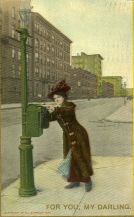
I wrote a message on the paper card, a reproduction of a work of art that hangs on my wall, a card printed by the artist. My words were few and possibly drivel. You can’t revise a card, though, not when you’ve used one from your cherished collection. Off it goes. Published to one person.370px-usmailbox1909

Attention Span

It’s been said that we teach what we most need to learn. Many of my classes involve critical thinking and information literacy skills. While I’m still teaching, I want to pay attention to the lessons I learn from my work.

Back in November, I asked my first year seminar students to write down topics they felt were important and challenging to discuss. We then used the randomly drawn slips of paper like the talking stick in a talking circle. The person holding it got to say whatever he or she needed to say while others listened, and then that person handed the paper along. Anyone could pass who was not ready to talk. We got through three topics that day and I saved the rest for when we had time to do this again. Two weeks later, the first topic someone drew from the heap was “Politics.” Most of the students said they had cared about it before the election and right after, but now they didn’t pay much attention to it. One young woman said the election had been so unpleasant that she changed her major from political science. It drove a thoughtful, moderate Republican who understands that conservative includes conserve out of wanting to engage in politics. That’s a loss to her community. Every time a young person with a good mind gets disillusioned, we lose their years of future leadership. I hope she’ll get involved again in the future. Her burnout is deep, though.

Her classmates’ loss of interest in something they felt passionate about two weeks before is alarming. As a culture, we may be getting trained to the media’s attention span and the media’s focal point, forgetting that our personal lives’ deep needs interact with issues that take prolonged, thoughtful, patient engagement, regardless of the headlines.

The lack of information they had was also troubling. Not because they’re not smart—they are, but the only student who knew recent world history well was from Palestine. He was the only one able to knowledgeably talk about the Cuban revolution and who Fidel Castro really was and why people felt so strongly about his death. And of course, he was well-informed on the complexities of the Middle East, and the pros and cons and unintended consequences of American presence there, something his classmates barely understood. I was relieved that the majority do understand climate change and that only one person in two classes of nineteen didn’t. Even the most politically conservative of them comprehended the reality of climate science. They don’t see it as a political issue so much as a scientific one with an impact they’ll have to live with.

Today in my January term health class, students shared and discussed articles on their chosen research topic for this half of the week, public health issues and the environment. This discussion was encouraging. I think the young adult attention span is only short for things they don’t fully understand, which for some includes politics, but it’s steady for the concepts they grasp. I hope this understanding ultimately translates into engagement. The earth needs them.

Writing about this motivates me to stay engaged as well, and to pay attention to issues in depth after the headlines fade.

Something for Real

t-or-c

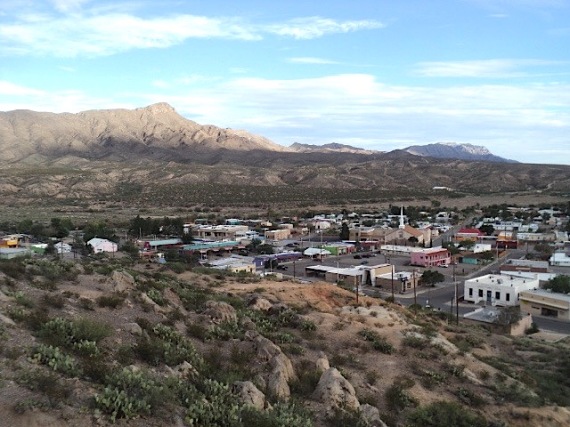
I don’t make New Year’s resolutions. January 1 is just another day. I decided to change my life for reasons that have nothing to do with the transition of numbers on a calendar. A plan I’ve been gestating for years is finally real. I made the commitment. I have a lease. My future landlady and I signed it on Main Street, Truth or Consequences, at an outdoor table in front of Passion Pie Café the morning of Wed. Dec. 28th. Friends in T or C have congratulated me, telling me it’s the best decision I ever made. The to-do list is growing. It’s hard not to keep thinking about it or imagining disasters that could intervene in my plan. I’m glad I have writing to focus my mind and yoga and meditation to quiet its hundreds of questions, or I’d be spinning inside. I’m focusing on the constructive work of getting ready and on trusting life’s unfolding process, trusting the flow of synchronicities that made this change possible. The process of winding down one phase of my life and beginning the next will be complicated even though the goal is simplicity. I hardly own anything but I’m going to own even less. Travel less, need less, and be more. Retire early and fully embrace T or C. Art. Hot springs. The Rio Grande. The desert. People who get me. I love the place. It’s been my heart’s home for years. At the end of this academic year it will be my full-time home. I may teach a college course or two online, teach a few yoga classes around town, but writing will be my full-time occupation.

“I’ve been a dreamer so long now. It’s time I did something for real.

There’s just no point in being alive if you don’t live the way you feel.”

    From the song “Something for Real” by T or C artist Don Hallock.


Santa Claus Checks in at the Fat Buddha Spa

This short story is an annual tradition (when I remember to share it). It’s an interlude that takes place “offstage” during Snake Face, book three in the Mae Martin series, while Mae is in northeastern North Carolina over the holidays.

Santa Claus Checks in at the Fat Buddha Spa

             Mae Martin raced her twin stepdaughters to the pasture fence and almost let them win, making it a three-way tie. The llamas looked up from grazing on the dry winter grass, blinking their long lashes. Taking walks to visit the neighbors’ animals had been a favorite pastime for Mae and girls when she’d lived with them. Now, on her first holiday visit after separating from their father, she was trying to keep everything as normal as possible. As the six-year-old girls clambered onto the fence, Brook shouted. “That’s what I want for Christmas. A llama.”

“Are you sure?” Mae picked up a small purple glove from the weeds and put it in her pocket. The late December day was growing warm and both girls had taken off their gloves and hats. “I thought y’all wanted a tarantula.”

“We do, but Miss Jen is scared of spiders.”

Their father’s new girlfriend didn’t share Mae’s appreciation for crawly critters. “She might think a llama was cuter, but I don’t think anybody can afford one right now. You do know your presents come from family, right? Your daddy said y’all don’t believe in Santa anymore.”

“Yeah. We figured it out.” Stream perched on the top rail, swinging her legs. “We watched this TV show with Grampa Jim and Granma Sally about these people who have reindeer in some place near the North Pole.”

“Lapland?”

“Yeah. And those things are big. There’s no way they can fly.”

“What about magic?”

Brook sat beside her sister. They studied Mae as if they felt sorry for her. Poor mama. She’s not caught up with us yet. “Magic is for little kids who can’t figure things out. We’re gonna be bug scientists when we grow up—”

“Nun-uh.” Stream wriggled and sat straighter. “That’s your job. I’m gonna be a race car driver.”

Mae walked up and placed her hands on their knees. She loved their independence and eccentricity, but they could be tactless about how smart they were—like her ex-mother-law—and she needed to take that attitude down a notch. Gently. “Now what in the world is Santa Claus gonna do if all these kids don’t believe in him?”Santa_Claus

Brook frowned, saying he couldn’t do anything if he wasn’t real, but Stream started to laugh. “He’ll pop like a bubble.”

Mae did her best to act serious. “Did you tell your friends there’s no Santa?”

The girls exchanged glances. Brook said, “We got in trouble for it at school. It made some kids cry.”

“It might be hard on ol’ Santa, too. Popping like a bubble. Before you tell any more kids he’s not real, I think I’d better give him a call and see how he’s feeling.” Mae took her cell phone from her jacket pocket and pretended to make a call. She rolled her eyes and sighed as if waiting a long time for an answer.

The girls poked each other and giggled. Stream whispered to her sister, “She can’t call him. She’s making believe.”

Mae raised her eyebrows, giving them the oh yeah? look, and then a triumphant smile as if she’d finally heard a voice. “Well hey, Santa buddy. What’s up? You know Summer Stream and Autumn Brook Ridley don’t believe in you anymore? … Oh. Of course. I can’t surprise you. You know who’s naughty and nice. “

Brook protested, “We weren’t naughty. We told the truth.”

“But did you tell it nice?” Mae turned away, lowering her voice to resume her conversation with Santa. “I hope they didn’t hurt your feelings. They told half the kids in Bertie County, North Carolina—You’re kidding! … So what are you doing now? … Really? Shut up! I live there. I just left for my vacation.” She put her hand over the phone. “You won’t believe it. He’s checked into a spa back in Truth or Consequences, New Mexico. So many kids stopped believing in him, he’s taking this Christmas off.”sign_-_new_mexico_-_truth_or_consequences_-_exit_4892943477

“What’s a spa?”

“It’s sort of like a motel with extra stuff. The ones where I live have hot springs. People go there to relax and get healthy.” She got back to Santa Claus. “Which one? You at the Charles? La Paloma? … I never heard of that one. The Fat Buddha? … Oh. Reckon I wouldn’t see it.”

She explained to the girls, “He’s at a spa for supernatural beings. Regular folks can’t see it.”

Both girls frowned, and Brook asked, “A spa for what?”

The_Laughing_&_Lucky_Buddha!_A_stroke_of_Luck!_(413428647)    “Supernatural beings. Kinda like ghosts or angels, but not exactly. It’s run by a big fat Buddha. You know who he is?”

Stream nodded. “Granma Sally has his statue on her desk. She says he helps her stay calm when she does taxes.”

“He’s helping Santa, too. And they’re hanging out with another fat supernatural, Ganesh. He’s this Hindu god with an elephant head.”

“An elephant head?” Stream whooped.

Brook asked, “How come they’re all fat?”Ganesh_2

Mae repeated the question to Santa and listened while she worked on an answer.

“He says it’s because they’re supernatural. They don’t have to be in shape to be healthy. Ganesh …” She had to stop and think again. Her neighbors in T or C were into yoga and they had a Ganesh poster in their living room. Finding it strange but beautiful, she’d asked Kenny to explain it. “Ganesh is fat but he’s big and strong, too. People call him the remover of obstacles. Like an elephant can pull a fallen tree off a road but a human can’t.”

Stream looked skeptical. “Do people believe in the elephant-head guy? Like they believe in Santa?”

“Some do, but a lot of people just believe in what they all stand for. Like being generous and happy and enjoying life. Santa says they’re hanging out in the hot spring together and these other guys helped him with something he was worried about. So, you did him a favor, giving him a vacation, but he wants to go back to work next year, and he’ll need kids to believe in him again.”

“We can’t make them.”

“No—but you can keep it to yourselves if some new believers come along. You know why he wants to go back to work?”

Brook asked, “Does he get paid a lot?”

“No—he does it to be kind. And this is what those other fat dudes at the spa told him. He’s been too generous. See, they don’t get as carried away with their roles as he does. They help people by changing their lives, not giving stuff. He’s been giving people way too much expensive stuff, and they’re starting to think Christmas is about getting big, fancy gifts. So next year, he’s gonna cut back. Give stuff that means more and costs less.”

Mae took a deep breath and let it out. She hadn’t known she was going to say that. But as a college student with a part-time job and not much cash, she’d had to buy small gifts this year—child-sized team T-shirts for the College of the Rio Grande Tarantulas and a pair of stuffed toy versions of the mascot. She’d wanted to do more, but the trip east had cost all she could spare, and yet she didn’t want the girls to think she loved them less because she didn’t live with them anymore.

“Like when we make you presents,” Brook said.

“Exactly.” Mae smiled in relief.

“Good,” said Stream, “because we—”

Brook dug a fist into her sister’s arm. “Sh. You can’t tell her.”

“That’s right.” Mae put her phone in her jacket pocket. “Being surprised is part of the fun.”

The girls stared at her pocket. “Mama,” Brook said, “That was rude. You hung up on Santa without saying goodbye.”

“Oops. Look like I’ve been naughty, too. Good thing he’s taking the year off.”

“Yes, and …”

How often do we say, “Yes, but …?” Sometimes, it’s how we decline unwanted advice, but it’s also what we say when we’d like to do something but automatically think we can’t. I heard Bob Harris, travel writer, microfinance lending enthusiast and author of The International Bank of Bob, as a convocation speaker at my college. He described how he came to embrace microfinance through some of the adventurous jobs he’s taken, experiences that broadened his world view.

The attitude of “Yes and…” got him there. It’s an approach he learned when doing improv comedy. Suppose a fellow actor suggests, “We’re in Spain.” If you say, “Yes but,” the scene is dead. If you say, “Yes and,” you can build on it. One of his examples was how he responded to a job offer asking if would write for a telenovela in Mexico. “Yes, but I don’t speak Spanish” would have closed the door. Instead, he dared to walk through it, answering: “Yes, and I can learn the language fast.”

A travel writing job reviewing the world’s top fifty luxury hotels brought Harris face to face with painfully glaring income inequality in a way that made him deeply uncomfortable. The contrast between the lifestyles of the guests and owners of these resorts and the lives of the people who built and maintained them led to his interest in micro-lending. Later, he visited microfinance recipients around the world, to see the impacts of the small no-interest loans he and others had made through Kiva, a microlending nonprofit. It took hard work on the part of the people who received the loans to grow their businesses—a chicken farm in Bosnia, a little shop in Rwanda, a barbershop in Beirut, and others—and little risk or effort on the part of people who each loaned them around $25.00. All it took was a “yes, and…”

I’m thinking of the various yes buts and yes ands in my life, such as letting new love or friendship in, or getting involved in a good cause. Turning it down would be a yes but. Yes and is more rewarding and yet it can be mentally difficult. It’s not just negative events that can be disruptive. Positive adjustments are disruptive, too.

In some ways, the world appears to be taking a dark turn right now. A backwards turn away from compassion, away from stewardship of the earth. When I look at the work to be done, it’s huge, overwhelming, urgent and complex. Can my small efforts make any difference? The answer is “yes, and…”