Music, Beauty, Wisdom, Bugs

Cricket_Drawing

On my last night in New Mexico for the summer, I listened to crickets as I left a Bandstand concert in Santa Fe. All of them kept the exact same beat throughout my fifteen minute walk to where I had parked my car, not single cricket out of sync with the rest. The bug music of the South is different. In Virginia at this time of year, cicadas ratchet away all day, and at night a polyphonic, polyrhythmic chorus begins. I meditate by going out on my deck, closing my eyes and deciding not to miss a note. It’s amazing how they produce this symphony by rubbing legs, or vibrating wings, or with specialized parts of their exoskeletons. Their bodies are musical instruments. (Did you know that Kokopelli, the flute player, was a bug? He’s identified with the musical cicadas but also with the stinging Robber Assassin Fly.)

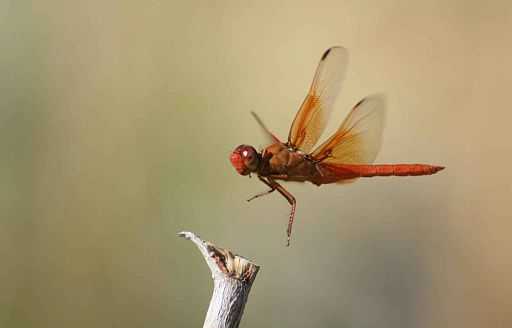
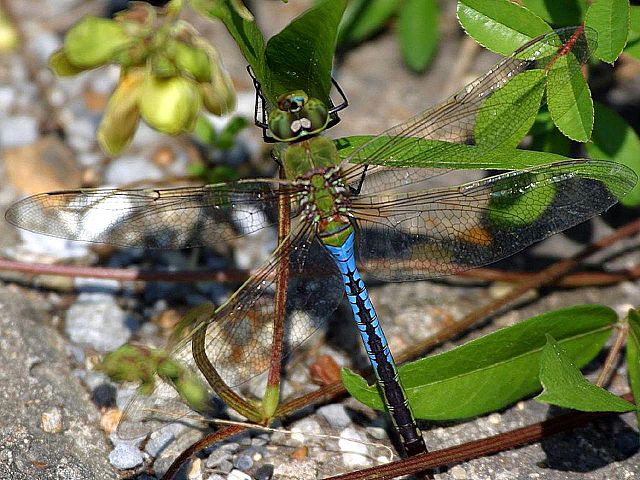
The crickets here who are making all the noise are tiny, like miniaturized versions. The dragonflies are delicate creatures, too, needle thin, brilliant green, orange-red, and sky blue, sometimes flying united, two fragile bodies connected in a mating dance. When I was in Maine, on a run through the green hilly countryside, I came across a farm with a clay pit where enormous colorful dragonflies hovered over the standing water, ten times larger than their southwestern Virginia cousins, like trucks compared to motorcycles. Flame_skimmer_insect_dragonflyBlue Dragonfliy

I’m not sure why insects are so large in less hospitable climates. New Mexico bugs will surprise people who think nothing can live in the desert. Think again. There are beetles and cockroaches out there that could carry a couple of fifty-cent pieces on their backs and not break a sweat (figuratively speaking).

If you’ve read The Outlaw Women, the short story prequel to the Mae Martin series, you know that Mae is not least bit squeamish about crawly critters. When it comes to this topic, more readers may identify with her friend Jamie, who enters the series in Shaman’s Blues. He’s appalled by spiders in particular and by things with too many legs in general. Personally, I like the many-leggeds, but with a few exceptions: roaches, flies, mosquitoes, biting ants and skunk beetles. I think I’ve mentioned before that bees and wasps sometimes walk on me when I do yoga outdoors, their delicate almost weightless feet on my skin. On close inspection, they’re quite beautiful. Some of them have bright yellow legs, a classy touch like the hubcaps that match the paint job on 1950s cars.

At a yoga and meditation retreat a number of years ago, Goswami Kriyananda came in a minute or two late to give his talk. He had stopped to help a fly that was trapped between a window and the screen. He opened the window, and then the screen, and closed the glass so the fly could go outdoors. He said it kept walking around and around on the screen in the same pattern it had before he offered it its freedom. With his warm and gentle humor, he said it reminded him of humans.

Recompressing

Half-way between New Mexico and Virginia, my tire pressure goes down. It happens every year. Nothing is wrong with the tires. It’s just that I go to mechanics in Santa Fe and they make sure the pressure is normal for that altitude, and then I descend to the lowlands.

When I unpack in Virginia, I always find that my shampoo bottle and other plastic containers have collapsed inward, folding in around the empty spaces inside them. When I run, I feel the heaviness of the air—the dampness as well as the low altitude. It’s hard work, like plowing through used teabags. Talk about coming down!

It’s time to recompress. I’ll readapt to the climate, to the busyness of the academic year, and to the green campus, so conventional and normal. I’m in the transitional phase, now though. I miss the colors and textures of the desert, the people in T or C, the eccentric personality of the town itself, the spaciousness of my life there and all the open space around it—so delightfully situated in the middle of nowhere. The challenge now is stay spacious inside when my surroundings aren’t, and as external demands become like the air, an unseen weight leaning on me. I did yoga on my back deck today, and two tiny bees sat peacefully on my shoulder through several poses. I was grateful to have this practice of active mindfulness. It left me feeling whole and bright. My outer life has to recompress, but my soul doesn’t.

New Release and Ninety-Nine Cent Sale

Some of my favorite places in New Mexico are featured in the latest Mae Martin Mystery: the Mescalero Apache reservation, where Mae finally meets her friend Bernadette Pena’s family and attends a ceremony and a powwow; and of course Truth or Consequences, my home and Mae’s. I enjoyed bringing a few of the local businesses and the work of one of T or C’s stellar artists into the plot—with their permission, of course. The cover image reminds me of Mescalero with its high mountains and its sky full of stars.

ghost sickness ebook

Ghost Sickness

The fifth Mae Martin Psychic Mystery

A visit to the Mescalero Apache reservation turns from vacation to turmoil for Mae Martin.

Reno Geronimo has more money than a starving artist should. He’s avoiding his fiancée and his family. His former mentor, nearing the end of her life, refuses to speak to him and no one knows what caused the rift. Distressed and frustrated, Reno’s fiancée asks Mae to use her psychic gift to find out what he’s hiding. Love and friendship are rocked by conflict as she gets closer and closer to the truth.

The Mae Martin Series

No murder, just mystery. Every life hides a secret, and love is the deepest mystery of all.

*****

If you haven’t started the series yet, now’s the time. You can buy the first book, The Calling, on sale for ninety-nine cents. Sale runs August 10 through 25 on major e-book retailers. Click here for buy links for all books in the series.


Ghost Towns of Sierra County: More Haunting than Haunted

Nothing lasts. Silver booms end, mining towns fade away, and buildings collapse unless cared for. Adobe slowly melts in the rare desert rains, returning to the materials from which it was made. A ghost town isn’t so much a place with ghosts as a ghost of its former self.

I took a trip through three of Sierra County’s ghost towns (there are many more) with a friend who is a found-object artist and a dealer in antiques and collectibles. Having his perspective on the sites added to the experience, because he knew what things were when we found odd objects lying around,.

Our first stop was in Cuchillo, at the partially-restored, partially-collapsed Old Cuchillo Bar. It shows the world a mangled face of original porch and windows—some broken—some of its original front and roof, new beams replacing portions of the fallen roof, and open space where the weather can get in. My view through the window was limited, but my much taller friend said it looked like the original bar was intact. This place was long reputed to be haunted, but in the book Mysterious New Mexico, paranormal investigator Benjamin Radford describes his night spent in the place and how he examined the physics and mechanics of a seemingly self-opening cabinet. No ghost was required to explain its movement. The bar is for sale, if anyone feels inspired to finish the restoration and try to revive the ghost. The town has a few inhabitants and a colorful history.

Winston looked the most modern and normal of the three towns, small but alive and well and not very ghostly, though it may have traces of the nineteenth century frontier further off the main road. We kept going to our primary destination, Chloride. (I plan to use it in a future book, the seventh in the series, although I’m only ten chapters into the sixth, and the fifth is about to come this month. I plan ahead.)

The winding roads on the way have glorious views of mountains and valleys—the empty desert that makes up most of Sierra County. Truth or Consequences, the home base from which we set out, is the county seat with a population around 6,500. In 1890, present-day ghost town Kingston boasted 7,000 souls, making it the biggest city in NM at the time. Chloride topped out at 3,000. Its current population? Eleven.

The museum is the general store that was abandoned with all its merchandise in place in 1923 and reopened in its new role with much of the same stuff in 1998. It also houses some of the amazing handiwork of self-taught furniture maker, Cassie Hobbs, a woman who grew up in a covered wagon and never went to school. She didn’t just hammer crates into a chair. She carved and upholstered as if she had the right tools and training. And she was still alive when Chloride was rediscovered. A few surviving old-timers like her were a treasure trove for the family that bought the old buildings and decided to save the remains of Chloride for the future. We heard only one ghost story at the museum, about a headless figure that used to chase people at night. (Most people who saw it were leaving the saloon.)

Santo Nino Cemetery is hidden high on hill above the town, up a road so winding and rough I had the good sense not to make my little Fiesta climb it. Legs could handle it better. It has simple burials from the old days and more elaborate ones from recent times, but not many of each. The old graves are marked by patches of rocks and pebbles covered with weeds. The headstones are clearly not the work of a professional, thin slabs of natural stone scratched with rough writing. Many of the newer ones are decorated: with toys and angels honoring a child’s short life, or a rider on horseback made from horseshoes swinging a lariat, memorializing an old cowboy’s long life.

The earth along the side of the road to the cemetery, where the hill had been cut to build the road, was layered with roots and rocks. On our way back through Cuchillo, we stopped to explore some desolate, crumbling houses. When I saw the old adobe bricks melting away with little dried teardrops of rain streaks in them, they looked very much the same as that slice of raw earth—small, beautiful stones of red and pink and green embedded with bits of straw in the dirt.

The abandoned houses had stories to tell, but there was no one to explain the artifacts the way there had been at the museum in Chloride, so we had to do some amateur archaeology. One ruin had nineteenth century adobe bricks and a shredded pinkish gray fake leather easy chair sitting in an otherwise empty room where one wall had fallen away. A burned-out building with structural elements that suggested it dated back to the mining boom days had apparently spent part of the 20th century as a bar or restaurant, judging from the broken china, and the huge cache of scorched Pepsi cans and rusted soup or bean cans in one half of the building. The other half was full of rusted car parts– a lot of mufflers and carburetors. Too many for a family’s cars, and inside the house. I kept picturing a combination bar and garage. Amusing, but unlikely.

We climbed up to flat area that looked as though it might have once been a campground or a trailer park, with nothing left but metal clothesline poles and a street sign that read Wyoming. I could sense Cuchillo ghosting away, hollowing out with time, changing but not dying.

Bat Medicine

640px-Free-tailed_bats

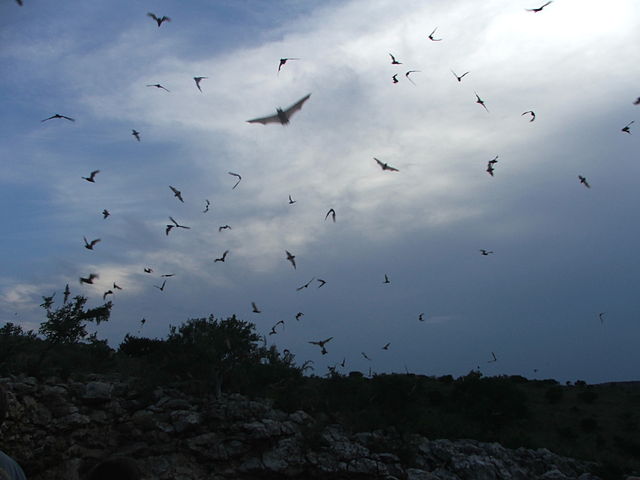
On a recent evening, I walked to the wetland at the edge of the Rio Grande for the bat-rise at sunset, the silent dance of dark forms against the golden sky, and remembered that I’d written about it a few years ago. I let the bats swoop around me and silence my mind into clarity for a while, and then came back and found that old post. The bats are still sacred and healing to me, so here it is again.

*****

I began re-reading Linda Hogan’s book of essays Dwellings and Michael Harner’s The Way of the Shaman at the same time. This pairing of readings couldn’t be more dissimilar in style, content and purpose. I finished the latter book quickly, but took my time with the first. It’s too beautiful to hurry through.

Poet and novelist Hogan, a member of the Chickasaw tribe, writes of the spirituality inherent in the natural world. Her insights into the relationships between living creatures and our own souls is anchored in places and in specific experiences—going to hot springs in a cave, or working at a bird sanctuary. She doesn’t write about animals or the earth in general, but this piece of earth, this particular sunflower, this colony of mud-building bees. When she cites other writers, often scientists, she finds passages so beautiful they flow into her own essays like the breath of the same breeze. Her topics range from wolves, to the Amazon rainforest, to the life cycle of water and rock, to the deeper meaning of ape language experiments, and more.

These essays wake the reader up to the aliveness of every moment, as the author hears the song of corn, or discovers the liquid, graceful, wing-wrapped mating of two bats she rescued from their fall back into hibernation in a sudden spring chill. “I put them in a warm corner outside, nestled safe in dry leaves and straw. I looked at them several times a day. Their fur, in the springtime, was misted with dewy rain. They mated for three days in the moldering leaves and fertile earth, moving together … then apart, like reflections on a mirror, a four-chambered black heart beating inside the closed tissue of wings.”

In addition to this subtle observation of their beauty, she sees the bats from a Native spiritual perspective. “The bat people are said to live in the first circle of holiness. Thus, they are intermediaries between our world and the next. Hearing the chants of all life around them, they are listeners who pass on the language and songs of many things to human beings who need wisdom, healing and guidance in our lives, we who forget where we stand in the world.”

This forgetting where we stand is Hogan’s theme. We need to heal ourselves back into what she refers to in her novel Power as “the real human beings”. If you love language, you will love this book, and you may come away from it loving every living creature, every crack in a rock, every sound when the wind blows, as if you had never seen and heard and known them before. I hope you will, like I did, love this book so much you want to read it again and again.

Harner’s book is almost the opposite of Hogan’s. An anthropologist turned shamanic trainer, he does his best to distill the essence of shamanism into a kind of how-to book for modern people. After an introductory chapter in which he tells of his studies with the Jivaro tribe, he intentionally presents shamanism divested of culture, land, language and tradition. Even the animals are not real creatures that walk the earth and breathe and live their lives, but animal spirits, guardians and guides for humans, and plants are also their spirit essence, for use in healing humans.

His citations are dense and thickly strewn, sometimes without any background on the culture or lives of people he is citing. That, however, is his point. This is shamanism as modern medicine, a world-wide range of healing traditions pared down to their “active ingredients.” Shamans from Australia to North America use quartz crystals, drums, rattles and dances. Shamans all over the world take journeys to find knowledge, and have power relationships with animal spirits. He turns these elements into a kind of recipe for being a shaman. Maybe it works for some people, but for me the best parts of this book are the direct quotations from real shamans such as the “sucking doctor” Essie Parrish, rather than the parts about modern Americans “dancing their animals.”

Compared to my experience of traditional ceremonies, or even to running outdoors, or dreaming, neo-shamanism feels incomplete, but then I wasn’t reading with the intention of putting it into practice. I had read the book before and gone to a workshop with Harner at an alternative therapies conference years ago, and already knew I wasn’t going to use this for spiritual guidance. It was research for a novel, Soul Loss, in which one character is a teacher of neo-shamanism—not based on Harner himself, only on the kind of practice that he teaches—and I needed to refresh my recollections.

I dreamed once that I turned into a bat. In this form I flew though the dome of an art gallery and then descended to the bottom floor as the blue outline of bat, a bat made of twilight sky. In Truth or Consequences, I like to walk down to the Rio Grande at that low blue time of evening in the summer and let the bats surround me at the edge of the little wetland where redwing blackbirds sing by day. While the bats dance for bugs, I can stand in the midst of them, and they swoop close without ever touching me, perfectly aware in their busy flight, flawless pilots of their world of sound. To me the animals themselves feel more sacred than a journey to find my “power animal.” This bat immersion is the bat medicine I need.

Monsoon, Moon and Mandala

Luna023

Finally. A real monsoon.

The sky had to work up to it. After a couple of weeks with temperatures in the upper nineties and low hundreds, it took a few days of clouds and passing sprinkles to cool things off enough that rain could survive its trip to the ground without evaporating in mid-air in those beautiful but maddening long gray brushstrokes. This is a tough place to be a water droplet, but at last they came together in a grand, full-sized storm. And then the power went out. I tried not to think about how long it would be off or what would happen to the week’s groceries I had just put away. I stumbled and groped my way outside and sat under the overhanging roof to watch the rain, feel the cool (probably eighty-something) night air, and enjoy the view of T or C without lights. Occasional passing cars lit the streets, but the only steady glow was from the full moon behind the storm and one tiny cloud-hole with a star in it. My neighbors a few doors down were already sitting outside, their voices softer than the rain.

Having had little time for writing all day, I brought paper and pen out with me to do the mandala for the book in progress. I could see well enough by the clouded moonlight, and it didn’t have to be a work of art. This process was due, like the rain. I had to work up to it with eight chapters first, to see who was going to be in this book and get a sense of where the conflicts and connections would be. Able to see well enough to draw, I made a circle with the names of my protagonist and her significant other in the center and all the other characters’ names around them, connected in complex patterns that swirled around the outside and wove through the inside of the circle. It was satisfying, and will remind me of relationships and loose ends and potential allies as well as enemies. This is as close as I get to an outline, and I will refer back to it often. I got the mandala idea from Writing as a Sacred Path by Jill Jepson, which I found in Santa Fe’s magical Ark Books several years ago. Every book I’ve written has had a mandala.

I finished it and the moon emerged. The rain was over and big puddles reflected the moon back at herself from the streets and alleys. Then the power returned. My neighbors and I stood at the same time, and as if we were driven to light like moths we went inside to the electric glare, leaving the moon behind.


Picture: Luna023 by Cezar Suceveanu

Cross-Training—in the Lake and on the Laptop

During the summer, I like to mix up my usual weight-lifting routine with water exercise. The physics of water are such that you can use it for resistance training if you push against it. The technique is the opposite of lifting weights on dry land, where the more slowly you move the weight the harder you work. The faster you try to “lift” the water, the more it pushes back. Momentum doesn’t exist, and every movement is a concentric contraction, so the workout can be intense and efficient at the same time, a dual-purpose strength and cardio activity. It’s great cross-training, challenging my body to adapt to different demands and stimuli, and makes me less likely to get injured or over-train. Also, the variety enhances my awareness of what I’m doing. It keeps me out of a rut.

Today I was surprised to find the Truth of Consequences town pool closed for employee training, but I was in my suit and motivated, so I drove to Elephant Butte Lake State Park and did my workout in the lake. The change of scenery was invigorating. The water felt alive, and the people-watching opportunities were infinite.

This experience reminded me to cross-train as a writer. I do two things regularly: short essays such as blog posts and book reviews, and long, complex novels. I seldom write short fiction. It’s great cross training, though. The tight focus helps me in structuring scenes and chapters in my longer fiction. I get an especially tough writing workout when I enter short fiction contests, whether or not I win. The word limits and the required themes force me to sharpen my skills. So, I challenged myself to write a short story based on my people-watching at the lake today. Polishing it will be the next workout. I have to give it rest days between revisions. If I get it into shape worth sharing, I’ll post it here. Even if it doesn’t turn out to be publishable, though, it will have been worth the effort. There will be other results. The way my water workouts make me a better runner, my short fiction workout will make me a fitter and more flexible novelist

*****

For short fiction that I have published, go to the free downloads link.

Walking into a Story in Santa Fe

Inside an old bowling alley in Santa Fe lives a multi-dimensional work of art. The House of Eternal Return blends written word, video, sculpture, paintings, textiles, and architectural space to immerse visitors in a mysterious story. When you go through the doors of a Victorian house built inside the former bowling alley, you find evidence of a family’s seemingly ordinary life, but as you explore you find that something strange has happened to the people, and to nature of time and space and reality. The characters and their story have to be discovered through the artifacts in the house, ranging from photographs to drawings to journals. For example, if you open the pages of a diary in a child’s room, you learn more about the mystery. If you don’t, you find clues elsewhere.

Behind the refrigerator is another world. If you open the fridge, you leave ordinary reality. Or you might exit another way. The upstairs goes in and out of altered worlds. Some are serene, some adventurous, some disturbing though not terrifying, just intensely strange. The psychedelic nature of this art installation is hard to describe. There’s so much to explore, so many aspects to the story—moving, transcendent, bizarre—that I can see why people buy a year’s pass. One visit isn’t enough for a full discovery. I crawled through a hole in a closet to find a piano under a glass ceiling like a starry sky. I clambered down a winding narrow staircase to a mystical cave full of music and crystal-like forms. Much of the art is interactive. You can play pianos and unique percussion instruments built into the sculptural walls; you can turn pages and decide if you’ll leave that journal open or closed; and you can press buttons to get sound and light effects. There are hidden nooks with video screens showing episodes of the residents’ past. Some videos only start if you choose to sit in the chair in front of them, and they seem to react when you get up to leave.

I recommend this art space to anyone who loves to play with reality, and who will not be overwhelmed by occasional flashing lights, moments of chaotic sound, tight narrow spaces, spiral staircases, and a general sense of being unmoored, floating in a sea of dreams. After spending a few hours in it, I found that meditation after my yoga practice was deep and blissfully silent. The chains of thought-to-thought busyness had been broken and my inner space was open wide.

Later, when my left brain came back online, I reflected on the story-telling genius of The House of Eternal Return. The objects in the normal-time-and-space rooms hint at the inner life of the characters and at the events that happened to them, and visitors end up collaborating at uncovering clues. One person notices a document and reads it. Another discovers a crawl space. Another emerges from an unexpected place—like the refrigerator. It’s like sharing a 3-D novel—part science fiction, part mystery—with other readers.

When I write a book, I can improvise the plot as I go. More often, I know where it ends and then try out different routes to get there. Free-flowing as the initial process is, however, the end product is a linear narrative, with a beginning, a middle and an end. The story in The House of Eternal Return is told in a nonlinear way, with multiple options for how visitors experience it, but the process of creating this vast, multi-chambered work of art had to be as precise as the design of an aircraft. If you’re a story-teller, this aspect of it may intrigue you as much as the interactive masterpiece itself.

Petrichor—An Ode to New Mexico Rain

Dominguez-Escalante_NCA_(8930993249)

The smell of rain in the desert is so special it has a name: petrichor. As moisture touches rocks and soil that have been hot and dry, they release a scent of minerals and plant oils and something else I can’t place. It’s the smell of life, I think.

When I crossed the state line from Texas into New Mexico last week it was pouring, with lightning so intense it flashed pale purple. At the same time, the last faint light of evening shifted through rain on the horizon like a pale gray aurora borealis. I parked at the rest area at Glen Rio and got out and danced in a backward spin, softly singing Michael Hearn’s lovely sweet song “New Mexico Rain,” not caring or noticing if anyone saw or heard me. It was that good to be back and to have my homecoming blessed with a storm.

Today we had a long, gentle rain, the kind the Navajos call female rain. I went running in it, on a favorite trail at Elephant Butte Lake State Park. Quails peeped, crickets chirped, and there were no other sounds but the rain, my steps and my breath. The sand was firm under my feet, the lake glowed silver-blue, and low puffs of clouds floated across the flat cone-top of an extinct volcano, making it look as if it had come back to life. The subtle greens of plants whose names I don’t know—feathery and blue-tinged, needle-like and yellow-green—glowed in the diffuse light. Wet lava rocks shone black or red as their pores soaked up the water. At each curve in the trail, the rain scent varied, mingling with juniper at times, stronger when the rain increased, fainter when it faded. Normally, I work on plot problems, writing scenes in my head as I run, but today my mind was quiet, my attention captured by sounds, textures colors and petrichor.

There’s not one special memory linked to this scent, just a sense of place. Of the earth itself within the borders that delineate New Mexico, a place where the Pueblo people are dancing for the rain. When that rain touches me, I feel as though something is released in me as well from the rocks. My heart knows who I am.Siler_pincushion_cactus_(6002291928)

Falling Awake: Review of Full Catastrophe Living

The net impact of this book, no matter how many encounters I have with it, is awakening. I’m not claiming it makes me “enlightened,” only that it accomplishes its purpose of teaching—or reminding—the reader how to be more fully alive and aware, moment by moment.

Kabat-Zinn is a gentle teacher, a master of the non-judgmental suggestion and the empathic anecdote. His writing style is accessible to his entire target audience—everyone who experiences stress. It’s a friendly, natural style, with some idiosyncrasies. He’s fond of exclamation points and often says things like “our body” and “our mind,” addressing his readers as a group and as individuals at the same time, while including himself in that group. Grammatically, this plural-singular is strange, but that’s his voice, his way of bringing readers into a conversation with him. Though the book is long, it’s low-stress. The themes are expanded gradually, each chapter building on the next, with steady reminders about the practices he’s teaching. I recommend reading it slowly, a little at a time, and letting it soak in. This turns the process of reading into a kind of meditation.

This was my first exploration of the revised edition. It grew by around 200 pages from the original. The updates were needed for two reasons. One is that the author and many other scholars in health psychology and the study of emotions and stress have accumulated decades of well-designed research on the effects of mindfulness. Mindfulness-Based Stress Reduction is no longer an innovation at one Massachusetts hospital but an established, thoroughly studied program taught all over the world. The results of studies are integrated into the rest of the text. At first I wondered why he didn’t make those a separate chapter, a massive appendix, but a lot of readers might skip or skim this information if it was presented that way. When it flows as part of the story of coping with various stressors, it gets read, and adds substance and science where it’s needed. The other reason the book needed an update was the change in the nature of stress and distraction since its first publication. When it first came out, there was no such thing as texting while driving or feeling the need to sleep with a cell phone turned on and lurking under one’s pillow, no such thing as constantly sharing on social media. The stress-creating tendency he described in the first edition—to be in touch with everything except ourselves—has only grown over the past thirty years.

The chapters on coping with physical pain and emotional pain are especially profound. At one point in my progress through this book, I ended up reading it in the emergency room in the middle of the night. It helped me cope mindfully with a bizarre, ambiguous symptom and the decision to get it checked out, to sit with the not-knowing while I waited to be seen, to accept that I might have something serious that could require eye surgery, and to accept that if I didn’t need it, this was how I’d chosen to respond. I was even able to get a couple of hours’ sleep before seeing a specialist in the morning. (In case you wonder, no surgery was needed. I can now cope mindfully with a mere risk factor—and my insurance company.)

This recent experience with sleep deprivation made me relate strongly to the chapter on sleep stress. This chapter doesn’t seem to have been updated with research the way the others have. I agree with Kabat-Zinn that getting upset about being unable to sleep only compounds the problem. Making peace with the necessity of being awake reduces the suffering. It does not, however, reduce the need for sleep. Adapting to the stress of being tired is not the same thing as being able to maintain normal reflexes, attention or memory. I’ve found shortcomings with this chapter, but that doesn’t invalidate the whole book. In fact, the chapter stands out because the rest of it is so soundly supported.

I have one more critique: The material on the benefits of yoga is valuable but the drawings don’t provide good instruction. The little man in the pictures uses his back incorrectly in several forward bending poses, and uses no props. Using a strap to reach one’s foot in many poses makes a big difference in both benefit and safety. The selection of poses isn’t as balanced as it could be and there is one that I think should have been eliminated, a curled-up inversion that could stress the back and neck. Kabat-Zinn does mention approaching it with caution, but there are safer ways to relax and put your feet up in yoga, such as lying on the floor and putting your legs up the wall. My suggestion would be to read the chapter but to study yoga with a qualified teacher who pays attention to each student and who understands anatomy and injury prevention. Don’t use the pictures as instruction.

There’s an option with this book to buy CDs or download guided meditations. I’ve never done that, having studied yoga and meditation with live teachers and developed a daily practice, but as one of my yoga students was saying after class the other evening, it reduces her stress to have someone else guide her. There are beautifully written instructions for meditation in this book, and some wonderful short experiments a reader can do to begin exploring the practice. I think other readers could do as I’ve done and not buy the CDs. It should work well either way. With or without guidance, it’s challenging to commit to daily practice at first. The book suggests forty minutes. (I prefer not timing it, just doing it.) Daily practice is one of the foundations of the stress reduction program in this book, whether one does the body scan (similar to Yoga Nidra), sitting meditation, walking mediation, or yoga, or alternates among these. Daily, one commits to taking time to be present in oneself. It is, as the author once said, both the simplest and the hardest thing you’ll ever do. And it can, through awakening, change your life.