Open Space

Waiting for an idea, I watch the pages of my wall calendar being stirred by the fan. The current date is empty, a blank white square. The future is full of obligations and anticipations—busy little squares. But none of that is now. Now I sit in the open space of the present, aware of the sensation of sitting and breathing, of the sound of the fan, the breath-like movement of the pages, free to fully inhabit the whole of the moment while gazing at the illusion of time.

Book Review: Snake Face

Re-Bodying: Movement and Play

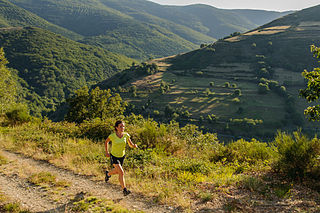
runningI’m reading Full Catastrophe Living again. I don’t know how many times I’ve read this wise book, but every time, it makes me more awake and aware. The chapters on mindfulness of the body inspired this blog post. The author, Jon Kabat-Zinn, reflects on how the words remind and remember can be interpreted as re-mind—come back home to your own mind, and re-member—become a member of your own consciousness, and then he suggests we may need the word “re-body.”

Children and animals know: it feels wonderful to move around. It’s not natural to hold still and sit for hours. I recently took a trip to visit friends in North Carolina and in Georgia, and the long drive left me craving movement. My friends are walkers and yogis, not runners. Walking and yoga sustained me for a while, but by the last day of the trip I was craving full flight. My Atlanta friend brought me to a trail along the Chattahoochee, and she walked while I took off in an explosion of delight, faster than I normally run. The novelty of the trail added to my energy. I had no idea what was around each curve or over each hill, and had to stay one hundred percent in the present moment to dodge roots and rocks and poison ivy and still take in the beauty of the woods and water. The speed and surprises were part of my joy, along with the sensation of my feet connecting with the earth, the springy strength in my legs.

We don’t all take joy from the same things, but whether we walk, run, dance, practice yoga, lift weights, do tai chi or go ballroom dancing, it doesn’t matter. We’re designed to move. And when we find the movement that matches our spirit, it’s like coming home every time we do it. I like to think that people who say they hate “exercise” haven’t discovered the kind of movement that will make them happy. They’ve been made to do activities incompatible with their nature. However, somewhere in every human is that child who had to be told to hold still. That child loved to jump, skip, run, and climb. It was play. For me, that new trail was play, the game of finding the next footfall on an unpredictable landscape. Yoga is play in the field one’s self, exploring the organization and sensation of each asana, the interaction of the posture and the breath. After decades of practice, I still find even the most basic poses fascinating.

For some people, the word exercise takes the play out of movement. Years ago, I read a study on why women exercise and why they quit. Reasons for starting: weight loss and looking better. Reasons for sustaining exercise: the discovery that it reduces stress. Reasons for skipping exercise or quitting: time pressures and stress. In other words, movement reduces stress, but when women are stressed (and I would guess this is true for men, too) they tend to forego it, as if it were a luxury. It can feel like one, in either the negative sense of an extra that can be cut from the time budget or in the positive sense of deep pleasure. It can be a luxuriant sensation to move, to be fully embodied, present and in motion.

When I’m writing and the story gets stuck, I find that if I stand up and walk around, ideas come to me. It’s as if the stuckness of sitting starts to affect my brain, and the energy of movement clears it. Movement is as essential to mental and emotional health as physical health, but “it’s good for me” is the last thing on my mind when I’m enjoying a run or a yoga practice or just getting up from my desk and re-bodying for a few minutes. I’m playing, following my movement bliss. What’s yours?

*****

Image by Robin McConnell originally posted on Flickr

“Are You Psychic?”

“Are you psychic?” I’m occasionally asked this question, since my series’ protagonist has this is gift. The answer is yes, but I can’t do what Mae can do. I have a long history of precognitive dreams, some that predicted major events such a relative’s death, a friend’s illness, or a major change in my workplace, and others that foresaw peculiar and unlikely but utterly trivial events, such as seeing a man in a top hat at breakfast in a hotel. I have no idea why I dream the future, but it’s happened forty or fifty times. I stopped counting. I’ve only once been able to harness this ability intentionally in order to see something for a friend, and the dream took months to come true. I wouldn’t make a good psychic in a novel. I have a character with a more focused and useful version of this talent in the next book. Ezra Yahnaki, the twelve-year-old grandson of Mescalero Apache medicine woman Bessie Yahnaki, will be introduced in Ghost Sickness, book five of the series.

The idea for Mae’s gift was planted a number of years ago when a neighbor invited me for dinner. She had a friend visiting from out of town. This visitor could hold something you owned and pick up information about you and your life. I didn’t know what to expect, but I asked her to find out what I most needed to know. She turned away from the dinner table, holding my eyeglasses, and was quiet for about five minutes. When she faced me again, she described an elderly woman in a bed, and said she sensed that this woman was very sad. I recognized this was my mother, who was in a nursing home suffering from multi-infarct dementia. Though this psychic’s vision didn’t reveal something new, she had somehow perceived an important and difficult part of my life.

I based Mae’s gift on this woman’s ability to see and emotionally connect with the present at a distance through touch, and added the ability to see the past. The limitations of the gift add challenges to the plots. While the information she can access is vivid and deep, it’s also incomplete, provoking questions as well as providing answers.

This is revised and recycled from an old post from Dec. 2013

Flow, Lived Time, and Wasted Time

Alex_Jacobi_Boots_on_TVThis is another refection on the thought-provoking book Flow: The Psychology of Optimal Experience. In discussing leisure time, Cziksczentmihalyi observes that people experience the optimal emotional and mental state of flow fairly often at work, and yet they long to go home from their jobs and have leisure—where they tend to waste time. It’s strange how we tend not realize what makes us happy.

“Free time … is unstructured, and requires much greater effort to be shaped into something that can be enjoyed. Hobbies that demand skill, habits that set goals and limits, personal interests, and especially inner discipline help to make leisure what it is supposed to be—a chance for re-creation.” Instead, many of us waste that free time on things that ask little of us, imagining that passivity will bring happiness. Cziksczentmihalyi mentions frequently throughout the book that if not given focus, our minds tend toward entropy and so do our relationships, and he is especially critical of excessive television-watching as an entropic behavior. He says we spend many hours watching athletes rather than engaging in sports, and “watching actors who pretend to have adventures, engaged in mock-meaningful action. This vicarious participation is able to mask, at least temporarily, the underlying emptiness of wasted time.” The book was written prior to the development of binge-watching Netflix, an extreme example of the peculiar appeal of this kind of wasted time. Can you imagine a TV show in which the characters spent a lot of time watching TV? That would not be an entertaining story. Fictional characters are engaged in challenges all the time. That’s what interests us. Conflict, challenge, growth and change.

Flow activities make us deeper, stronger, and more complex, whether we are reading, dancing, gardening, talking with family and friends, engaged in community activism, or making art and music, and they result in something we can share that adds to the quality of others’ lives as well as our own.

Blogging about a book as I progress through it is a new approach—but this one is making me think so much I had to share the thoughts before finishing.


Why Reading and Writing Can Make You Happy

BookFlow is a state of absorbed, continuous attention in which skill and effort are perfectly matched. I’m half-way through reading the book on it, Flow: The Psychology of Optimal Experience by Mihaly Csikszentmilahlyi, and it’s given me a lot of food for thought

If your skill is high and the effort asked of you is low, a task could lead to boredom. For example, folding laundry. Most of us probably use some sort of additional stimulus like music or television to make it less dull. Sometimes I work on plots or blog posts in my head while I do things that ask too little of my mind. Boredom is also likely when you’re not paying full attention to a task, due to the lack of effort. Students who skim their textbooks often complain that the book was dull. Oddly enough, according to Csikszentmilahlyi, the man who named and first studied flow, paying more attention to a presumably dull thing will make it more interesting. If I turned laundry into a contemplative awareness activity, it could create flow. His research is full of examples of people who turned repetitious jobs into flow activities by how they focused their minds.

However, even if you are focused and aware, if the required effort for a task is too high and your skill is too low, you’re going to be stressed and frustrated. I ran into this trying to follow directions for using Canva, a web site that supposedly lets even tech-impaired idiots create complex images. My skill was too low even for that!

If skill required and effort involved are both low, you’ll be relaxed or apathetic, depending on the circumstances—or you might have flow, if you’re mindful. A massage requires little effort on your part, and little skill, and the match is perfect. Relax and receive. Unless, of course, you stop paying attention to the experience. I’ve sometimes caught myself becoming absent and had to invoke the skill of mindful presence so I could relax and have a low-key flow.

Paying attention in an unbroken way is a rare blessing for a lot of us. Many of our jobs are built around interruptions. Studies have found that people who get interrupted a lot, when left alone, will continue to interrupt themselves for up to an hour before being able to focus again. Flow is lost.

Fragmented attention is the nature of social media. Each click is a new activity. I like chatting with Facebook friends, but the process is fractured, like conversation at a noisy party. It creates connections, but not flow. Books create flow, either a flow of focused ideas in nonfiction or the flow of a story in fiction. According to Csikszentmihalyi, reading is one of the most reliable sources of optimal experience, aka flow. Unlike more passive entertainment, it requires effort, skill, and imagination. Writers and other creative people know flow when we play our part in this exchange of vital energy. When we’re wrapped up in our work, we lose our sense of self, our sense of time, and become one with the creative process itself. Athletes, scientists, and mathematicians know it, too. What gives you flow?


Daily Practice

Yoga,_double_exposure_by_Victor_Tondee_

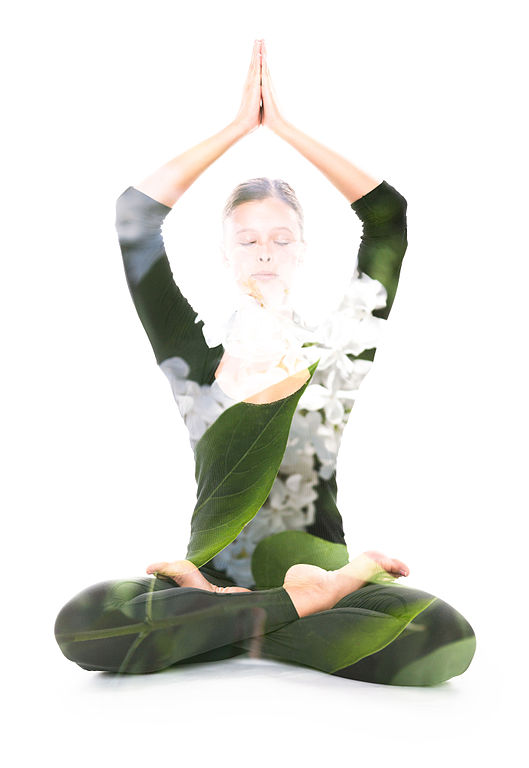
I had a pleasant and unexpected visit from a student who took my freshman seminar last fall. Its topic was mindfulness and critical thinking. I like to imagine it had a lasting effect, but it’s general education, not a course in my department, so I may not see the students again unless they get into my perpetually wait-listed yoga class as juniors or seniors. This young man stopped by to tell me that he was finishing the books, Work as a Spiritual Practice and The Wise Heart. Like many, he got about two thirds of the way through them during the course. Reading them more slowly and thoughtfully on his own, he’s getting more out of them. He wanted me to know that the class had an impact, and that his way of thinking about and looking at everything was changing. He’s paying attention to what he eats and questioning his choices, not being mindless. This sounds small, but in the big picture of a life, it’s not. How we relate to the world and ourselves through our food can be meaningful as well as have an effect on our health.

That which we teach ourselves, we truly learn. The class gave him the opportunity, but now he’s independently applying and internalizing the skills of meditation and awareness. He asked me for suggestions and the main thing I could say was practice. Daily practice. I’m not a guru or spiritual teacher; I’m just someone who has committed to daily practice. With that, everything changes. He asked about opening the third eye, and I said that it can happen, but it’s not a goal, and in the Buddhist traditions, it’s seen as more of a side-effect than something to get too wrapped up in. Yes, psi occurrences—the siddhis, as they are called in yoga—can result for meditators, but if they are set as goals they can be distractions from present-moment mindfulness. For some people, they never happen. For others they arise for a while and then quietly cease. As I mentioned in my review of One Mind, such events are evidence of interconnectedness and a deeper level of reality, but mindfulness doesn’t strive for special effects in consciousness. There’s nothing to seek, only practice.

*****

Image: originally posted to Flickr by Victor Tonde at http://flickr.com/photos/115887883@N05/16943456596

Book Review: One Mind by Dr. Larry Dossey

Chakra_Another

To some people, psychic events are kind of cool, fun and interesting. To others, they are troubling and to others, they are woo-woo nonsense. To a few, they are the subject of serious science.

In this book, Dr. Larry Dossey’s thesis isn’t simply that nonlocal or psi phenomena exist, but that these phenomena have spiritual, ethical and ecological implications. He provides compelling evidence from research and a vast collection of illustrative stories to show that shared knowledge and perception over a distance are not only possible but common. People who are not normally psychic have this connection with loved ones at times of intense need. Psi connections occur with twins, with pets and owners, with doctors who know when patients need them, and are even shown to take place between minds and machines in experiments with random event generators. Dossey calls this capacity to share past, present and future in our consciousness the One Mind, and notes that love is a factor that enables it.

It’s not the only factor. Mere helpfulness will suffice. Some gifted individuals can bring their psychic ability into action on purpose, finding shipwrecks that were previously undetected by other means or locating stolen property.

Our society is afflicted by the illusion of separateness, fueled by rage, fear and negativity. Dossey persuasively builds his argument that individuals are woven into a web of being through consciousness that is not confined to the brain and body or to one place and time. In the final chapter, he quotes Vaclav Havel on transcendence, wrapping up the journey through the various forms of evidence with this reminder that we not only can transcend the boundaries of ego and self-vs.-other thinking, but that we must.

A review can’t do justice to the contents of this book. It is constructed so that ideas build upon ideas, scientifically and philosophically, and it is also entertaining, like a conversation with widely-read, witty and irreverent expert. If you liked the review, you’ll like the book even better.

Larry Dossey’s web site: http://larrydosseymd.com


Image: Chakra by Ranjithsiji

Shape-Shifters: How Did You Think of That?

SwainsonHawk23One of the hardest questions for a fiction writer to answer is exactly where an idea came from. I was asked that question recently about some of the imagery in one of my books. The short answer is that I imagined it, but the long answer mixes research, experience, imagination and dreams.

In what is basically realistic fiction with paranormal elements, I create some characters who have unusual abilities—psychics, healers, mediums, and shamans. A few can take—or seem to take— animal forms, and my Apache characters speak about this with fear and caution as the sign of a witch. Bearing is a horror story (though gore-free), so in that genre I made the shifting real. In the Mae Martin Mysteries, characters who shape-shift are not physically becoming animals but psychically manipulating others’ perceptions to create the illusion of another creature, or so strongly identifying with an animal that a psychic could pick up the imagery. The power of our minds to share images and information is astounding, and that ability is at the root of the stories I tell.

When I was choosing search terms to help readers find Bearing, one of the ones I chose was shape-shifter, a concept that I associate with skin-walkers and similar witches. I was surprised to find that there are shape-shifter romances. The possibility that this power was romantic had never crossed my mind. To me it’s scary, so it’s an element I use in fiction to give readers goosebumps. What makes an animal image scary to one person and beautiful and powerful to another is often regional and cultural. One of my Apache friends told me some terrifying stories of owl-witches that chilled me to the bone. He scared himself by telling them and said he shouldn’t be talking about the subject. When I was in my teens, I had what turned out to be a premonition, a frightening image of someone prowling outside the house hooting like an owl. Around ten years later, my roommate and I were disturbed at night by owl calls first at the front and then at the back of our townhouse apartment. Her cat’s hair stood on end and he quivered and made pitiful sounds, his fear scaring us all the more. We’d never seen him act like that. My roommate looked outside and saw a man she worked with but didn’t know well, and she called the police. The man admitted to stalking her but couldn’t explain what had gotten into him with the owl calls. Somehow that was creepier than if he knew.

One of my good friends in high school had repeating nightmares about wolves looking through every window of her house, and the way she told it gave me the shivers. When I was a very small child, I had repeating nightmares about bears, including a strange one in which I was a fourteen-year-old boy camping on a hunting trip with an uncle, and it ended with being attacked—I think killed—by a bear. No one in my family hunted or camped, and I had never seen a bear or a gun or even a tent at the age at which I dreamed this.

A little girl I knew years ago liked to think she had hawk powers. We were swinging in swings and she told me the reason she could go so high was this special power she had. She stayed in my mind, too, as another way that people identify with animal spirits.

This can be a “treasure hunt” through the series now. (Obviously the bear story is the standalone Bearing.) Readers will find the wolf, the hawk and the owl in the Mae Martin series. No spoilers. I’ll let you look for them.

Mae Martin Mysteries Book One The Calling 99 Cent Sale #Kobo #Nook and Everywhere

Been meaning to venture in mystical mystery?callingebooknew You can start exploring the series at a bargain price. Through Saturday March 26th, The Calling is ninety-nine cents on Kobo, Nook, Amazon, iTunes and Page Foundry.