
 On April 26, Independent Bookstore Day, I had the pleasure of doing a reading and signing at Black Cat Books and Coffee in Truth or Consequences. There were fresh flowers on the table where I was set up in the back room.
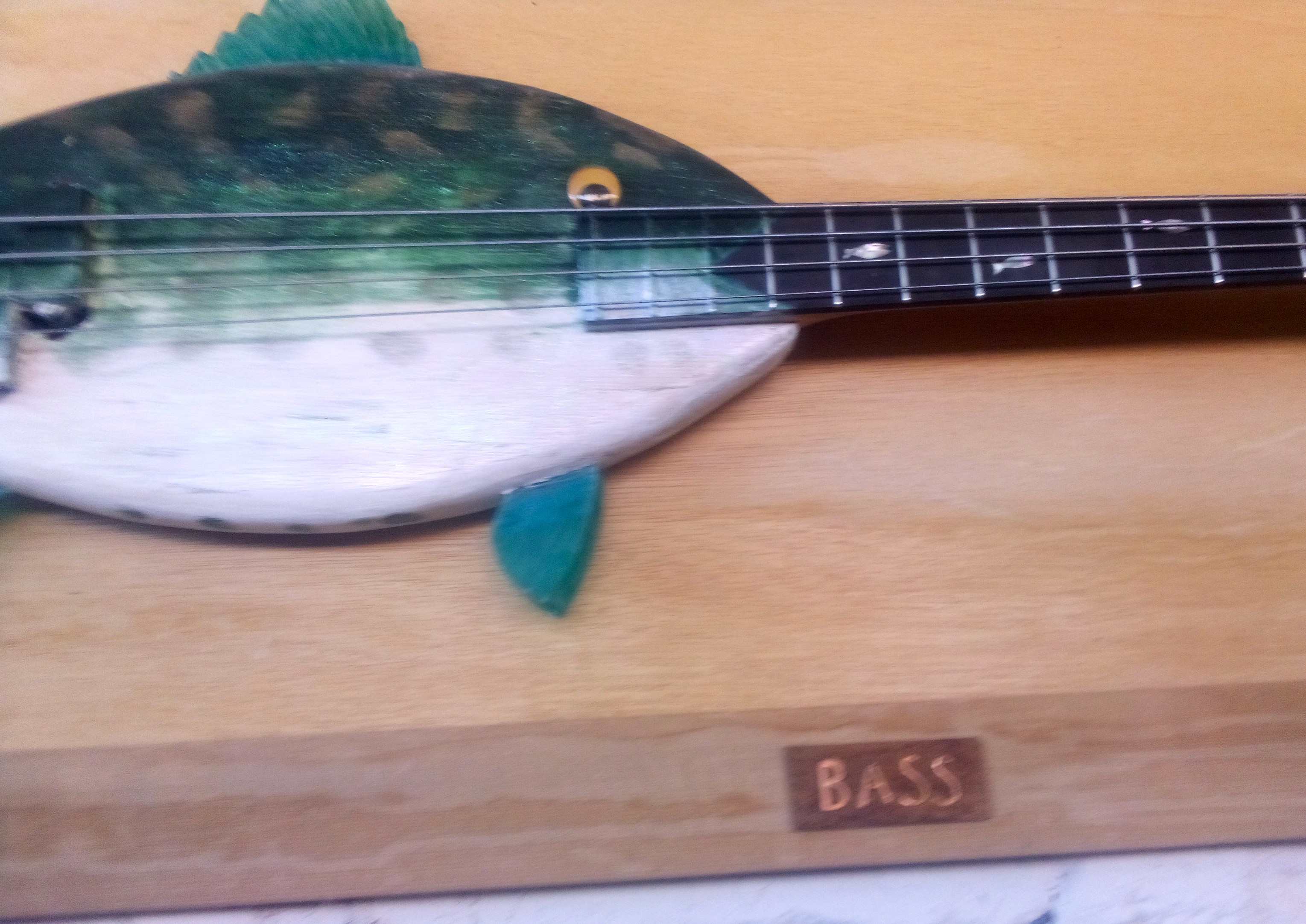
  To my surprise, the room was like a museum honoring a beloved Sierra County musician and luthier, the late Bill Bussman. He and his wife lived out in the middle of nowhere beyond Hillsborough, one of our living ghost towns, but people throughout this area and all over the country knew him because of his musicianship and the instruments he created. He was truly an original—warm and funny with irresistible charm. To learn more, read this article about him and this thread of posts from other musicians acknowledging his passing and sharing their memories of him. One of them mentions him playing the stand-up bass that had an Elvis head and a little red sneaker on its foot that tapped in time to the music. I heard him play that bass many times over the years. The bass wasn’t at Black Cat with me, but a number of his quirkiest creations were: the red chiles, the watermelons, and the bass bass. (Note the knives in the watermelons.)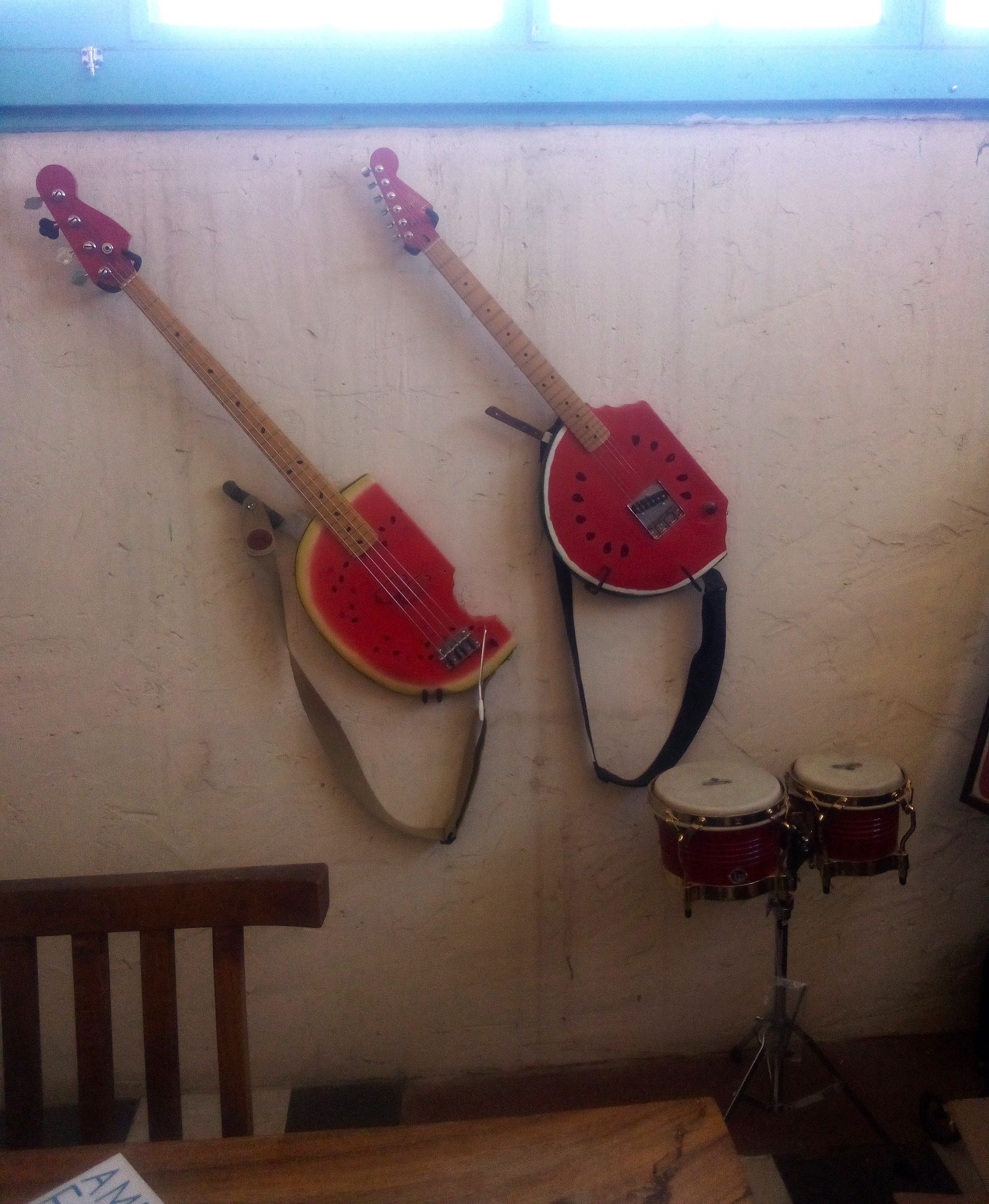
While I was there, I had the pleasure of meeting fascinating people. Some were buying my books. Some of were there to talk—about my writing, about their writing, about their travels and families, and more. A retired New Age pastor told me about the life she left behind in California and some behind-the-scenes tales of famous spiritual teachers—a bit like something out of one of my books. When people tell me stories, it helps me write stories. And surely, the spirit of Bill Bussman lent light and delight to us all.

Tag: creativity
Street Solos
She staggered and wove, her steps crossing each other as she traversed the steep sidewalk, aiming uphill toward Main Street in her irregular style. Heading downhill on my way home after teaching yoga, I tried not to stare at the poor drunk on the opposite side of Foch Street. And then, from seeming unable to walk a straight line, she transformed into a dancer. She spun, both arms extended, her balance perfect despite holding a large cloth bag. Then she staggered on, and then spun again.
Okay, I thought. This is Truth or Consequences. What the heck. You can express yourself.
I continued across Healing Waters Plaza and reached Broadway. While I paused for traffic, a man passing down Daniels along the side of the drug store stopped and posed, casting his shadow on the white wall of the building. He wore a backpack, and his pose resembled the position of the Turtle formation atop Turtleback Mountain,. He stood on one leg, his torso horizontal, his other leg flexed and lifted in an attitude derriere, his arms in front cupping the unseen mountain. Or so it looked to me, having struck that pose a few times to help people see the Turtle. He jogged a few steps and posed again, casting his shadow, repeating the move until he was past the streetlight and out of sight.
What was going on? People alone dancing in the streets. And not the sort of dances you’d do if the music in your head or through your earbuds inspired you to move with the beat. Was it an art event? A random coincidence? A pact or dare between friends? No one was watching or filming. I seemed to be the only audience. I can invent a story, for sure. Reading this, you may be inventing your own. Perhaps that’s what they wanted.
Rain Runner
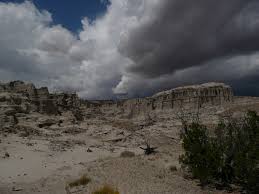
Sensation and perception reach my deepest inner places, massaging out creativity and awareness where I didn’t even know they’d been knotted up. The first day of rain delivered a short thunderstorm. It cooled the air so much I opened my door and turned the air conditioner off, bringing in the special smell of desert rain. The burst of natural light through the screen door changed the look of the room, and the silence created space in which the familiar felt new.
In the prior weeks, the temperature was over 100 day after day. My body is acclimated to exercise in high heat, and I’ve come to enjoy the intensity of it. However, the sand on the trail got so hot my toes were blistering in my five-toed, flexible barefoot shoes. A pair of new, semi-minimalist shoes let me keep running, but instead of responding to subtle differences in the terrain that normally would make me vary my stride and speed, dancing around rocks and thorns, I just kept padding along. My feet felt nothing but shoe.
On the second day of rain, soft and steady, I ran in it, letting it bathe me in its blessings. The sand had cooled and firmed, the perfect running surface. Wearing my barefoot shoes again, I could feel the textures of thick sand, of thin sand over underlying rock, of the rounded bumps of a pebbly stretch of trail—getting reflexology from the ground. My feet were happy. Sole to soul.
Rain beaded on the tips of green needles and leaves, on desert plants that seldom wear such jewelry. The greens grew brighter and deeper under the diffuse gray-sky light.
To honor the rain gods, I cleaned the trail as best I could. With the reopening of tourism comes plastic litter. The discarded containers I carried to a trash can had no texture, no responsiveness to the weather, just impermeable smoothness. The dirt that stuck to them was alive, holding moisture, darkening with wetness. It struck me that my mind after too much time indoors is like plastic, while time in nature makes it more like dirt. Stuff can grow in it.
Surprising Myself
Multiple times in the past few months, I dropped my car key while running. My new Amphipod water bottle has a smaller pocket on the hand strap than the old one did, so I couldn’t fit the key with its great big head in the pocket anymore. It was either poking half-way out or dangling from my little finger. When I shifted the bottle from one hand to the other, it was easy to drop the key. After each drop, I told myself I would pay more attention. But I don’t run to pay attention to my key. I’m either brainstorming a scene in a book, admiring nature, or doing both.
I sometimes a route that doesn’t go in laps of a circular trail but along a stretch of sand above Elephant Butte Lake and back.  I’ve never measured it, but it takes as long as five miles did on another trail. Not a great distance for marathoners, but it’s my usual. I changed the bottle from right hand to left at the turnaround point and didn’t notice my key was missing until I got back to my car. My phone and spare key were locked in the trunk.
No point in fretting or in objecting to reality. I had no choice but to run back. After a windstorm, the sand was freshly rearranged, and my tracks were easy to retrace. But the sand was soft in places where the key could have vanished. I could have dropped it into a lizard hole. Or a well-meaning person could have picked it up.
Seeing a park ranger’s truck on the dirt road above the beach, I pulled up my mask, waved, and ran to him. He loaned me his phone to call my roadside assistance club, and then I ran on, in case I could find the key.
It lay exactly where I’d turned around and switched hands on the water bottle. I ran back to my car, speeding up so I could get to my phone and cancel the lock-out service.
I did it! Success!
Almost. I was in the middle of the call when the ranger showed up, escorting the wrecker to my car.
Insights from this adventure:
- I can make the same mistake five times before I learn from it.
- I can be creative with what I have on hand: I crafted the world’s smallest fanny pack using the pocket from my old Amphipod bottle. My key will go in it.
- And I can run double my usual miles.
You never know what you’re capable of until you do it.
Outdoor Yoga and Bushy Neurons

I’m still exploring Hare Brain Tortoise Mind at a tortoise pace, and I came across this concept in it: Animals that live in highly stimulating environments grow bushier neurons in their brains. That is, the neurons develop more dendrites, make more connections with their neighbors, and become capable of new and varied patterns of interaction. They can get out of a rut.
I think of T or C as a bushy neuron kind of place. A friend who visited from Virginia tried to explain what she found so remarkable about it. She said I’d described it well in my books, and yet those descriptions hadn’t captured a certain aspect of its vibe, something she struggled name or explain. Then she finally realized what it was. “There’s no pattern.”
While she was here, she mentioned how odd it was to look down an alley and see not only a dirt alley with dumpsters, but also an explosion of murals—not graffiti, but murals. The town kept surprising her. And it can still surprise me.
She’s right; there’s no pattern, unless the two blue-and-purple houses on my block constitute a pattern. But one has a moon goddess on it and the other has a Kokopelli. On the same block are trailers and the stucco-and-stick-fence gated wall of a spa that will never be built. For some reason, someone bought the lot quite a few years back and began construction, although you can’t build anything that size in this location. It’s a nice wall, though.
Doing some volunteer work that takes me all over town, I recently discovered a section of Juniper Street I never knew existed. The street has three disconnected parts, and I’d only known about two of them. This third part is around a hidden curve. From there it suddenly drops down, becoming so steep no one could ever ride bike up it and so narrow you’d hate to meet another car on it. On one side is a great wall of wind-and-water-sculpted red dirt and on the other side, two residential streets, one with little houses, and below that, one with super-bright crayon-colored trailers. When I’ve looked down at the town from the water tower hill, I couldn’t figure out where the street with those trailers was and how one got to it. That third leg of Juniper was hidden by the wall of dirt.
In other neighborhoods, I’ve food an orange-and-blue building, stone buildings, a yellow house with Lady of Guadeloupe murals, little hidden cottages behind other houses, magical gardens, art gardens, hoarder yards, collapsing houses, yards with so much trash in them I worried how people could live that way, serene little adobe apartments with winding paths and desert gardens, and many of these coexist on the same streets. No pattern. The appeal of T or C to artists and musicians makes sense. It’s not neat, cute, or pretty, but it makes your neurons bushy.
The recent exposure to so many new off-beat places seems to have broken my habitual perceptual patterns. I discovered a perfect spot for outdoor yoga in the courtyard outside my apartment that I never noticed as such, though the small square of bricks was always there. Smooth and flat, partly shaded, it faces the autumn-yellow fig tree and a tall purple aster. Yoga feels more spiritual under the open sky with nature around me, even if it’s nature in the courtyard. And the shapes of the fig tree and the flowers reminded me what the novelty was doing for my neurons.
*****
Read more of Amber Foxx’s essays on this blog and in the collection Small Awakenings: Reflections on Mindful Living.
Road Trip
I recently took a week and a few days to go back to Virginia and North Carolina to visit friends and collect some art I’d stored in one friend’s house. I enjoyed the reconnections with people, and the brief exposure to snow and cold and to architecture that was neither adobe nor trailer. T or C, with a population of a little over 6,000—it’s been shrinking—seems tiny next to Harrisonburg, Virginia (pop. 52,000), though it’s also considered a “small town” by some people. To me, Harrisonburg felt downright urban. So many ethnic restaurants with healthy choices, so many building over two stories tall, and so many traffic lights. (T or C has one.)
I dropped in on former colleagues, and due to snow, I was grateful that retired faculty have access to the college fitness facility. Running on an indoor track takes mental endurance, and if there hadn’t been so many students playing basketball to keep me amused, I wonder if I could have managed my usual distance. I taught a couple of yoga classes at the studio where I used to work in Harrisonburg, and it was a special and meaningful opportunity.
Part two of my road trip took me to Asheville, NC, where I found myself wondering what a trip to the mountains of North Carolina would be like for Mae Martin, my series’ protagonist. (I was visiting the friend who inspired the character.) Mae grew up in that area and she has connections in Asheville. What it would feel like for her to go back, after living in New Mexico? Asheville is a lot like Santa Fe and T or C in some ways, with its artists and yoga teachers and massage therapists, but in many ways it’s entirely different. The mountains are old and green. And the smaller towns beyond the city, such as the place where Mae’s grandparents lived, are another world, culturally and spiritually as well as physically, from the funky, eccentric town where she’s made a new home. (I moved her to T or C years before I made the permanent move myself.)
And what about a road trip itself as part of a story? Travel is inherently challenging. I drove through rain in the Blue Ridge on my way in, and on my way back through wind that started to peel the rubber rain-channel seal off my windshield, wind that made it hard to open the car door when I stopped for gas, wind that made big truckers struggle to open and close the doors of the truck stop. There were two wildfires on the outskirts of Amarillo and the flames and smoke mingled weirdly with the sunset. Any events in a story that I could set in weather like that would be doubly difficult for my characters, and it’s my job as a writer to make their lives difficult.
The outcome of all this? I’m glad to be home in this peculiar town with its colorful people and murals, its hot springs, and its art and music scenes. I was glad to see my T or C yoga students, to run in the desert again with the lizards and jackrabbits and roadrunners, and to go out dancing at the T or C Brewery. The art I brought back is either consigned for sale or on my walls, and I feel even more at home now with the pieces I chose to keep all around me. More complete, focused and inspired to create, with new ideas for the work in progress. 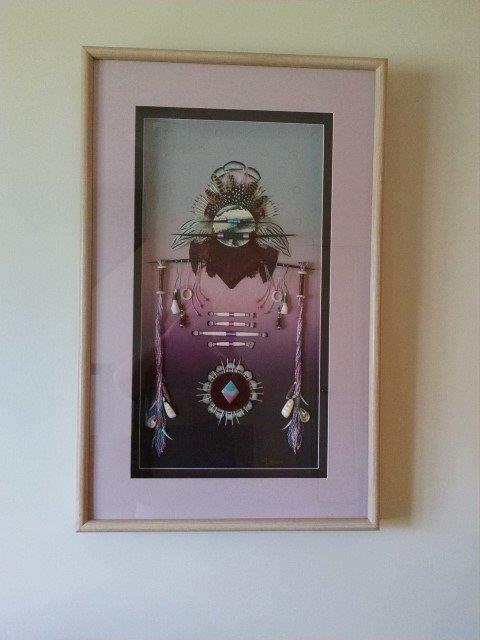
Inner Beauty
I’m a people-watcher. My fellow humans are endlessly fascinating and the fragments of their lives that I observe have the seeds of stories in them, maybe even new characters. They also give me an opportunity to practice what Buddhist teacher Jack Kornfield describes in his book The Wise Heart as seeing the inner nobility in in others.
On a recent run in a park, I noticed a romantic young couple setting up a hammock, and they asked a man who was walking his dog to take their picture in front of it. The man had a pair of hot pink headphones parked on his neck. He was around six foot three, wearing a baggy old T-shirt over a broad chest and prominent belly and khaki shorts that revealed thick, powerful calf muscles. They thanked him and he walked on with his stubby-legged little white mutt, a comical creature that looked all the smaller and stubbier for being his dog. As I finished one lap, I encountered the dog sitting patiently while the man fiddled with his MP3 player, pink headphones now attached to his head. On my next lap, he and his dog were in the middle of the green space, and he faced away from the couple in the hammock, who had vanished deep into its blue embrace. The man was singing. I realized the headphones were providing him with his accompaniment, and he was … rehearsing? Creating? He had a huge soaring tenor voice, classically trained, sweet yet strong and passionate, filling the air with a song about lost love.
You never know what’s inside another person. The pink headphones were a hint that music mattered to him, but the sound of his voice, the feeling and beauty with which he sang, expressed far more than anything on the outside. The inner depth, the inner nobility.
Monsoon, Moon and Mandala

Finally. A real monsoon.
The sky had to work up to it. After a couple of weeks with temperatures in the upper nineties and low hundreds, it took a few days of clouds and passing sprinkles to cool things off enough that rain could survive its trip to the ground without evaporating in mid-air in those beautiful but maddening long gray brushstrokes. This is a tough place to be a water droplet, but at last they came together in a grand, full-sized storm. And then the power went out. I tried not to think about how long it would be off or what would happen to the week’s groceries I had just put away. I stumbled and groped my way outside and sat under the overhanging roof to watch the rain, feel the cool (probably eighty-something) night air, and enjoy the view of T or C without lights. Occasional passing cars lit the streets, but the only steady glow was from the full moon behind the storm and one tiny cloud-hole with a star in it. My neighbors a few doors down were already sitting outside, their voices softer than the rain.
Having had little time for writing all day, I brought paper and pen out with me to do the mandala for the book in progress. I could see well enough by the clouded moonlight, and it didn’t have to be a work of art. This process was due, like the rain. I had to work up to it with eight chapters first, to see who was going to be in this book and get a sense of where the conflicts and connections would be. Able to see well enough to draw, I made a circle with the names of my protagonist and her significant other in the center and all the other characters’ names around them, connected in complex patterns that swirled around the outside and wove through the inside of the circle. It was satisfying, and will remind me of relationships and loose ends and potential allies as well as enemies. This is as close as I get to an outline, and I will refer back to it often. I got the mandala idea from Writing as a Sacred Path by Jill Jepson, which I found in Santa Fe’s magical Ark Books several years ago. Every book I’ve written has had a mandala.
I finished it and the moon emerged. The rain was over and big puddles reflected the moon back at herself from the streets and alleys. Then the power returned. My neighbors and I stood at the same time, and as if we were driven to light like moths we went inside to the electric glare, leaving the moon behind.
Picture: Luna023 by Cezar Suceveanu
Cross-Training—in the Lake and on the Laptop
During the summer, I like to mix up my usual weight-lifting routine with water exercise. The physics of water are such that you can use it for resistance training if you push against it. The technique is the opposite of lifting weights on dry land, where the more slowly you move the weight the harder you work. The faster you try to “lift” the water, the more it pushes back. Momentum doesn’t exist, and every movement is a concentric contraction, so the workout can be intense and efficient at the same time, a dual-purpose strength and cardio activity. It’s great cross-training, challenging my body to adapt to different demands and stimuli, and makes me less likely to get injured or over-train. Also, the variety enhances my awareness of what I’m doing. It keeps me out of a rut.
Today I was surprised to find the Truth of Consequences town pool closed for employee training, but I was in my suit and motivated, so I drove to Elephant Butte Lake State Park and did my workout in the lake. The change of scenery was invigorating. The water felt alive, and the people-watching opportunities were infinite.
This experience reminded me to cross-train as a writer. I do two things regularly: short essays such as blog posts and book reviews, and long, complex novels. I seldom write short fiction. It’s great cross training, though. The tight focus helps me in structuring scenes and chapters in my longer fiction. I get an especially tough writing workout when I enter short fiction contests, whether or not I win. The word limits and the required themes force me to sharpen my skills. So, I challenged myself to write a short story based on my people-watching at the lake today. Polishing it will be the next workout. I have to give it rest days between revisions. If I get it into shape worth sharing, I’ll post it here. Even if it doesn’t turn out to be publishable, though, it will have been worth the effort. There will be other results. The way my water workouts make me a better runner, my short fiction workout will make me a fitter and more flexible novelist
*****
For short fiction that I have published, go to the free downloads link.
Re-Bodying: Movement and Play
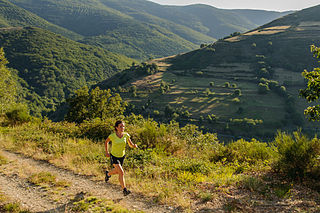 I’m reading Full Catastrophe Living again. I don’t know how many times I’ve read this wise book, but every time, it makes me more awake and aware. The chapters on mindfulness of the body inspired this blog post. The author, Jon Kabat-Zinn, reflects on how the words remind and remember can be interpreted as re-mind—come back home to your own mind, and re-member—become a member of your own consciousness, and then he suggests we may need the word “re-body.”
Children and animals know: it feels wonderful to move around. It’s not natural to hold still and sit for hours. I recently took a trip to visit friends in North Carolina and in Georgia, and the long drive left me craving movement. My friends are walkers and yogis, not runners. Walking and yoga sustained me for a while, but by the last day of the trip I was craving full flight. My Atlanta friend brought me to a trail along the Chattahoochee, and she walked while I took off in an explosion of delight, faster than I normally run. The novelty of the trail added to my energy. I had no idea what was around each curve or over each hill, and had to stay one hundred percent in the present moment to dodge roots and rocks and poison ivy and still take in the beauty of the woods and water. The speed and surprises were part of my joy, along with the sensation of my feet connecting with the earth, the springy strength in my legs.
We don’t all take joy from the same things, but whether we walk, run, dance, practice yoga, lift weights, do tai chi or go ballroom dancing, it doesn’t matter. We’re designed to move. And when we find the movement that matches our spirit, it’s like coming home every time we do it. I like to think that people who say they hate “exercise” haven’t discovered the kind of movement that will make them happy. They’ve been made to do activities incompatible with their nature. However, somewhere in every human is that child who had to be told to hold still. That child loved to jump, skip, run, and climb. It was play. For me, that new trail was play, the game of finding the next footfall on an unpredictable landscape. Yoga is play in the field one’s self, exploring the organization and sensation of each asana, the interaction of the posture and the breath. After decades of practice, I still find even the most basic poses fascinating.
For some people, the word exercise takes the play out of movement. Years ago, I read a study on why women exercise and why they quit. Reasons for starting: weight loss and looking better. Reasons for sustaining exercise: the discovery that it reduces stress. Reasons for skipping exercise or quitting: time pressures and stress. In other words, movement reduces stress, but when women are stressed (and I would guess this is true for men, too) they tend to forego it, as if it were a luxury. It can feel like one, in either the negative sense of an extra that can be cut from the time budget or in the positive sense of deep pleasure. It can be a luxuriant sensation to move, to be fully embodied, present and in motion.
When I’m writing and the story gets stuck, I find that if I stand up and walk around, ideas come to me. It’s as if the stuckness of sitting starts to affect my brain, and the energy of movement clears it. Movement is as essential to mental and emotional health as physical health, but “it’s good for me” is the last thing on my mind when I’m enjoying a run or a yoga practice or just getting up from my desk and re-bodying for a few minutes. I’m playing, following my movement bliss. What’s yours?
*****
Image by Robin McConnell originally posted on Flickr
 Amber Foxx Mysteries