Turn it off. Turn it all off.

One of my yoga teachers in New Mexico often mentions the importance of quieting the nervous system. He doesn’t use music in his classes. I teach in places where music is expected, so I use unobtrusive, meditative music, but it’s still background sound, another level of stimulus.

Readers of this blog may have noticed I like to contemplate the effects of power outages. Today there was a brief one at the fitness center at my college. Normally, there are a few fluorescent lights in the group exercise studio that never go off, though I turn off the ones I can. These perma-lights were finally gone. So was the steady blowing of the air conditioning. Its presence has been ceaseless, so I never knew how harsh and persistent it was until it stopped. With plenty of natural light through the windows of a room that had been chilled a little too cool for yoga, the outage was wonderful. The quality of my voice softened. The clarity of my thoughts sharpened. My teaching became more precise, more aware, and I felt a matching shift in the students’ energy. When I stopped talking, there was nothing to be heard at all. Except, perhaps, each student heard his or her own breath.

Overstimulation has a subtle yet pervasive effect. Sometimes I wonder if it’s addictive. There are people who say they have to sleep with a TV on or have one running at all times when they’re home—“for the noise.” That would drive me crazy. I write in as much silence as possible and do my personal yoga practice in silence, too, either outdoors with only the sounds of birds and insects and occasional neighbors’ voices, or indoors in a quiet room. I’ve praised perfect silence in nature before, but today was the first time I’ve experienced the benefits of deep silence in my teaching.

Yoga doesn’t require stimuli that keep our minds bouncing and nerves buzzing. Yes, we can learn to do it in the midst of a barrage of sounds, but when we can choose to be free of them, it’s even better. The yoga sutras begin with a definition of yoga that can be translated as “Yoga is the stilling of the fluctuations of the mind.”


Music, Beauty, Wisdom, Bugs

Cricket_Drawing

On my last night in New Mexico for the summer, I listened to crickets as I left a Bandstand concert in Santa Fe. All of them kept the exact same beat throughout my fifteen minute walk to where I had parked my car, not single cricket out of sync with the rest. The bug music of the South is different. In Virginia at this time of year, cicadas ratchet away all day, and at night a polyphonic, polyrhythmic chorus begins. I meditate by going out on my deck, closing my eyes and deciding not to miss a note. It’s amazing how they produce this symphony by rubbing legs, or vibrating wings, or with specialized parts of their exoskeletons. Their bodies are musical instruments. (Did you know that Kokopelli, the flute player, was a bug? He’s identified with the musical cicadas but also with the stinging Robber Assassin Fly.)

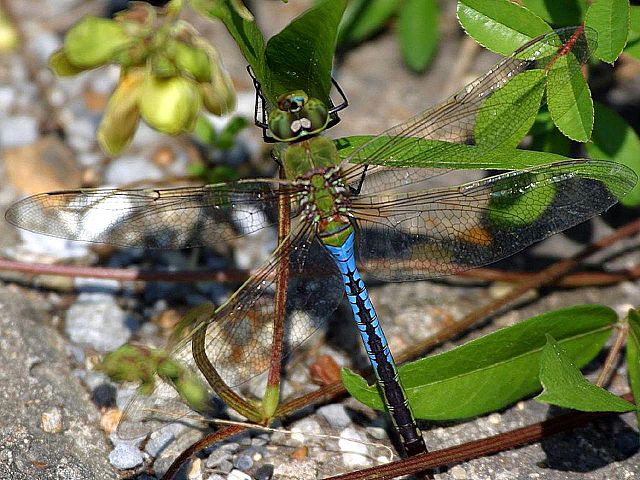
The crickets here who are making all the noise are tiny, like miniaturized versions. The dragonflies are delicate creatures, too, needle thin, brilliant green, orange-red, and sky blue, sometimes flying united, two fragile bodies connected in a mating dance. When I was in Maine, on a run through the green hilly countryside, I came across a farm with a clay pit where enormous colorful dragonflies hovered over the standing water, ten times larger than their southwestern Virginia cousins, like trucks compared to motorcycles. Flame_skimmer_insect_dragonflyBlue Dragonfliy

I’m not sure why insects are so large in less hospitable climates. New Mexico bugs will surprise people who think nothing can live in the desert. Think again. There are beetles and cockroaches out there that could carry a couple of fifty-cent pieces on their backs and not break a sweat (figuratively speaking).

If you’ve read The Outlaw Women, the short story prequel to the Mae Martin series, you know that Mae is not least bit squeamish about crawly critters. When it comes to this topic, more readers may identify with her friend Jamie, who enters the series in Shaman’s Blues. He’s appalled by spiders in particular and by things with too many legs in general. Personally, I like the many-leggeds, but with a few exceptions: roaches, flies, mosquitoes, biting ants and skunk beetles. I think I’ve mentioned before that bees and wasps sometimes walk on me when I do yoga outdoors, their delicate almost weightless feet on my skin. On close inspection, they’re quite beautiful. Some of them have bright yellow legs, a classy touch like the hubcaps that match the paint job on 1950s cars.

At a yoga and meditation retreat a number of years ago, Goswami Kriyananda came in a minute or two late to give his talk. He had stopped to help a fly that was trapped between a window and the screen. He opened the window, and then the screen, and closed the glass so the fly could go outdoors. He said it kept walking around and around on the screen in the same pattern it had before he offered it its freedom. With his warm and gentle humor, he said it reminded him of humans.

Falling Awake: Review of Full Catastrophe Living

The net impact of this book, no matter how many encounters I have with it, is awakening. I’m not claiming it makes me “enlightened,” only that it accomplishes its purpose of teaching—or reminding—the reader how to be more fully alive and aware, moment by moment.

Kabat-Zinn is a gentle teacher, a master of the non-judgmental suggestion and the empathic anecdote. His writing style is accessible to his entire target audience—everyone who experiences stress. It’s a friendly, natural style, with some idiosyncrasies. He’s fond of exclamation points and often says things like “our body” and “our mind,” addressing his readers as a group and as individuals at the same time, while including himself in that group. Grammatically, this plural-singular is strange, but that’s his voice, his way of bringing readers into a conversation with him. Though the book is long, it’s low-stress. The themes are expanded gradually, each chapter building on the next, with steady reminders about the practices he’s teaching. I recommend reading it slowly, a little at a time, and letting it soak in. This turns the process of reading into a kind of meditation.

This was my first exploration of the revised edition. It grew by around 200 pages from the original. The updates were needed for two reasons. One is that the author and many other scholars in health psychology and the study of emotions and stress have accumulated decades of well-designed research on the effects of mindfulness. Mindfulness-Based Stress Reduction is no longer an innovation at one Massachusetts hospital but an established, thoroughly studied program taught all over the world. The results of studies are integrated into the rest of the text. At first I wondered why he didn’t make those a separate chapter, a massive appendix, but a lot of readers might skip or skim this information if it was presented that way. When it flows as part of the story of coping with various stressors, it gets read, and adds substance and science where it’s needed. The other reason the book needed an update was the change in the nature of stress and distraction since its first publication. When it first came out, there was no such thing as texting while driving or feeling the need to sleep with a cell phone turned on and lurking under one’s pillow, no such thing as constantly sharing on social media. The stress-creating tendency he described in the first edition—to be in touch with everything except ourselves—has only grown over the past thirty years.

The chapters on coping with physical pain and emotional pain are especially profound. At one point in my progress through this book, I ended up reading it in the emergency room in the middle of the night. It helped me cope mindfully with a bizarre, ambiguous symptom and the decision to get it checked out, to sit with the not-knowing while I waited to be seen, to accept that I might have something serious that could require eye surgery, and to accept that if I didn’t need it, this was how I’d chosen to respond. I was even able to get a couple of hours’ sleep before seeing a specialist in the morning. (In case you wonder, no surgery was needed. I can now cope mindfully with a mere risk factor—and my insurance company.)

This recent experience with sleep deprivation made me relate strongly to the chapter on sleep stress. This chapter doesn’t seem to have been updated with research the way the others have. I agree with Kabat-Zinn that getting upset about being unable to sleep only compounds the problem. Making peace with the necessity of being awake reduces the suffering. It does not, however, reduce the need for sleep. Adapting to the stress of being tired is not the same thing as being able to maintain normal reflexes, attention or memory. I’ve found shortcomings with this chapter, but that doesn’t invalidate the whole book. In fact, the chapter stands out because the rest of it is so soundly supported.

I have one more critique: The material on the benefits of yoga is valuable but the drawings don’t provide good instruction. The little man in the pictures uses his back incorrectly in several forward bending poses, and uses no props. Using a strap to reach one’s foot in many poses makes a big difference in both benefit and safety. The selection of poses isn’t as balanced as it could be and there is one that I think should have been eliminated, a curled-up inversion that could stress the back and neck. Kabat-Zinn does mention approaching it with caution, but there are safer ways to relax and put your feet up in yoga, such as lying on the floor and putting your legs up the wall. My suggestion would be to read the chapter but to study yoga with a qualified teacher who pays attention to each student and who understands anatomy and injury prevention. Don’t use the pictures as instruction.

There’s an option with this book to buy CDs or download guided meditations. I’ve never done that, having studied yoga and meditation with live teachers and developed a daily practice, but as one of my yoga students was saying after class the other evening, it reduces her stress to have someone else guide her. There are beautifully written instructions for meditation in this book, and some wonderful short experiments a reader can do to begin exploring the practice. I think other readers could do as I’ve done and not buy the CDs. It should work well either way. With or without guidance, it’s challenging to commit to daily practice at first. The book suggests forty minutes. (I prefer not timing it, just doing it.) Daily practice is one of the foundations of the stress reduction program in this book, whether one does the body scan (similar to Yoga Nidra), sitting meditation, walking mediation, or yoga, or alternates among these. Daily, one commits to taking time to be present in oneself. It is, as the author once said, both the simplest and the hardest thing you’ll ever do. And it can, through awakening, change your life.


Open Space

Waiting for an idea, I watch the pages of my wall calendar being stirred by the fan. The current date is empty, a blank white square. The future is full of obligations and anticipations—busy little squares. But none of that is now. Now I sit in the open space of the present, aware of the sensation of sitting and breathing, of the sound of the fan, the breath-like movement of the pages, free to fully inhabit the whole of the moment while gazing at the illusion of time.

Daily Practice

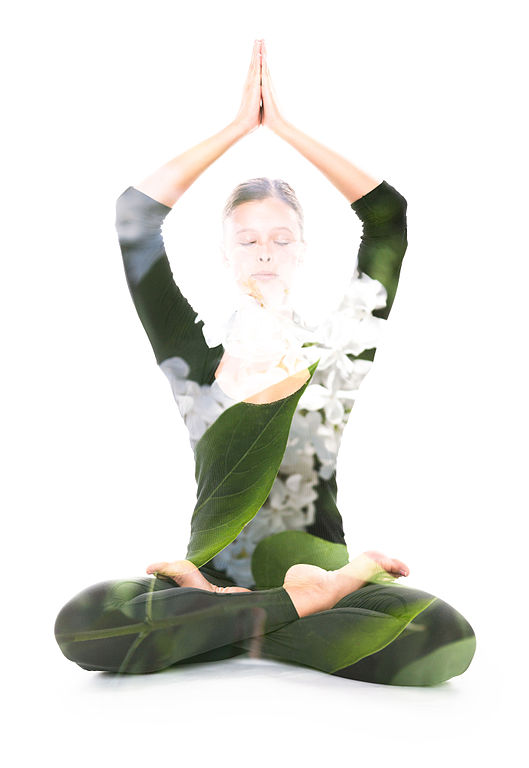
Yoga,_double_exposure_by_Victor_Tondee_

I had a pleasant and unexpected visit from a student who took my freshman seminar last fall. Its topic was mindfulness and critical thinking. I like to imagine it had a lasting effect, but it’s general education, not a course in my department, so I may not see the students again unless they get into my perpetually wait-listed yoga class as juniors or seniors. This young man stopped by to tell me that he was finishing the books, Work as a Spiritual Practice and The Wise Heart. Like many, he got about two thirds of the way through them during the course. Reading them more slowly and thoughtfully on his own, he’s getting more out of them. He wanted me to know that the class had an impact, and that his way of thinking about and looking at everything was changing. He’s paying attention to what he eats and questioning his choices, not being mindless. This sounds small, but in the big picture of a life, it’s not. How we relate to the world and ourselves through our food can be meaningful as well as have an effect on our health.

That which we teach ourselves, we truly learn. The class gave him the opportunity, but now he’s independently applying and internalizing the skills of meditation and awareness. He asked me for suggestions and the main thing I could say was practice. Daily practice. I’m not a guru or spiritual teacher; I’m just someone who has committed to daily practice. With that, everything changes. He asked about opening the third eye, and I said that it can happen, but it’s not a goal, and in the Buddhist traditions, it’s seen as more of a side-effect than something to get too wrapped up in. Yes, psi occurrences—the siddhis, as they are called in yoga—can result for meditators, but if they are set as goals they can be distractions from present-moment mindfulness. For some people, they never happen. For others they arise for a while and then quietly cease. As I mentioned in my review of One Mind, such events are evidence of interconnectedness and a deeper level of reality, but mindfulness doesn’t strive for special effects in consciousness. There’s nothing to seek, only practice.

*****

Image: originally posted to Flickr by Victor Tonde at http://flickr.com/photos/115887883@N05/16943456596

The Epidemiology of Peace

Meditate_Tapasya_Dhyana

In 1993, a group of approximately 4,000 people practiced meditation in a focused and consistent way for a measured time period as part of an experiment in reducing crime in Washington DC through creating a more peaceful collective consciousness. The crime rate was significantly reduced. This was a successful, well-designed scientific experiment, and from the 1970s through the 1990s several others were done with similar results. This type of intervention hasn’t become a mainstay of public policy, though a study done in Merseyside, England found that it saved the local government money. Do we need more meditators? More people in in government who pay attention to these ideas?

Though I write fiction that involves psychic phenomena, it’s not the only reason I find the science behind it important. I’m reading Dr. Larry Dossey’s book One Mind, and I’ve been thinking about the effects our multiple minds have on the One Mind we all share—the interaction of our individual psychology with transpersonal psychology. It can be positive, like the meditation experiments. It can be negative, like the rising level of what I’ll call recreational anger in the United States. I get the impression there is an audience for anger—angry radio, angry TV, angry politics—and that the audience is getting pleasure out of this state of hostile arousal. I’m not one to enjoy outrage for the fun of it, so I can’t claim any insider insights into it. As an observer, I wonder, does it create a wave of disturbance leading to additional anger? Do negativity and meanness have a kind of viral quality that can spread through the shared psychic space of a culture? Is there any connection between our level of anger-for-fun and anger that kills? I don’t know the answers.

Still, I’d suggest that each individual contribute his or her drop of peace to the ocean of the collective consciousness through actions, thoughts and words as well as meditation. It’s an experiment worth trying. Imagine what would happen if we all practiced self-forgiveness and self-study. If we humans all sought moments of stillness and awareness of beauty. Paused to reflect before speaking and acting. Made a daily practice of seeing what Buddhist teacher Jack Kornfield calls the “inner nobility” of others, whether they are family members, friends, opponents, or strangers. Perhaps we can change the world-mind, one careful, loving person at time. Our peace-minds would be the psycho-spiritual equivalent of the sterile male mosquitoes that scientists release into disease-ridden areas. No one gets killed. The problem stops reproducing. To continue my epidemiological analogy, when the effort is dropped, the mosquitoes find fertile partners again and the diseases they spread come back. We can’t take peace and wisdom for granted. Meditation is a called a practice for a reason.

Do you notice changes in your life if you keep up the practice?

Leaves in Mud, Leaves in Sky

trees

Standing on a riverbank, I found myself absorbed in watching the motion of a low-growing tree branch that had been snagged by the current. Dead leaves in water, moving yet going nowhere drifting back and forth in the mud. The swaying was hypnotic. I broke the trance and looked up at the rest of the tree, vital and full of color in a bright blue sky. There was so much more.

It made me think of how much may lie beyond our ordinary perception, how much of reality we may miss. Not only the beauties we fail to notice, or the colors that bees can see and the sounds that dogs can hear, but the worlds that dreams walk through, the shamanic realms.

The Back Yard Buddha

My landlord put a Buddha on the back deck of the house I’m renting. This statue is about two feet tall at most, a slender Indian Buddha, not the jolly fat Chinese kind, and he has a seam on his right shoulder that shows where he was broken out of a mold. He’s a mass-produced Buddha.

A few weeks ago, I was sitting for meditation after my yoga practice and noticed that his hands were in dhyana mudra, which I was about to use to center my mind. (Imagine the classic thumb-to-first-finger jnana mudra joined by sliding the hands together so the tips of the thumbs and the nails of the first fingers touch.) Dhyana means concentration, the most difficult stage in yoga for many people, myself included.

His eyes are closed and he has an infinitely subtle Buddha smile, an expression that somehow conveys deep and effortless focus, immersion in what Buddhists call “lovingkindness.” As I sat with my eyes open, held the mudra and gazed at him, I felt the peace and stillness of that smile. I’ve never used any kind of spiritual or religious imagery for meditation, so I found this effect intriguing. I’m an extravert by nature, and I wondered if this mirror of true inwardness was what I needed, or if I was just borrowing serenity.

Over time I’ve started to feel my mind fall into quietude from a mere glance at the Buddha, whether he’s glowing in the moonlight or showering in a thunderstorm. I like to think that the artist who made the original put something special in that face, and understood that mudra. It makes me glad this Buddha is mass-produced. Somewhere, someone else is smiling back at him. Hundreds of people, hundreds of smiles, petals of peace in a single flower.