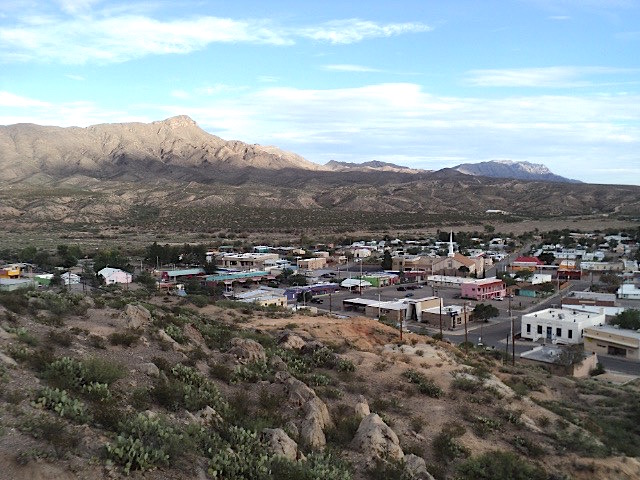
Strange Things Happen

I dreamed I was leaving Hatch (the town where the chiles come from) and took a wrong turn onto a winding road with psychedelic pavement and narrow walls alongside it, also in bright pink, purple, blue, and yellow. The road took me to a farm at the end of a dirt road, where I met men who were raising pigs. I petted a piglet, got directions, and left by yet another route, not my usual way in and out of Hatch, but not the trippy pink one either.

While I drank coffee, I tried to interpret the dream symbols, but they made no sense. A friend called and asked if I’d like to go to Sparky’s in Hatch. A favorite blues band was playing. I agreed, and then proceeded to toss my purse into the trunk of my car with my keys in it and closed it. I hadn’t unlocked the car yet, so my phone and both sets of keys were in the trunk. Normally I would have a key in my pocket, but for some reason, I put the key in my purse. I walked to a neighbor’s blue and purple house and called Better World Club and got unlocked. Hm. Wrong turn on the way to Hatch instead of on the way out?

I picked up my friend at the foot of his driveway—more of a road, really—in the very small town of Arrey, and when we arrived at Sparky’s, Guitar Slim was playing a psychedelic pink and yellow electric guitar. As many times as I’ve enjoyed his music, I’d never seen that instrument before. While the band took a break, I looked in the display case behind me—Sparky’s has a mindboggling collection of off-beat antiques—and there was a collection of pig figurines. Two women in motorcycle gear arrived, one wearing a red elf hat and the other a leopard print elf hat. They also wore jingle bells along with their black leggings, turtlenecks, leather vests, and boots. Leopard Elf had the words “Pig savers” on the back of her vest. (I looked it up later. These are rubber nipples for bottle-feeding piglets. I guess she’s a pig farmer?)

The dancing was great—couples, kids, solo dancers, and trios. People from the audience were invited to sing, including Leopard Elf. Afterward, my friend offered me tomatoes, so instead of dropping him at the end of his “driveway,” I went all the way down the dirt road to a sort of farm—he grows tomatoes, mostly, and has a few chickens—and we picked the last viable tomatoes of his outdoor crop before the frost that’s expected tonight.

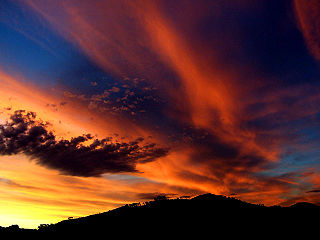
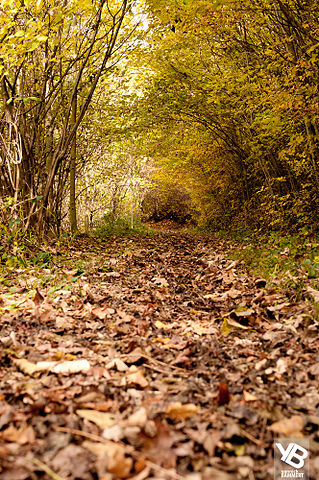
On my way home, I missed the turn to get on I-25 for T or C and ended up on the back road, winding and in places narrow, as the sky turned pink and purple and deep blue.

You could say this was all coincidence, a series of normal events. But I’d just been dancing in T or C to a different blues band the previous night, and had encountered this same friend in the crowd. The least likely thing was that he’d want to go dancing again right away on Sunday afternoon. I see him in town so much I haven’t been down the dirt road to his place in over a year. The way the night’s dream lined up with the day’s events, though in scrambled fragments, is intriguing. Hatch, wrong turns, a farm, a dirt road, a narrow winding road, psychedelic colors, and small pigs. The biker elves weren’t in the dream, but a lot of other things were. When I have precognitive dreams, they’re almost always about bizarre trivia like this. Only on rare occasions do I pick up significant events, warnings, or omens. This was just a reminder that time leaks, that past, present, and future are all happening at once, and reality is not the version that our linear perception of it creates.


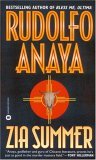
A New Mexico Mystery Review: Zia Summer by Rudolfo Anaya

A mystery with many layers, the first of Anaya’s Sonny Baca novels is crime fiction and also literary fiction with mythical depths. At one level, it’s the story of a young private detective’s search for his cousin’s killer; at the other level, it’s the story of his spiritual development and reconnection with his traditional culture and his ancestors. The story also reflects on the ecological and ethical challenges facing New Mexico as some seek to develop it and others to preserve and protect it. The sacredness of earth, sun and water, and their spiritual place in human hearts, is as important as the question of who committed the crime, and even inseparable from it.

Sonny Baca, great grandson of the famous Elefgo Baca, is—like his bisabuelo—a flawed hero. Sonny is still maturing as a man and in his profession, learning from his mistakes, but at the same time he’s smart, perceptive, and courageous, and he thinks a lot about both the world around him and the struggles within him. For a reader used to the pace of most crime fiction, this occasional descent into deep wells of thought may feel digressive, but Sonny’s insights are part of the story. Most of the time, the pace is intense and the story flies along.

One way Anaya sustains the flow is that he never translates or explains the Spanish words and phrases his characters sprinkle throughout their conversation. This not only kept the pace and the authenticity, but taught me. I began to understand them as I read. (If you’re not a Spanish speaker, notice how you figured out bisabuelo already.)

Though they have full personalities, there’s an archetypal quality to the characters. Sonny’s neighbor don Eliseo is the Wise Old Man, human and believable, not idealized. His spirituality is both transcendent and earth-bound. Rita, Sonny’s girlfriend, comes close to seeming too perfect, a strong, loving, nurturing goddess, but she’s written as seen by a man in love with her. The villains of the story are the inversions of these benevolent archetypes, making them some of the most disturbing criminals I’ve come across in a mystery.

The writing is engaging, as one would expect from a literary master like Anaya. The first chapter, however, is the weakest, heavy with backstory. Don’t let the slow start deter you. After that, the story comes alive. While the crime is horrific, the fullness of Sonny’s life and circle of friends balance this element with humor, love, and mystical wisdom.

*****

New Mexico Magazine recently profiled Anaya in a wonderful and thorough article, linked here.


Five More Things I Love About Truth or Consequences

Music. The quality and variety here is incredible, all within walking distance of my apartment. I’ve danced to blues and rockabilly at the T or C Brewery; listened to the Southwest Chamber Winds at Grapes Gallery, admiring the art during the concert; attended open mic night at Seba Gallery for original acoustic music by local singer-songwriters—again mingling music and art; was immersed in healing music in a church; and was surrounded by the vibrations of healing music again in an amazing sound-space designed especially for such events. This last concert, Matt Venuti’s, was like nothing I’d ever heard before. He plays a tuned drum, an instrument that is both melodic and percussive. I may have to incorporate that instrument into my books. Jamie would love it.

Full circle sunsets. Even with no clouds, there can be as much or more pink in the east over the Turtle as in the west. In the summer when there are storm clouds, the bowl of color effect is breathtaking and constantly changing. Orange, blue gray, rose pink, salmon pink, yellow-gold—all encircling the town.

Freedom to be yourself. Two of my neighbors happened to paint their houses blue and purple at the same time without consulting each other. (One house was previously pink paisley, the other solid lavender.) One of the purple-and-blue houses has a statue of an alien in saint’s robes on the porch. Self-expression in outdoor art is everywhere, and in the way people dress. I was at a meeting with my fellow yoga teachers, sitting outdoors at one of the downtown establishments, and I kept seeing various colorful folks pass by, such as a stout Santa-Claus-like man in red suspenders riding his bicycle with his dog on a long red leash trotting down the middle of Broadway. One of the other teachers, who was facing in toward the windows rather than out toward the street, would see that look cross my face and ask, “T or C?” And that would sum it up. Yep. T or C.

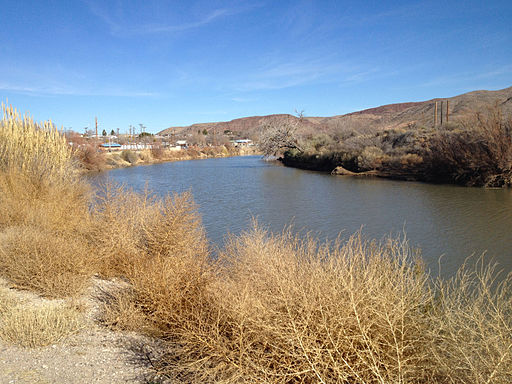
My outdoor “gym.” I take exercise tubing down to the Rotary Park on the Rio Grande and attach it to a pole of a picnic shelter for resistance training, and use the benches for various bodyweight exercises, while enjoying a view of the river, Turtleback Mountain, and wildlife ranging from ducks and herons to huge orange dragonflies. In keeping with T or C’s freedom to be oneself, no one has ever looked at my funny for doing this.

Too much to do. Especially at this time of year. The weather is perfect for running and hiking, and of course the end of October and early November are festive, too. First there was the costumed dance party at Grapes Gallery, a fundraiser for Friends of the Pool, with live blues music and the creative people of T or C dressing up and competing for the best costume award. (Artists do great Halloween outfits. My Gumby costume was pretty plain compared to the winners.) Then there was Day of the Dead in Mesilla, with all the beautiful shrines to loved ones on display in the old plaza under a classic New Mexico blue sky while musicians played from the bandstand. ( I know, this was not in T or C, but only an hour away.) On Halloween, the children’s costumed safe walk took place on Broadway, and I had to go around and admire everyone. The street was closed, business owners and employees were in costume on the sidewalks handing out treats, and families in Halloween finery were trick or treating. People here love to dress up. A man dressed as a baby doll stood in the doorway of his shop sucking on a lollipop. I even met a tiny dog in a Harley jacket and little black doggy jeans. Later, I went to a showing of Nosferatu, the black-and-white silent vampire movie, at Rio Bravo Fine Art. Three classically-trained musicians improvised an amazing, intense and spooky score live. (Surrounded by great art, once again.) Some of the audience members were masked or painted. One was, of course, entirely black and white. I stopped by another dance and costume event on my way home, but I didn’t stay. A writer has to go home and write. But last night, there was more good music to go out and dance to. I call it research. My protagonist likes to dance, too, after all.

New Release: Death Omen

Death Omen

The sixth Mae Martin Psychic Mystery

Trouble at a psychic healing seminar proves knowing real from fraud can mean the difference between life and death.

At an energy healing workshop in Santa Fe, Mae Martin encounters Sierra, a woman who claims she can see past lives—and warns Mae’s boyfriend he could die if he doesn’t face his karma and join her self-healing circle. Concerned for the man she loves, Mae digs into the mystery behind Sierra’s strange beliefs. Will she uncover proof of a miracle worker, or of a trickster who destroys her followers’ lives?

The Mae Martin Series

No murder, just mystery. Every life hides a secret, and love is the deepest mystery of all.

*****

To welcome new readers to the Mae Martin series, the first book, The Calling, is free through the end of November, and so is the series prequel, The Outlaw Women.  My horror short story Bearing, based on Apache myths,  is also free this month.


Messages in Bottles—With or Without Bottles

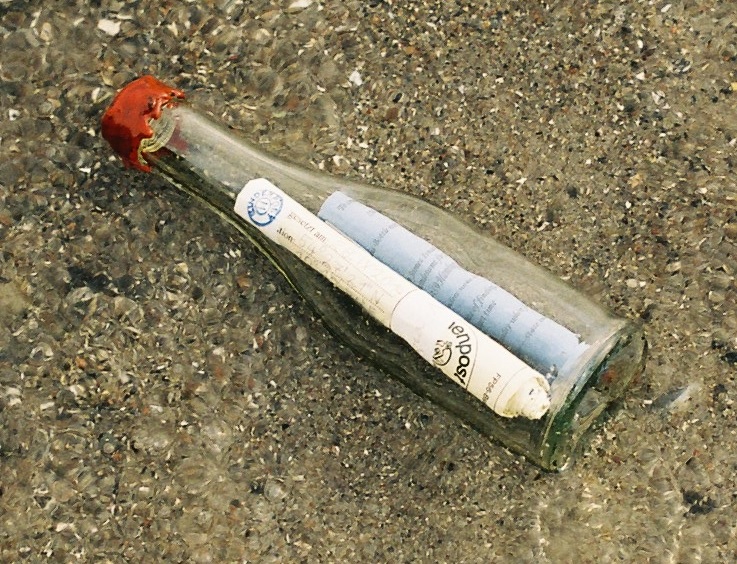
I have a slightly foggy memory from my childhood of standing on a beach in Maine with my father, setting afloat a message in a bottle. We had no expectation of knowing if anyone read it. The open-ended feeling of the outreach was part of the wonder of doing it. I could imagine the bottle landing in Ireland, where my father’s ancestors came from, though it may have ended up in Portugal, or Newfoundland, or the bottom of the ocean.

Lately, I’ve been finding the landlocked version of these cast-adrift messages, most of them with an expectation of being tracked. I’ve gotten several “where’s George” stamped dollar bills with the motto “Hot Springs, Cool Town,” originating in Truth or Consequences. The person who stamps the bill is curious to know of its travels, and probably hopes it will circulate all over the country eventually. Also, I’ve found a number of painted rocks with messages on them, something I never saw before moving to T or C. Some of the rocks have web addresses to visit. I found a beautiful one painted gold with a yellow, liquid-looking sun in the center, and a Facebook address that had something to do with a place in Arizona. Rather than go online, I relocated it to one of the fountain-bubbling rocks in Healing Waters Plaza and the next time I passed through, it was gone. Perhaps the Arizona rock-painter heard from that finder.

The two most recent rocks I found were lovely, one painted white with a purple butterfly and the other red and yellow with the Zia sun symbol seen on the New Mexico state flag. On the back, they said “T or C rocks. Keep me or re-hide me.”

I loved that. There was no expectation of feedback. These little works of art were gifts left on the wall bordering the parking lot of the Charles Motel and Spa, near its fruit-heavy pomegranate bush. I carried them on my walk, happier than when I’d found rocks that asked me go online and log the find. I was inclined to keep them to add to the rock garden in front of my apartment, but then I saw some green succulents with red and yellow flowers growing around a bench in front of the old post office on Main Street, and there was a dent in the foliage, a nest exactly the right size for Zia rock. I placed it there. Public art. Across the street, the elaborate multi-colored ceramic sculpture next to the Geronimo Springs Museum has some deep purple areas in its walls. I found a spot for the butterfly rock and walked home lighter.

Out-of-nowhere random gifts provide as much joy for the giver as the receiver. I know a man who loves to bake, and at any public event, he shows up with bags of fresh, home-made cookies to give away. Back when a local coffee shop had a give-and-take bookshelf, I used to slip signed copies of my new releases onto the shelf. I liked the mystery of not knowing who took them home and read them.

In a way, writing a blog is a message in a bottle or a painted rock left in a plaza. There’s no obligation for the reader to respond. However, if any of you have stories about random gifts or messages in bottles, I’d love to hear them.

*****

 BARKING SANDS, Hawaii (Sept. 15, 2011) Electrician’s Mate 2nd Class Jon Moore removes a message from a bottle sent from Kagoshima, Japan more than five years ago. More than 40 Sailors and volunteers teamed up with 16 students and faculty of Ke Kula Ni`ihau O Kekaha School to collect trash along the shore at the Pacific Missile Range Facility. The beach cleanup effort was in observance of International Coastal Cleanup Day sponsored by the Ocean Conservancy. (U.S. Navy photo by Mass Communication Specialist 1st Class Jay C. Pugh/Released) This Image was released by the United States Navy with the ID 110915-N-YU572-080  (Wikimedia Commons)


One Step

The sun was so intense when I was out walking today, I had to lower the brim of my hat to keep from burning my face or being blinded as I turned to leave the park by the river. I couldn’t see the mountains, the river, the sky, or the two lone trees turning yellow in a world of evergreens, rocks and cacti. Just the ground at my feet. The gravel path. Then dirt with tire tracks. Then a patch of dust and weeds with a narrow path between the goatheads. Once I reached the street, I was no longer facing the sun, but my awareness had shifted.

Those steps with nothing but the view of the next step became walking meditation. I noticed the textures of each pebble, the curves of the tire tracks, and the green ground-hugging leaves and tiny yellow blossoms of the goatheads. Instead of seeing them as the foot-stabbing burrs they will become, I saw them as flowers. Walking slowly, listening, I only tilted my hat up to check for cars or snakes once in a while, then ducked back into my world of shade and single steps. Gravel-crunch. Wind-whisper. One step. Another step. The sensation of my legs moving, my feet contacting the ground. I should do this more often, even when the sun doesn’t force me into it. I used to teach walking meditation to my college students, and those were blissful classes.

Of course, I have no illusion that the rest of my job was bliss. It was work. The three-column to-do list on my desk ran into a second page most of the time. Things to do for work, to do as a writer, and to do for retirement planning. A few days ago, I went back to that system. Things to do for writing, for marketing, and my everyday life. The list is only one page, and two of the columns don’t even reach the bottom. Every day I cross one thing off, maybe two. Life isn’t about what I cross off, though. It’s a living moment. A single step.


Crystals


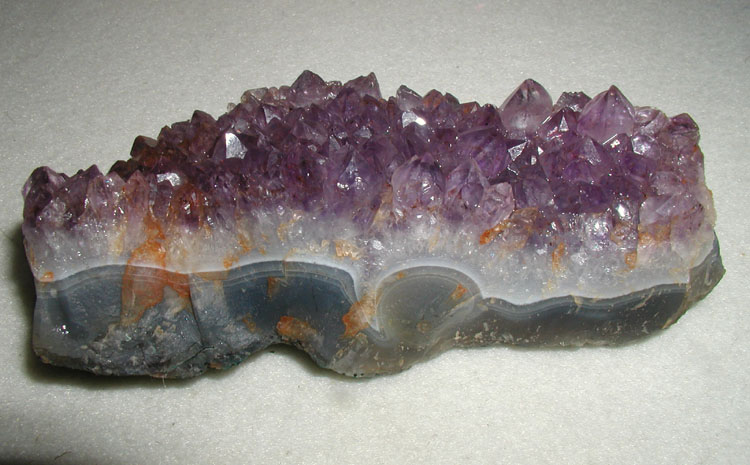
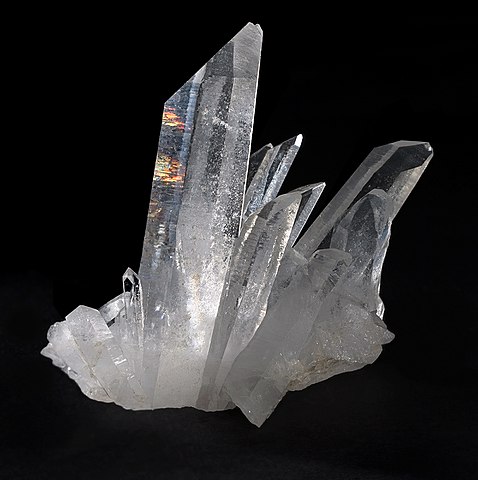
Once in a while, I like to recycle an older post that new subscribers may not have seen. This post from the winter of 2015 is a short summary of what I’ve discovered so far, from both reading and experience,  as a novelist incorporating the use of crystals in my books.

*****

When I researched energy healing, I easily found twenty-six articles in the archives of just one peer-reviewed medical journal. In another, I found a meta-analysis of healing studies, including those done with subjects other than “whole humans”—healing done on animals, plants, and cell cultures, which are presumed not to experience placebo effects. A number of years ago, I read a study on Qi Gong done in China with pigs as the targets of healing by emitted chi. I can’t remember what their malady was, but I recall that they improved at a statistically significant level. Healers have measurably affected fungi, seeds, plants and mice. When researching the use of crystals in healing, I looked for a similar level of scientific investigation and couldn’t find it. However, I found anthropological literature on the subject as well as modern books on crystals. My reading gave me the impression that the primary use of crystals historically has been for strengthening psychic ability rather than for healing.

 In North and South America and in Australia, shamans have used quartz crystals to enhance their ability to see into spirit worlds and other places and times, as well as into a sick person’s body. For example, Navajo crystal gazers use quartz crystals perceive the nature of an illness. One crystal gazer I read about also used his visions to find lost sheep and lost children. In Australian Aboriginal traditions, quartz crystals were used to make ritual cuts as part of a shaman’s initiation and sometimes embedded into a finger or under the skin. The crystals also become spirit forms or energy centers in the shaman’s head or belly.
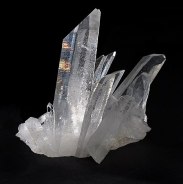
Quartz—sometimes called a “wild stone” or a “live stone” by indigenous people—has the most uses in shamanism, but other stones have been seen as powerful. In ancient Taoist alchemy, jade was considered to enable one to fly up to heaven, which sounds like a shamanic journey. In European folk magic, any clear surface like a mirror or water as well as a crystal could be used for scrying. The Druids are said to have used beryl crystals when seeking visions.

The present-day practice of crystal healing has grown up from a mixture of influences from the East and the West. In the American colonies, European folk healers met Native healers, and their practices began to cross cultures. This blend is the root from which my character Rhoda-Sue Outlaw Jackson’s idiosyncratic folk healing springs. With the introduction of yoga in the West, color symbolism from India relating to the chakra system was integrated with the shamanic use of crystals. In The Calling, when Mae starts working with crystals, a book on this contemporary East-West approach is her primary resource. She uses crystals in both the traditional shamanic way as a seer and in the modern way as a healer.

Practitioners of crystal healing ascribe specific influences to certain stones, referring to effects of their harmonious structures and their unique vibrations or frequencies. Crystals grow; they have a kind of vitality or life force, and yet they are also stable. An interaction is assumed to take place between the vibration of the person being healed and that of the crystal. Skeptics assume that any results are due to the placebo effect, or that hypnosis is somehow involved in healing with crystals. This latter guess makes sense to me. Trance states affecting both healer and patient are part of the shamanic tradition. **

I first encountered crystal healing at the home of some friends in Santa Fe. After running a five-K race, I’d been experiencing pain in my left ankle, which had developed a ganglion cyst. My friend Jon held an enormous clear quartz point and made circles with it over the painful part of my ankle for about twenty minutes. I was skeptical but open-minded, willing to test out his belief that he could help. That was in July 1999. My ankle didn’t hurt again until June 2013. When I went to the foot and ankle doctor in Santa Fe to have the cyst taken care of, I told him this story. We joked about my getting it treated again with another giant crystal, but I wasn’t sure I could get another fourteen years of relief from just any healer, and Jon and his giant crystal had moved away.

When I lived in Norfolk I met a young woman who used crystals in energy healing. I can’t say if they had an actual effect or contributed to a mutual trance, but the sense of lightness and peace I felt from her work was strong.

While preparing to write the Mae Martin series, in addition to reading about crystals I acquired a collection of them to experiment with. Sometimes I’d try leaving different ones next to my bed at night, in the space between the lamp’s curved legs on the bedside table, to see if they affected my dreams. One night I placed sodalite in that spot—it’s supposed to be good for perception and creative expression, among other things—and I dreamed that people were sitting at a bar playing a gambling game with crystals, shaking them like dice and throwing them. I woke up in the morning and reached to the table to get my glasses—and noticed that the blue-and-white stone, which had been a smooth solid oval the night before, was now broken as neatly as if the end had been sliced off with a saw. Sodalite does fracture easily. If any crystal was going to break, this was the one, but I doubt I picked it up and threw it in my sleep, acting out the dream. If I had, I probably would have knocked over the lamp, and I don’t have any history of parasomnias. The stone lay right where I’d left it. Maybe it already had a crack it in and quietly fell apart while I dreamed it was being thrown. This is one of those strange little things that I could explain away, but that’s different from actually explaining it.

Sources

Harner, Michael, The Way of the Shaman, Harper, 1990

Benz E and Luckert K, The Road of Life: Report of a Visit by a Navajo Seer, Ethnomedicine II 3/ 4, 1973

Cowan, J. Wild Stones: Spiritual Discipline and Psychic Power Among Aboriginal Clever Men,  Studies in Comparative Religion, V. 17 no. 1&2, Winter-Spring, 1985

Permutt, Philip, The Crystal Healer, Cico Books, 2007

Knight, S., Pocket Guide to Crystals and Gemstones, Crossing Press, 1998

* I use the male pronoun because my sources focused on male shamans. Female healers’ and seers’ roles in traditional societies often differ from the men’s.

**If I understand correctly, people in shamanic cultures who use crystals don’t feel the need to differentiate between placebo, trance, and spiritual effects, or between power objects and symbols of power, or between the crystals the shaman carries in his belly or forehead (spirit objects) and the ones in his medicine bundle (physical objects). Their world view is of a whole system, not separated by the veil modern people place between the spiritual and the material.

Hot or Cold?

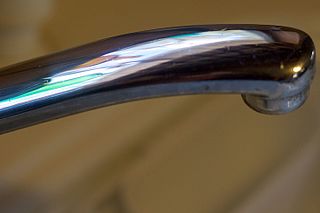
My landlady and her maintenance guy put in a long day fixing a few problems in my apartment. After all the work was done, and it was hard work which I greatly appreciated, I discovered that my new kitchen faucet knobs were reversed. The one on the left marked H produces cold water, and the one on the right marked C produces hot water. Considering the hours they had put in, I can understand how one of them made the mistake. So far, I haven’t felt the need to bother them about it. As I live with my backwards faucet knobs, they make me pay attention to a simple task, bringing mindfulness into the ordinary. They also make me think. What if we all had to stop and consider this way before speaking or acting? Hot words? Pause to check. Cold actions? Pause to check. What will happen when I turn them loose? Is that outcome what I really want?

Of course, it would take a lot of the drama—and realism—out of my fiction if my characters always took these pauses, but it would take a lot of the drama out of daily life, and off the world stage as well, if more of us did. For my own part, I’m working on it.


Disappearing Words

When I was a teenager, I read a newspaper column about a myth related to the autumn equinox. After all these years, I can still see the kitchen table where I was sitting, and see which side of which page the column was on. I remember that it was about a Germanic pagan goddess of second chances who opened a path that was only visible on the night of the autumn equinox, a path seekers could take to redo a mistake or regret in their pasts. I made an effort remember her name and wrote it down, although I was confused as to whether it was Llobrodga or Llobrogda. Having had a short story published in a teen magazine, I already thought of myself as a writer, and I knew I would have to create a story about this myth someday. An image of the goddess’s twilight path of golden leaves stayed with me. When I finally wrote the story decades later, she didn’t exist. I looked up everything I could think of about goddesses of second chances and pagan mythology and the autumn equinox and found nothing. I can’t explain this. But I hope you enjoyed A Night in Betsy Gap.

The title came about a few years ago during a training session for professors who were teaching a first-year seminar class. One of the presenters was named Betsy, and she didn’t use all her allotted time, so someone referred to the open space in our schedule as the Betsy Gap. I said it sounded like some place out near Naked Creek (a real town in that part of Virginia) and we all started joking about the way things are done in Betsy Gap. The name stuck with me as perfect for an obscure place where a traveler could get stuck. Then I saw a prompt for a short fiction contest in which the theme was crossing a line, and it had to include the word six-pack and another which I’ve forgotten. The idea for a short story about Edie had been brewing in the back of my mind for a while, since she’ll never be onstage in the Mae Martin series. Her only role is in Hubert’s past. I was surprised when Will Baca showed up in the story, but this other-world experience prepares him for the big changes he goes through about ten months later in Ghost Sickness. (Not that he remembers.)

If you read the short story before it disappeared,  you know something Mae and Hubert don’t know, since Edie cut off contact with everyone she knew in Cauwetska, intentionally making herself hard to find. Her fate won’t show up in the series for a while. But in the September before the events in Ghost Sickness, she spent a night in Betsy Gap.

*****

A Night in Betsy Gap will return eventually, either in a short story collection or here next fall, after dark on the equinox.

Alternate Routes

While my car has been away on an extended health retreat, recovering its ability to recognize its own key, I haven’t been able to drive to the nearby state park where I like to run the trails, so I’ve been running on a dirt road along the Rio Grande instead. It has a flatter terrain, a harder surface, and not as much wildlife, but it offers a view of the river and of T or C’s magnificent landmark, the sleeping turtle formation atop Turtleback Mountain. For a second choice, it’s not bad.

On an unfamiliar route, though, I don’t know where all the lumps and soft spot and other hazards are, and I can get distracted by the scenery—and yet it totally surprised me that I tripped and found myself scraping my knees and elbows in the dirt and gravel before I’d even gone half a mile.

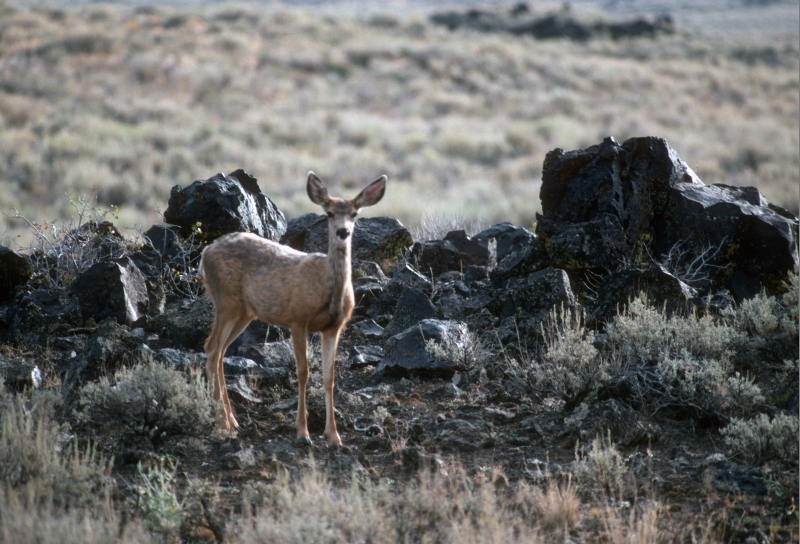
I jogged back home, cleaned up, bandaged my gashes, and decided to take a walk rather than sit around getting stiff from the fall or frustrated about not running. The route I chose took me to the highest point in town, the hill crowned by the water tank, where you can see to the edge of town in all directions. The tank features one of the town’s best murals, an image of Apaches on horseback coming to their traditional healing place, the hot springs along the Rio Grande. When I descended to downtown, I continued on to Ralph Edwards Park, one of our two riverfront parks. On the opposite bank, in the wild area across the river, a mule deer stood with her feet planted on the steep slope, her head lowered to the water, drinking in a position that would have caused a human to flop head first. She sustained her balance at such an angle it was like getting aerial view, revealing the subtle brown stripe on her back, a marking I’d never been able to see on a deer before. Four legs and hooves, I thought. It would be nice to have hooves. Her fine pointy feet enabled her to turn on a camber in a tight little clearing and angle herself uphill to browse the shrubs without a stumble. If my big ol’ size nines hadn’t stumbled, though, I wouldn’t have seen her. I’d have been somewhere else.

If my personal training business in Santa Fe hadn’t crashed, I wouldn’t have taken a job as health educator at a fitness center in Northeastern North Carolina. While I was working there, they needed a yoga teacher and none was available, but I had decades of yoga practice and offered to go to teacher training. It changed my life as well as serving their needs. Teaching has deepened my yoga practice profoundly and brought me in contact with some of my most valued friends. I found the setting for The Calling in that North Carolina town, and met the young woman who inspired the character of Mae Martin. If I’d stayed in Santa Fe, where there’s an excess rather than a shortage of yoga teachers, none of this would have happened. I can’t regret the alternate route. It was better than the one I’d planned on.