Observations on being a full-time writer

    • It doesn’t feel like a job.
    • I’m writing while it’s still light out, not just after nine at night the way I did when I had a structured day job.
    • I now live where my protagonist does. Result: Everything gives me ideas.
    • The town changes faster than my fictitious version of it can, but the essence stays the same.
    • I don’t need a job to structure my life or keep me busy. There’s so much to do, from music events to dancing at Sparky’s to Art Hop to teaching yoga to just getting out in nature, the challenge is telling myself no, stay in and write. I was more productive when it was 108 degrees in June. Less temptation to go out.
    • Depending on which of my friends is making the introductions, new acquaintances may be told that I’m a writer or that I’m a newly retired professor. If they hear the latter, it’s hard to redirect their first impression, and they tend to suggest things I could do to keep busy, including—I cringe at the thought—adjunct teaching. I think of myself as a writer and yoga teacher, not a retired professor—the person I am today, not the role I used to play. It’s an important distinction.


Conscious Listening

Sound can be noise, it can be distraction, it can be enjoyable, beautiful or soothing, and it can also be a direct route to clearing the mind. Sound reaches the brain faster than thoughts, faster than images or sensation. So, if you listen mindfully, you can silence the inner chatter and be. I recently attended a concert of healing music, a sound bath, in a St. Paul’s Episcopal Church in Truth or Consequences. It wasn’t religious music, but it was sacred. I started out with thoughts of writing, of possible scenes and settings, since one of my ongoing characters is a musician who composes healing music. He would have loved the event (writers think this way about their characters), but I forgot about him during the performance. The beauty of the experience was getting past verbal thought altogether and into pure sound—bells, electronic tones, rain sticks, non-melodic music created to promote a meditative state or an inner journey. The composer/performer encouraged the small audience to close their eyes and go inward, and I did. The music came through eight speakers in patterns that gave it a spatial structure and a quality of movement that triggered flowing abstract color visions in my mind, and yet I was always grounded and present in my body, aware of my own energy. The next morning I still had a lingering sense of deep clarity, as if I had been meditating. And that is not the way I normally feel before coffee!

Recommended listening: Tom Montagliano

If you have a chance to hear his music in person, don’t miss it.

My Neighbor’s Peaches

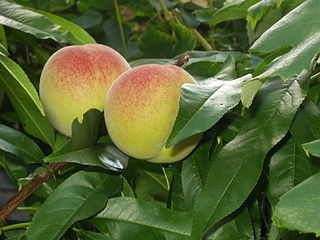
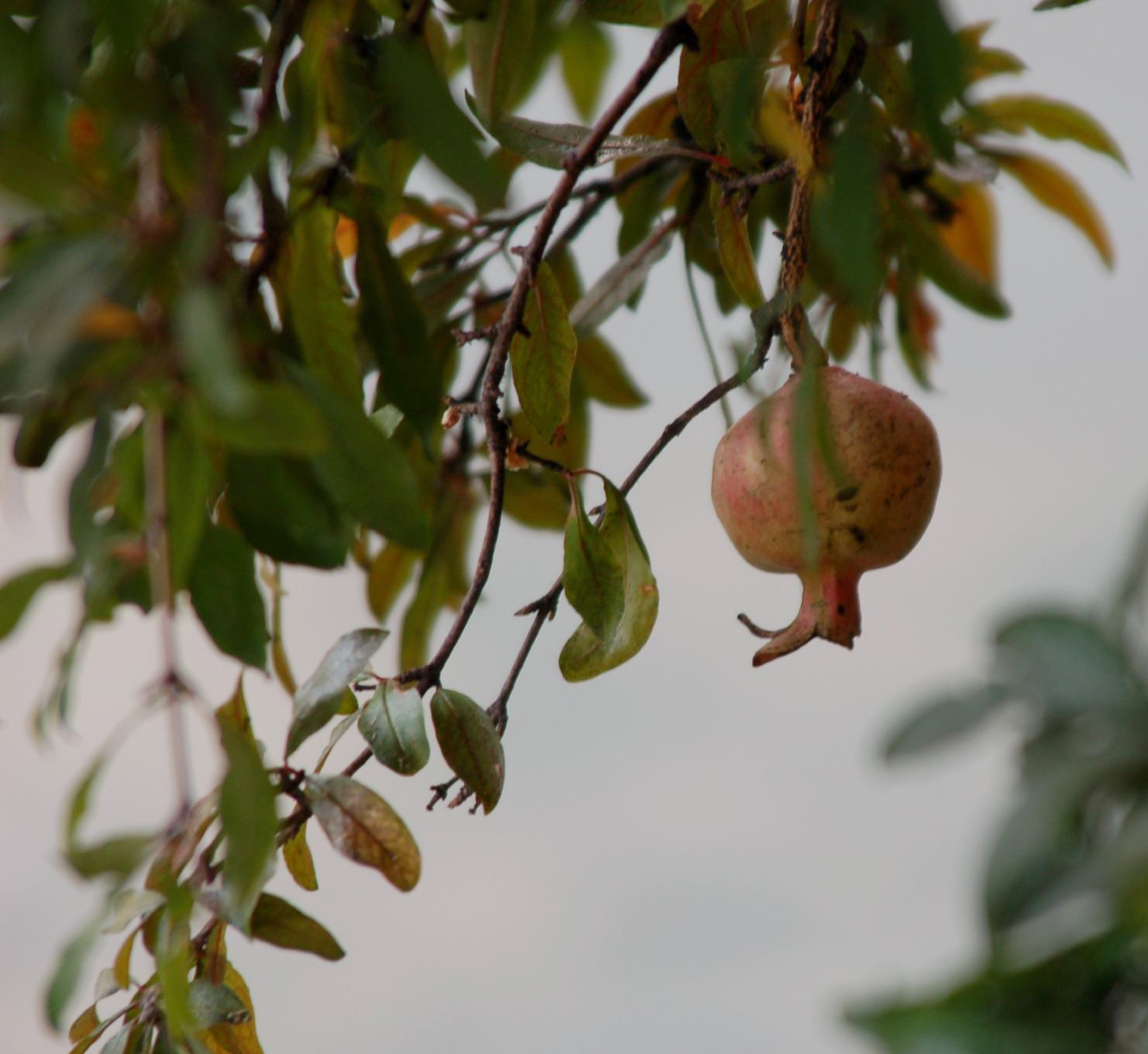
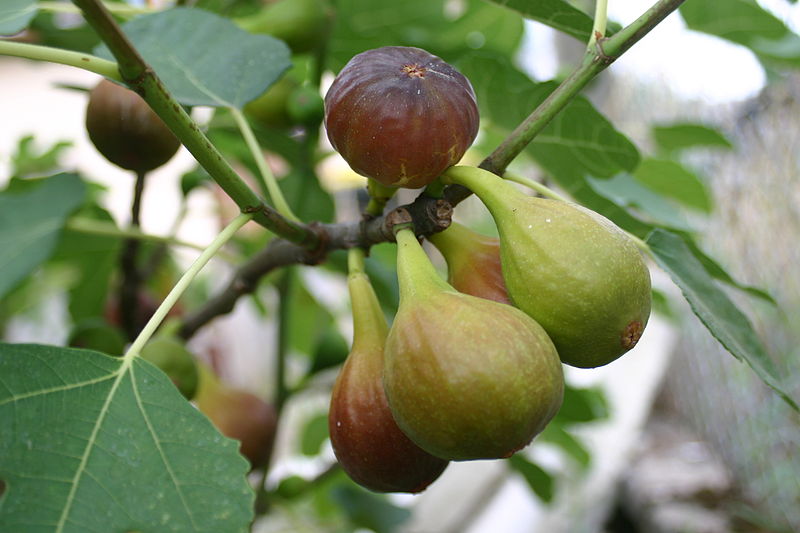
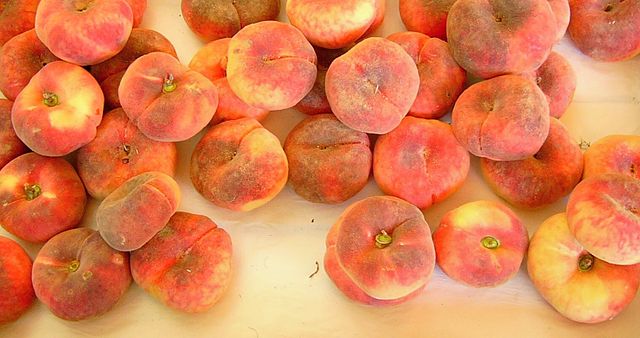
Out my back window, across the alley, I have a view of a white trailer with chain-link fence around a typical T or C back yard of dirt and gravel. In it is a peach tree, full of fruit that I have watched ripen over the summer, and no one is picking any of it. If you don’t know the desert of New Mexico well, you might be surprised at the way fruit trees thrive here, soaking up sun in the heat of June and water in the downpours of July. Three pomegranate trees, heavy with fruit, bow toward the street on my route to the pool. In front of my apartment, a shrub-like fig tree is producing a massive crop, some newly ripened, many green and still growing. When I lived in Santa Fe, I knew where to find apricots falling to the sidewalks and parking lots, so abundant no owner could possibly pick and eat them all. I have a crisper drawer full of gift peaches from a friend’s neighbor’s tree. As small and velvet-skinned as apricots and just as dense, they are super-sweet, as if growing in a desert made them work harder to become peaches. Still, I look at the ones across the alley behind the fence and see one lying in the gravel, a perfect yellow-and-pink sphere, and it bothers me. A moment someone missed and can never have now, knocked down by yesterday’s storm. It’s not that I want their peaches. I want them to have their peaches.

What aspect of my life is that fallen peach? What is ripe that I am not picking?


Rain Salutations

I know I can’t make the sky rain. It’s like trying to make someone love you. When the right conditions have arrived, the change comes. Sometimes, however, I think it fails to rain when the world is out of balance, and that it takes dancing and meditation, yoga done as rain salutations, people showing compassion and affection and listening to each other with their hearts, to invite rain. Love and care for the earth will call rain. Earlier today, it rained in the alley behind my apartment for one minute. I went for a short walk at sunset, and a massive blue-black cloud was flashing lightning out toward Elephant Butte, revealing the rain as a sheer curtain in each orange flare. I did a little dance, spinning and then running backwards, asking the storm to follow me home. It did, but I don’t take credit.

When I was running in the desert around noon today, I encountered a mule deer. They often look you in the eye before they run. If they even run. We circled a juniper, checking each other out, making eye contact through the branches, then she turned her back to me, did two full springs straight up in the air with a graceful tuck of all four legs, and trotted off. If anything had the power to call the storm, she did. The deer did the rain dance.

*****

Unrelated, but perhaps of interest: The Calling, book one in the Mae Martin series, is on sale for 99 cents on all e-book retail sites through July 21st. If you’ve enjoyed my books, tell a friend. Thanks.

An Evening Out in T or C

The Austin Art Factory, an outdoor performance venue accessed through an alley, is attached to a warehouse used by the New Mexico Film Office, full of lighting equipment and props ranging from ratty old chairs to enormous books and a variety of weathered signs, including a wall-sized one for the New Mexico State Prison that served as the backdrop on Sunday July 2nd for a traveling circus (all humans, no animals) from New Orleans. The audience was seated on rows of blue plastic chairs and a few wooden benches under a corrugated metal roof. Behind us was a stack of trunks about eight to ten feet high. To the right was the warehouse, where the performers had their backstage area and the audience could find rest rooms. To the left was a gravel-paved yard whose chain-link fence is decorated with art made from New Mexico license plates (the yellow ones). My favorite is a Volkswagen Beetle. An old tow truck sits in the yard, full of random objects, perhaps as a work of art, perhaps as storage.

The show opened at 6:00 p.m. with a guest performance by local acoustic duo Desert Milk. After that beautiful, mellow music came circus side-show acts such as knife-throwing, dancing barefoot on broken glass, and breaking a cinderblock on a man’s chest while he lay shirtless on a bed of nails. An acrobat squirmed her way in and out of a birdcage. The weirdest act was done by a woman who drove a long sharp nail up her nose with a sequined hammer and had an audience member pull it out with her teeth. A cowboy performer did rope tricks and pistol-twirling and whip-cracking, cutting a rose in half with a whip while he held the flower between his teeth. The emcee talked too much and used “exciting” and “excited” so many times she could have killed the excitement she was trying to rouse, but I had to forgive her because, after all, she did drive that nail up her nose.

The best part of the evening: the aerialists.

T or C’s Jeannie Ortiz floated with dancelike grace and power in fluid, seamless weavings of her body and supporting drapes of fabric. Without a break in her flow, she wrapped a limb or her pelvis in the silks and moved from backbends to splits to side arcs and inversions in perfect concentration. Her art was ethereal and meditative and yet awe-inspiring at the same time. As I watched her suspend herself with the silks attached only at the feet and ankles in a split, I knew what this was asking of her at the muscular and biomechanical level, probably her most impressive feat when it came to strength, though the audience expressed more enthusiasm for the aesthetically stunning moves. And there were many. This was not just athleticism but visual art, dreamlike and magical.

The circus aerialist was equally strong but performed at a higher speed in a spinning hoop. She did the near-impossible, hanging upside-down only from the edge of her heels or from the curve of her buttocks and then transitioning to a new pose without any loss of control or use of her hands. The style of her performance was showy, smiling and making eye contact and striking applaud-me poses. And applaud we did. She earned it. But I think the audience applauded Jeannie even more. Not only because she’s local, but because she never once demanded that we appreciate her. She simply gave her art with quiet grace.

This being T or C, the audience, of course, was almost as colorful as the show. And the sky, as I walked home, was filled with brush-stroke clouds in all directions, remnants of a failed attempt at a thunderstorm, streaking the horizon with gray silks of aerial rain.

*****

Follow this link to a New Mexico Magazine feature on Twenty Things to Love About Truth or Consequences. The slide show at the end of the article includes, among other images, Jeannie Ortiz on aerial silks and some of license plate art.

In Praise of Patient People: Paperwork as a Spiritual Practice

In the process of transitioning from a full-time employed person to a self-employed writer and retired professor, I’ve had to interface with many institutions, and all of them have required paperwork and forms. This isn’t a 21st century phenomenon. There has been paperwork as long as there have been organizations and rules. 

What’s new, perhaps, is the expectation that it should be quick and easy now that it’s electronic. This isn’t always the case.

I’m impressed by the warm humanity people have shown me while slow computers did their things. I got to know them a little, learning that the woman who helped me at the Motor Vehicle Division is a fellow yoga practitioner and that the customer service person at the bank also moved here, like I did, after getting “caught in the vortex’ (the feeling you have to live in T or C after only being here a few hours).

The local enrollment counselor for getting ACA health insurance and the agent on the phone at the healthcare marketplace jointly spent almost two hours with me today resolving tangles in the system that had happened because—and it took some detective work to figure this out—someone who talked with me on the phone two weeks ago made a typo that jammed up my account. Human error. The kind I make every time I type. No one got angry or frustrated. We all kept our senses of humor. The enrollment counselor even helped me with simple things that could have been a hassle, such as the fact that I don’t have a scanner or a copier for submitting various documents and that cell phones don’t have free calls on 800 numbers when you need to make a two-hour phone call and don’t have a landline. The marketplace agent said she wasn’t ending the call with me until the problem was solved, and she didn’t.

People who are “just doing their jobs” are different from people who make their jobs into opportunities to practice kindness, friendliness and patience, opportunities to relate to the actual person they are working with, not just process papers and problems. I have nothing to complain about. I have my New Mexico license and registration; I have a local bank account; I have health insurance. And I have been treated with more than respect, treated with genuine human-to-human presence by everyone, including the helpful man two weeks ago who made the typo. Many factors made my application unusually complicated, and we accomplished important things before his finger made that one unfortunate keystroke.

I’ve read Lewis Richmond’s book Work as a Spiritual Practice so many times I gave it away when I cleaned out my college office. Every lesson in it came back to me today as these two persistent ladies hung in with me through what could have been tedious or maddening. I exited my immersion in bureaucracy energized and positive. It takes people who can turn their work into spiritual practice to have that effect. Thank you.

*****

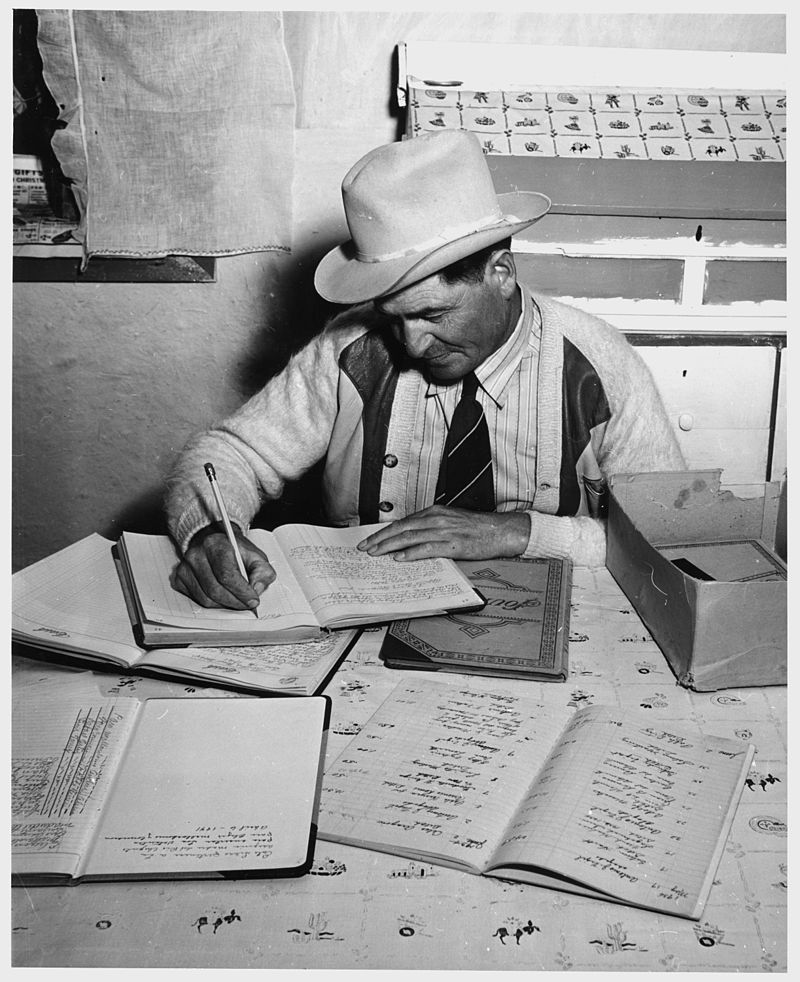
Image of Files: “Paperwork” by Tom Ventura

Other images, Taos County ditch supervisor and Taos County surveyor, public domain


Grateful for Beauty

The world we see through headlines seems to be falling apart, filled with violence and dysfunction, and ordinary life can be full of petty hassles. I need to get out in the natural world where life is more in balance than in the man-made one, and do it daily. Before the temperature goes over a hundred and after it goes down.

 The same conditions that make June in New Mexico so challenging during the day—no humidity, no clouds, hot winds clearing the sky—make it spectacular after dark. Even just standing in an alley, a short way from the streetlights, I can look up and see not only the bigger, closer stars, but the background billions and billions sparkling like a beach of diamond sand behind them.

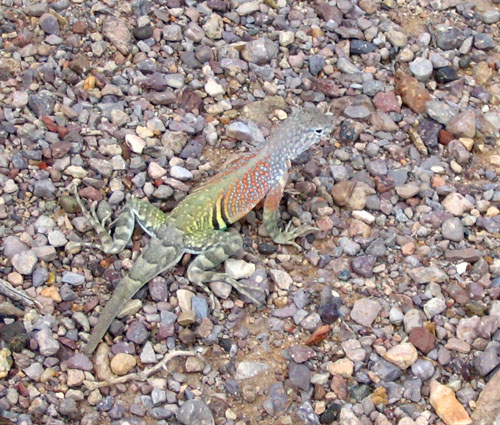
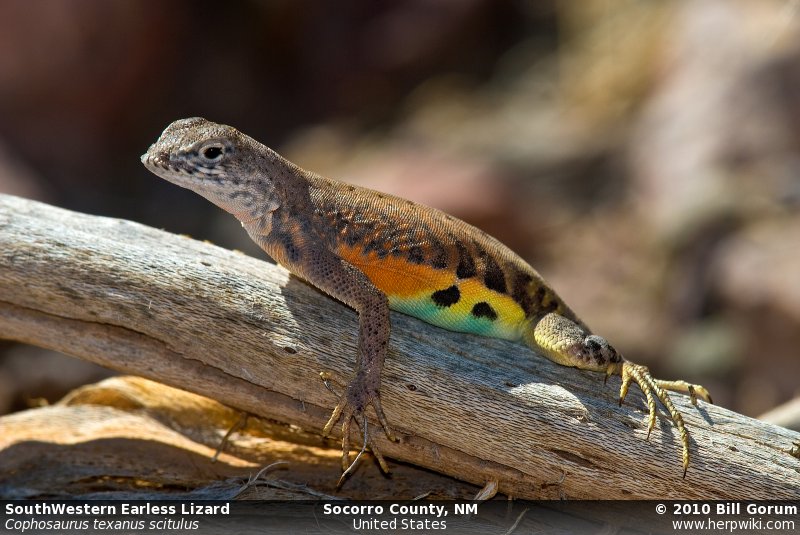
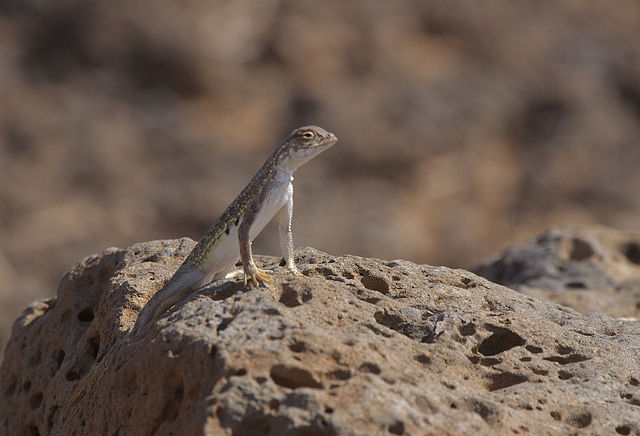
 Heat and all, I still run, heading out while the temperature is only in the nineties. As I was about to start a run a few days ago, I encountered a grasshopper longer than my index finger. Yes, it held still and let me measure. Its head was marbled, its body striped and speckled, and it had golden antennae that looked like strands of broom straw. Beautiful, in its own buggy way. Along the trail, pearlescent gray lizards with radiant orange bands on their sides perched on rocks then ran away. Another species displayed glowing blue-green hind legs that appeared lit from within. I think it’s some kind of collared lizard or perhaps a type of earless lizard, but I couldn’t find one quite like it when I searched on web sites. Whatever it’s called, it’s a miracle. So is having vision to see to it and a mind to appreciate it. For all of this, I am grateful.


*****

Southwestern earless lizard photo courtesy of the New Mexico Herpetological Society.

A New Mexico Mystery Review: Song of Lion by Anne HiIlerman

A bomb goes off outside a high school basketball game in Shiprock, and the “wrong” man dies…

Set partly in New Mexico, partly in Arizona, and entirely within the Navajo Nation, this is Anne Hillerman’s best yet. Her strengths are character, setting, and relationships, as well as a solid plot. A good mystery is not only a case to be solved, but a story about people the reader cares about. Hillerman integrates police work with family and friendships, Navajo culture, and a sense of the sacred.

Bernadette Manuelito is a strong and engaging central character, with Jim Chee and Joe Leaphorn in supporting roles. It was wonderful to read a few chapters in Leaphorn’s point of view, and I admired how the author tuned into his thinking and personality, with explorations of his inner life as well as his process as he solves a puzzle. The new characters are unique and original personalities, including, as Anne Hillerman always does so well, genuine, natural humor. The bombing victim’s story is sad and true to life, making this one of the most emotionally moving mysteries I’ve read, and the man who was the real target of the attempt is developed with depth and complexity.

The various Native cultures linked to the Grand Canyon region have meaningful moments in the telling of the story, and the canyon itself comes to life as a setting. The red herrings are believable and the final solution to the mystery makes sense without a single forced bend in the trail to get there.

This is the twenty-first book in the series. A reader could begin here and not be lost, but I recommend reading all of them, the three by Anne Hillerman and the ones by her father Tony Hillerman that preceded them. When I moved, I gave away most of my paperback mysteries, but I kept these.

Click here for my interview with Anne Hillerman, done when Rock with Wings came out. It’s interesting to look back on her early plans for this book two years ago, and her thoughts on writing Joe Leaphorn’s point of view.

Uninterrupted

I’m reading a pre-publication review copy of a book on fascial anatomy and updated, science-based stretching techniques for athletes. (Don’t worry, I’m not going to review it here, but I am glad this publisher still wants a former professor as a reviewer.) Part of the pleasure in reading it today is that I could keep going for two and half hours, fascinated and intellectually refreshed. While I was working, that much unbroken time to read a book in my field was rare. Days were chopped up by e-mails and appointments and of course classes. Time was always tailgating me with papers to grade and endless pop-up tasks to organize.

 After reading for as long as I felt like reading today, I applied concepts from the book to my yoga practice, intrigued by the way the authors’ research lines up with things I’ve heard some of my teachers say and that I have discovered through exploration. The undulating wave of the breath moves through each stretch. You should experience no pain in stretching. Don’t exit a stretch by tightening the region of the body you just lengthened. Effective stretching releases connective tissue, fascia, not just muscles.

 I have all the time I need to study the charts and try out the techniques before integrating new skills into my yoga teaching—when I get around to setting up a teaching schedule. I’ll finish the review before it’s due. This spaciousness plus engagement is something I hadn’t experienced at work for years, probably not since the advent of email. In my windowless office, I used to read books like this in ten- and fifteen-minute spurts when I could grab the time, or read a page while the computer woke up. Today I read in sunlight with a view of flowering trees. Uninterrupted.


Namaste, Y’all

I have a file called Blog Posts Yet to Post where I store drafts of ideas and eventually find some worth revising and using. Today, in search of this week’s post, I found three rough drafts about moving, and I since I’m getting to the end of that topic, I didn’t need three posts. One was about sorting through my books and deciding which to keep and why, one was about parting with some of my art, and one was about no longer working as a professor. I’m so happy about the latter, there’s not much else to say. I went into my office this afternoon just to use a desk with a proper chair (I’ve sold almost all of my furniture) and that felt good, but I won’t miss sitting there for hours reading student papers. Or emails. I will stay in touch with some special people I got to know through the job, but it’s easy to let go of the work itself.

A friend who is going to open a used bookstore bought about eighty books. Those were easy to let go of, too. Parting with a piece of art is harder, sort of like cutting scenes when revising a book, but I decided not to challenge certain fragile things to make a trip to New Mexico. The Santa Clara Pueblo buffalo dancer, a small statuette made of black pottery, broke a hand, a foot, and a leg on his way to North Carolina from Santa Fe many years ago. I repaired him as well as I could. The powerful energy I felt at a buffalo dance was unforgettable, a force that swept through my whole body to the bones. He holds that sacred feeling in his glued-together form. I was happy when a neighbor who teaches history in the public schools and loves Native American history wanted him and several other items. When she came to get them, she asked which piece was made by which tribe, and appreciated the buffalo dancer for what he means, cracks and all, not for collectible value. I packed him carefully, wrapped the tiny Acoma cats so they wouldn’t break, and sent the collection off with someone who will feel the spirit of New Mexico in it.

Friends value us that way—for our spirits, flaws and all, not expecting or needing perfection. Letting go of people is harder. My closest friends in Virginia (and North Carolina and Georgia) will come out to see me eventually, but I won’t see them as often anymore. One who has helped me with the multitudinous hassles of the moving-out process has grown even closer as we’ve worked on things like my moving sale, and I will miss her all the more. I’ve said most of my goodbyes on campus, but I still have two more yoga classes to teach, to students who have been with me for years. I have friends to rejoin in T or C, and I’ll find new yoga students there, but it will still be hard to say the last “namaste” in Virginia.