A New Mexico Mystery Review: The Clovis Incident

Clovis_frt

Until I read this book, all I knew about Clovis was that it was home to the Norm Petty recording studio, where Buddy Holly recorded his hits. It’s not one of New Mexico’s more famous places and seems unlikely ever to be one. This makes the premise of the book immediately appealing. Freelance PR pro Sasha Solomon is trying to get a gig promoting flat, unimposing Clovis as tourist destination.

She was doing PR for a health care company that included alternative therapies in it coverage, and in true Albuquerque/Santa Fe area style, she tried out so many shamans and other mind-body-spirit healers she had a kind of psychic meltdown, making her mental boundaries so porous she now hallucinates under stress. She’s been fired, and she needs the Clovis job.

The story gets more and more eccentrically New Mexican as Sasha looks into alien abductions as part of her PR plans to promote alien-seeking tourism in Clovis, (Her visit to alien-centric Roswell is a small but delightful part of the book.) Alien abductions also figure in a murder investigation, as do Sasha’s strange visions, when the body of a Singaporean military officer is found on a friend’s land.

The less colorful aspects of life in Clovis, from the military base to the farms and ranches, are portrayed with respect and realism in the framework of a humorous mystery. In a crucial scene set in the midst of a large-scale dairy farm, suspense and comedy run neck in neck.

Author Pari Noskin captures characters brilliantly, whether they are major players or walk-ons. Sasha is an original creation, likeable but far from sweet. Detective LaSalle grew on me. The longer Sasha had to deal with him, the more he was revealed in the slow, natural way strangers get to know each other.

Underlying themes include mother-daughter relationships, friendships, rural life, and romance in middle age, tied together through the mystery and laced with an inside look at the PR business. The mystery is multi-layered with so much entertainment that I sometimes forgot to try to solve it. I know a book is working when I respond to it as a story rather than a plot. It turns out that I did suspect the real culprit, but I never felt that the author had made it too easy to figure out.

Noskin turns some off-beat phrases, with a style unlike any other. Aside from Sasha’s appalling habit of taking shots of whipped cream straight from the can, I thoroughly enjoyed every page.

*****

My interview with the author will be posted in the next week to ten days. Meanwhile, you can buy the book and enjoy an unconventional trip to Clovis.

The Epidemiology of Peace

Meditate_Tapasya_Dhyana

In 1993, a group of approximately 4,000 people practiced meditation in a focused and consistent way for a measured time period as part of an experiment in reducing crime in Washington DC through creating a more peaceful collective consciousness. The crime rate was significantly reduced. This was a successful, well-designed scientific experiment, and from the 1970s through the 1990s several others were done with similar results. This type of intervention hasn’t become a mainstay of public policy, though a study done in Merseyside, England found that it saved the local government money. Do we need more meditators? More people in in government who pay attention to these ideas?

Though I write fiction that involves psychic phenomena, it’s not the only reason I find the science behind it important. I’m reading Dr. Larry Dossey’s book One Mind, and I’ve been thinking about the effects our multiple minds have on the One Mind we all share—the interaction of our individual psychology with transpersonal psychology. It can be positive, like the meditation experiments. It can be negative, like the rising level of what I’ll call recreational anger in the United States. I get the impression there is an audience for anger—angry radio, angry TV, angry politics—and that the audience is getting pleasure out of this state of hostile arousal. I’m not one to enjoy outrage for the fun of it, so I can’t claim any insider insights into it. As an observer, I wonder, does it create a wave of disturbance leading to additional anger? Do negativity and meanness have a kind of viral quality that can spread through the shared psychic space of a culture? Is there any connection between our level of anger-for-fun and anger that kills? I don’t know the answers.

Still, I’d suggest that each individual contribute his or her drop of peace to the ocean of the collective consciousness through actions, thoughts and words as well as meditation. It’s an experiment worth trying. Imagine what would happen if we all practiced self-forgiveness and self-study. If we humans all sought moments of stillness and awareness of beauty. Paused to reflect before speaking and acting. Made a daily practice of seeing what Buddhist teacher Jack Kornfield calls the “inner nobility” of others, whether they are family members, friends, opponents, or strangers. Perhaps we can change the world-mind, one careful, loving person at time. Our peace-minds would be the psycho-spiritual equivalent of the sterile male mosquitoes that scientists release into disease-ridden areas. No one gets killed. The problem stops reproducing. To continue my epidemiological analogy, when the effort is dropped, the mosquitoes find fertile partners again and the diseases they spread come back. We can’t take peace and wisdom for granted. Meditation is a called a practice for a reason.

Do you notice changes in your life if you keep up the practice?

Recommended Readings: Psychic Science Redux

Nadia's_Psychic_Readings_01

Recently, I got an e-mail from a reader who was curious how I learned about various healing and psychic phenomena. I studied energy healing as part of my yoga therapy training years before I wrote my first book, and I visited a variety of healers and psychics (some gifted, some questionable) as part of my research. And of course, I read. Two years ago, when this blog was new and not many people had found it yet, I wrote about some of web sites, books and scholarly journals I’ve used as resources. This week, I’m bringing it back for new readers. The post is recycled below.

 *****

After I taught a stress management workshop as part of one of my college courses, a young man came up and asked me if I knew anything about being psychic. (He must have been psychic to think to ask me.) He had recently started having precognitive dreams and wanted to learn more. These are some resources I recommended to him. If you read my books, you may also be curious.

I list references in the back of The Calling, including some of the articles and web sites used in the course Bernadette and Charlie teach. In the scene where Mae and Hubert read the about PEAR lab studies, I tried to give readers a sense of the solid scientific support there is for remote viewing and also remote influencing of what should be random events. (PEAR stands for Princeton Engineering Anomalies research.) The articles from the PEAR lab, and the ones on affecting the output of random event generators (REG) are a little dry, as scholarly articles can be, but the site can give you a summary of the work done there.

For more accessible reading on the subject, I suggest Rupert Sheldrake’s book The Sense of Being Stared At. The title refers to one of the topics he has studied in depth. Yes, we do feel it when we are being stared at.

A fun yet solid book exploring energy healing and the power of the mind to influence events is Afterwards You’re a Genius by Chip Brown. (Published in 1998, it’s now out of print, but used copies are available on Amazon.)Brown enrolls in an energy healing course, and fills in the science around the story through research and interviews. The title is a quote from Dean Radin, a scientist who studies such things as the ability of human intentions to influence REG machines and robots. His point was that when you first start studying wacky stuff, you’re a wacko, but afterwards,  when your work is accepted, you’re a genius.

I found a trove of fascinating stories on the web site The Archives of Scientists’ Transcendent Experiences. Scientists may not like to admit that a mystical or psychic event happened to them. This site served as a safe community for those who had such a story to share. It is currently inactive—no new posts—but readable.

The journal Explore is wonderful. I recommend subscribing if you are seriously interested in healing studies. I encourage you to sample the brilliant editorials of its editor Larry Dossey.

When he was editor at Alternative Therapies in Health and Medicine, the peer-reviewed journal I cite often in The Calling, I used to look forward to his editorials as the highlight of the journal. He unites science, poetry, and wit with a unique voice. He can integrate the most unlikely images into a coherent, thought-provoking essay.

I also recommend Dossey’s book the Power of Premonition.

          *****

I’m currently reading a book which looks like promising addition to my list, Dr. Larry Dossey’s most recent work, One Mind. I’ll review it here when I’ve finished. Dean Radin’s Supernormal is waiting in my Nook, and when I get to it, I’ll share my thoughts on it as well.

Image from Wikimedia Commons, courtesy of Bohemian Baltimore


Joy is Healing

There are days that don’t promise much. Too busy. Too cold. And then there is the endless business of being human, being a body. It’s a resilient organism but it’s also vulnerable to the strangest injuries from the most random, unlikely sources. On a day like that, where will joy come from?

I was stuck having to run indoors today due to all of the above. One of my most reliable joy sources, nature, was only outside the windows. I decided to make up for it with music. Most people who like Krishna Das’s music use it for yoga, but I needed the uplift of his voice while I ran. His voice is a gift to the world, rich and warm, full of feeling. Because the songs are in Sanskrit, I don’t get lost in words, I simply respond in my heart.

The catharsis of joy mobilizes the chemistry of healing. It also broadens the spirit, touches the soul. Spirituality is hard to define, and yet when I hear this music, I know it, and sense that the singer lives it. It’s not solemn or rigorous, but full of melody and rhythm, love and life.

Listen at http://www.krishnadas.com

Have a joyful day.

Reading it Forward with my Team

Writing may seem like a solitary occupation, and it does involve long hours alone, but like most work done well, it also involves a team. In the past week I’ve finished the second draft of the fifth Mae Martin book and sent it to critique partners. I’ve also critiqued two short stories by fellow writers and am one-third of the way through another’s full-length work in progress. None of us could do it without each other.

I have two writing support networks. For some reason, in each trio I have one British partner and one Australian. My “mystical mystery sisters” Virginia King and Marion Eaton share similar readers, people who like mysteries that go off the beaten track and have an element of non-religious spirituality, so we share not only writing ideas but marketing. My other writing trio includes two authors of humorous mysteries, J.L. Simpson and Jordaina Sydney Robinson. They both have a knack for tight plotting as well as comic timing and can tell me when I’m going off track. I can’t imagine producing a book without them.

It doesn’t feel like work to take the time to read and critique their books. I’m honored to be part of these authors’ teams and would like to introduce them to my blog readers who may not already know their work. Virginia King did a guest post on this blog, and Marion Eaton joined me for an interview.

https://amberfoxxmysteries.wordpress.com/2015/04/16/virginia-king-mything-in-action

https://amberfoxxmysteries.wordpress.com/2015/03/24/interview-with-m-l-eaton-the-mysterious-marsh

Their web sites are:

Marion Eaton

http://www.marioneaton.com

Virginia King

http://www.selkiemoon.com

J.L. Simpson is part of the group blog Ladies of Mystery with me.

http://ladiesofmystery.com

Learn about her Daisy Dunlop series here

http://www.jlsimpson.com/?page_id=77

Jordaina Sydney Robinson’s first book, Beyond Dead, will come out soon, and I’ll be one of the first to spread the word. I mentioned it midway in this blog post a while back:

https://amberfoxxmysteries.wordpress.com/2015/09/17/karma-and-creativity

(Note: the giveaway in the link at the end is long over.)

Teaching Myself to See

Years ago, at a party on the Damariscotta River waterfront in Maine, I met an artist with whom I struck up a long, thoughtful conversation. We stayed in touch for quite a while, but what I remember most about him is this. He said, “I paint to teach myself see.” I was making my living acting at the time, so I responded, “I wonder if I act to teach myself to feel.”

Writing, I have to be actor, artist, and playwright, teaching myself to observe more mindfully, to listen to others and the sounds of the world, to experience my own emotions with awareness, and to notice textures and scents. A smell can trigger a memory more powerfully than anything else. The more I pay attention, the more seeds I have in the seed bank of ideas from which stories, scenes and characters grow.

As well as being part of the creative process, this practice of awareness pops the bubble of busyness and brings me into the present moment. It’s an eye-wide-open meditation I can do at any time, cracking the shell of the ordinary to reveal its depth.

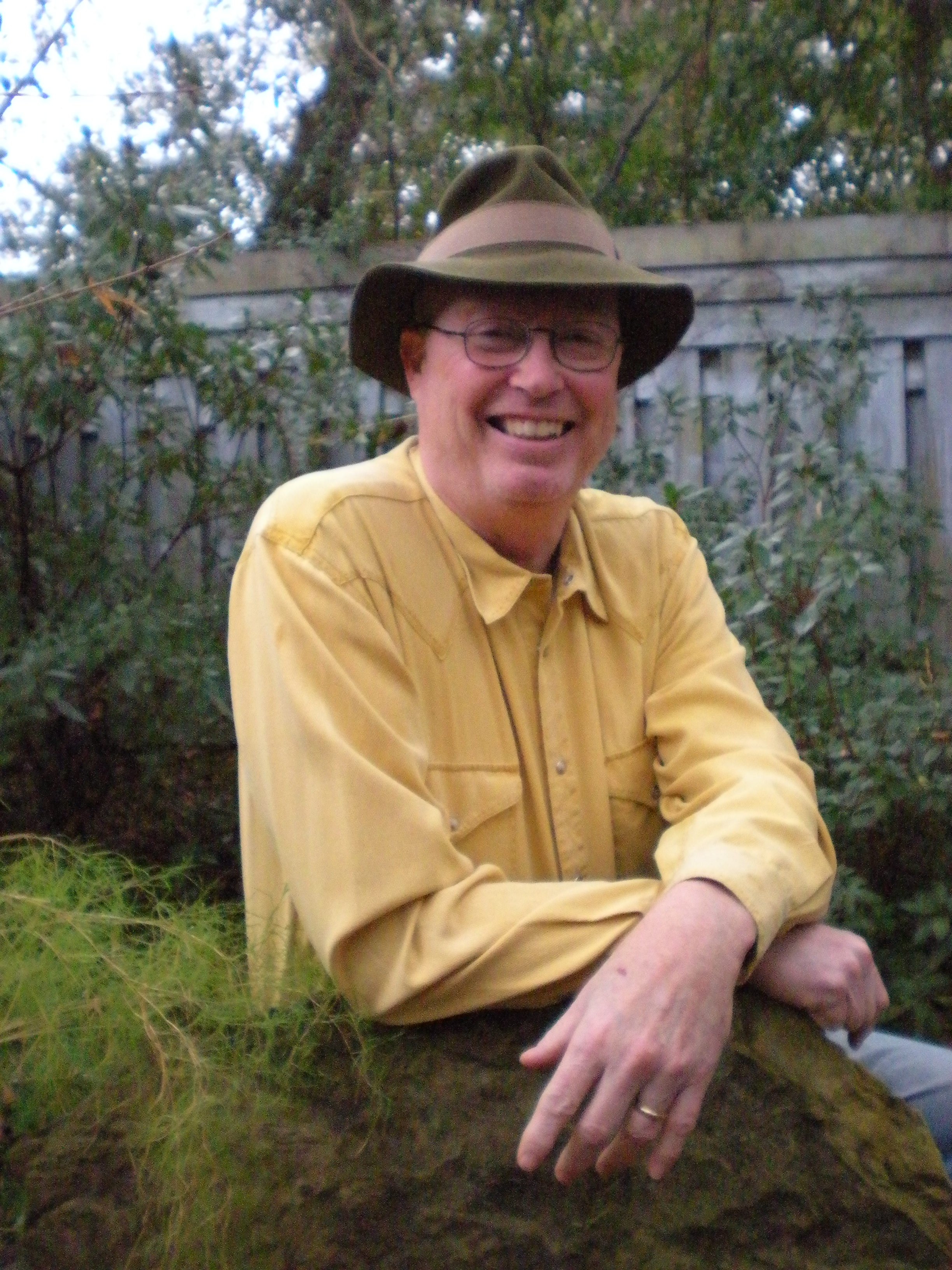
A New Mexico Mystery Author Interview: J. Michael Orenduff

author 1.53mbO'Keeffe cover 3

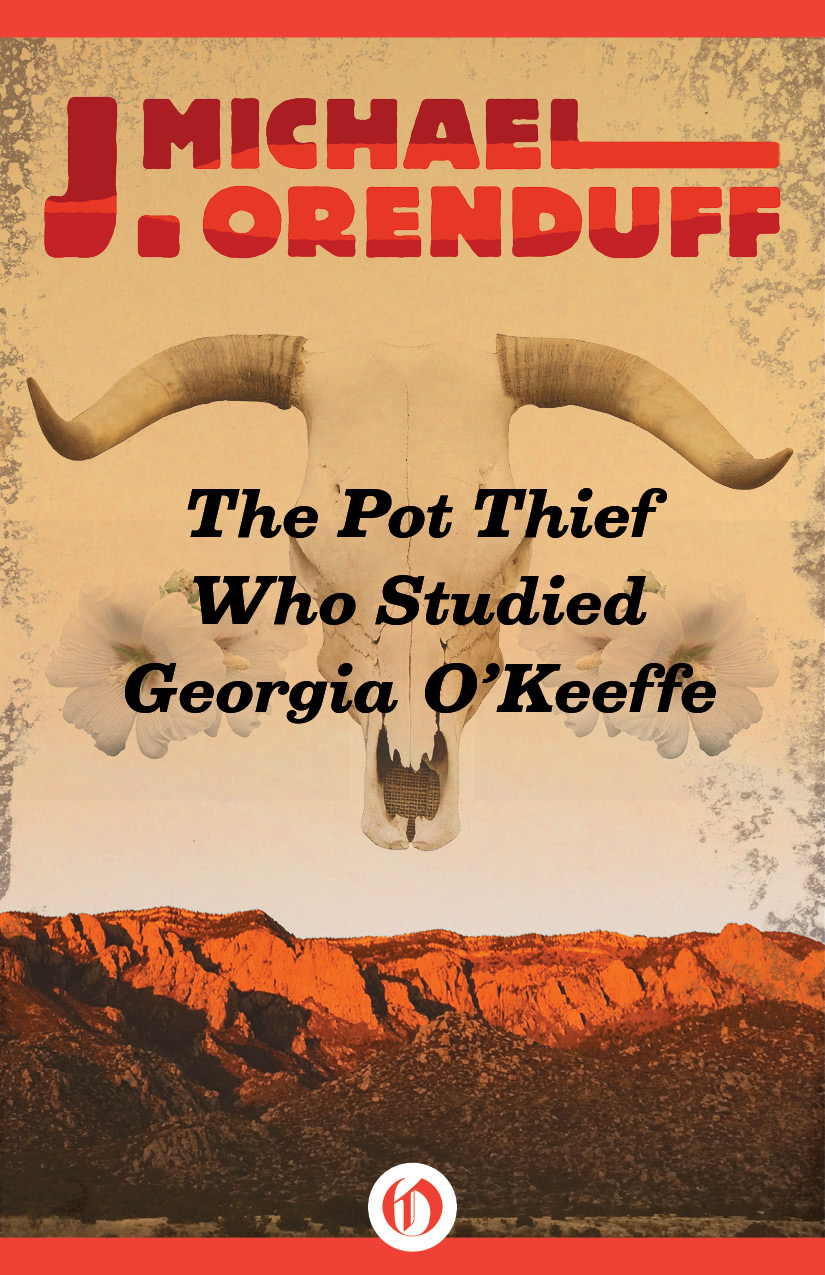
Last week I reviewed the Pot Thief Who Studied Georgia O’Keefe.

https://amberfoxxmysteries.wordpress.com/2016/01/01/a-new-mexico-mystery-review-the-pot-thief-who-studied-georgia-okeefe

I’m delighted to have the author as my guest today.

 Bio: Mike Orenduff grew up in a house so close to the Rio Grande that he could Frisbee a tortilla into Mexico. A former president of New Mexico State University, he took early retirement from higher education to pursue his career as a fiction writer. His many accolades as an author include the Lefty Award for best humorous mystery, the Epic Award for best mystery or suspense e-book, and the New Mexico Book Award for best mystery or suspense fiction.

AF: You’ve been a professor at various colleges. What did you teach? Which class did you most enjoy teaching and why?

JMO: I taught philosophy (primarily logic courses) and mathematics. The mathematics courses were what are now called developmental. They used to be called remedial, but someone decided that’s politically incorrect. That may be, but remedial is a more accurate description. It is no blot on students who are not skilled at math. Good math teachers are rare in the public schools, so students often show up at college unprepared for college level math courses. My courses were a remedy. My favorite teaching experience was the pre-algebra courses I taught at Central Wyoming College. Many of my students were from the Wind River Reservation. The most rewarding thing about teaching is not standing at the blackboard writing the steps of some arcane proof. It is having a student say, “I thought I couldn’t do math. But now I can.”

AF: What’s your favorite place you’ve lived outside of New Mexico? Could you share an anecdote or memory from that place?

JMO: I lived in La Serena, Chile for a summer while my wife was teaching at La Universidad de la Serena. It was an idyllic life. I shopped each day at the market for food and fresh flowers, both of which were waiting when my wife arrived home from work. La Serena is in the northern desert area of Chile, so it was like New Mexico except it’s on the Pacific Ocean. Albuquerque with a beach. And even more Spanish being spoken. Two of my favorite memories from northern Chile are seeing the southern cross in the beautiful clear skies and being stranded in a small fishing village twenty miles north of La Serena after travelling there in a collectivo (a taxi into which six people are crammed to go to a place with no bus service). It was easy to find a collectivo in La Serena, a large city. But Las Casetas was a village and had no collectivos. Hence, no means to return. As we stood by the road wondering what to do, a man in a small Japanese pickup pulled over and asked us if we wanted to go to La Serena. We crowded into a bench seat designed for two people and had a delightful conversation with him on the ride south. I offered to pay him. He declined. I offered to at least pay for his gasoline. He declined again, saying he was going there anyway, so no extra gas was being burned. He told us about his wife whom he obviously adored. When we arrived in La Serena, I finally coaxed him into accepting money by holding out enough pesetas to buy flowers and saying, “This is for flowers for your wife.”

AF: Your books make me want to pay more attention to very old Native pottery. What would be the best places to go for a (legal) pottery tour of New Mexico?

JMO: Of course the shops and museums in Santa Fe are the places most people associate with ancient Native pottery, but my favorite place is Western New Mexico University in Silver City. Their museum has the largest collection of prehistoric Mimbres Mogollon pottery and artifacts in the world, including pottery and artifacts of the Upland Mogollon, Casas Grandes, Salado, and Anasazi. And as an added benefit, you can tour the Gila Cliff Dwelling just north of town and see artifacts in situ and where the people lived who made them.

AF: You share my love of T or C. I noticed that every place you mention there is real. What about the places in Albuquerque? I found myself guessing that every location except Hubie’s shop might also be a real place, but I seldom dine out in Albuquerque so I’m not sure. Are they? What’s behind your decision to use actual places rather than fictitious versions of them?

JMO: You guessed it. Every place is real. The only fictional ones are Hubie’s shop and Dos Hermanas. All the other places are real, even Sharice’s condo. Georgia O’Keeffe said that she preferred painting flowers instead of models because flowers, “are cheaper and they don’t move.” I prefer real places because it’s easier to describe them than to make up new ones. And I like to give them free publicity.

 AF: What made you choose the White Sands Missile Range for Hubie’s latest pot thieving adventure?

 JMO: There were several reasons. Perhaps the most interesting one is a real event that happened there is 2001. A man hunting Oryx found a Chupadero black-on-white water jug dating back to around 1300. Where else could that happen? Especially the Oryx part.

AF: Why Georgia O’Keeffe in the title?

 JMO: After starting out with a bunch of dead white males with no connection to New Mexico, I finally tumbled to the realization that I should use people with NM connections such as D. H. Lawrence. Then I decided a woman in the title would be good. And I chose O’Keeffe because she is strongly identified with NM but also because I had a small personal connection with her. In 1985, I was serving as the academic vice president at West Texas State University, known as West Texas State Normal College when Georgia O’Keeffe taught there from 1916 to 1918. We were celebrating the 75th anniversary of the school’s founding and looking for something to make the event special. I decided we should ask O’Keefe to grant us the right to make prints of a painting she had done while teaching there and allow us to sell those prints to fund scholarships. I gave the task of approaching Ms. O’Keeffe to my wife, whose charm and grace were best suited to the task. And it helped that she is also an artist and an art historian. O’Keeffe granted her request. So Georgia O’Keeffe helped me raise scholarship funding and also inspired me to write the latest book in the series.

 AF: Who are your favorite mystery writers? What is it that makes them stand out?

JMO: In no particular order and with apologies to the many others whom I like but didn’t pop to mind: Simon Brett, Michael Bond, John Mortimer, Mary Jane Maffini, Aaron Elkins, Carl Hiaasen, Leann Sweeney, Lawrence Block (but only his Bernie Rhodenbarr series), and Tim Hallinan (especially his Junior Bender series). What makes them stand out is clever humor.

AF: Did you know you were going to write a series when you wrote the first Pot Thief book? Which book in the series was the most challenging for you to write and why?

JMO: I knew it was to be series, but I didn’t know the titles would all start with The Pot Thief Who Studied…. In fact, the working title of the second one was The Pot Thief Who Gazed at the Stars. What was I thinking?

The first was the most challenging because I had to create everything from scratch. The rest somewhat less so, but I try to have the characters grow and develop as people do in real life.

AF: Any idea what the pot thief will study next?

 JMO: Edward Abbey. Like Hubie (and me), he was a graduate of the University of New Mexico.

AF: One of my favorite writers—and a good match with Hubie. I look forward to it.


A New Mexico Mystery Review: The Pot Thief Who Studied Georgia O’Keefe

O'Keeffe cover 3

This is not an interstate kind of a story; it’s a back road drive with a raconteur at the wheel. There’s a wonderful pot in a remote place, and it takes a bit of a hike and some excavation to find it. Brush off another layer, and there it is, an intact marvel of original workmanship. The old pots which the narrator, Hubie Schuze, admires were made by hand, not on a wheel, and their shape shows it. Not perfect—and not meant to be. That’s part of their character. This book is not shaped like a standard mystery novel, either. Don’t expect it to be. Just ride the back road. Hubie knows where he’s going (though you may wonder about that at times).

The prologue takes off like a rocket. Then, during the first few chapters, new readers may go through what I’ll call “orientation to Hubie,” getting used to the flow of his entertaining and often educational ramblings on topics historical, artistic, culinary, and unclassifiable. (Established fans of the series already enjoy this as much as solving the mysteries.) If you’re new to the Pot Thief and decide to start here, don’t worry, keep reading. Once Hubie gets out in the desert to illegally “rescue” an ancient pot, the story, his character, the setting and his deep reverence for the artifacts he finds and sells come together into a lively, colorful tale that’s both a clever mystery caper and a sweet, delightfully off-beat love story. There’s a lot of wordplay, for fans of that type of wit. However, the humor I liked most in this book was that which came authentically from characters and situations, and there’s plenty of it. Hubie’s sincere and awkward attempt to put his girlfriend at ease in a delicate situation is hilarious, all the more so because it comes from his heart. A sudden turn of events near the end is so perfectly timed and phrased for comic effect, I think my neighbors heard me laugh when I read it.

The New Mexico landscape and locations—from Albuquerque to Truth or Consequences to the vast emptiness of the White Sands Missile Range—are portrayed well. Hubie’s idiosyncratic meanderings are part of the New Mexico feel of the book. I can easily see him in the mini-park in the median in Truth or Consequences across from Black Cat Books and Rio Bravo Fine Art. I can’t decide if he would get on my nerves or amuse me if I sat with him—probably both—but he fits perfectly. (There seem to be a lot of smart, eccentric, single, middle-aged men in T or C.) Orenduff has created a unique character in Hubie, and his own style of mystery—intelligent, non-violent, and funny, with the murder aspect secondary to other puzzles. The red herrings are effective, the clues are laid well, the solution is surprising, and the end is satisfying.

If you haven’t yet discovered the earlier books in the series and want to start at the beginning, the titles, in order, are:

The Pot Thief Who Studied Pythagoras

The Pot Thief Who Studied Ptolemy

The Pot Thief Who Studied Escoffier

The Pot Thief Who Studied Einstein

The Pot Thief Who Studied D.H. Lawrence

The Pot Thief Who Studied Billy the Kid

The Pot Thief Who Studied Georgia O’Keefe (release date: Jan. 26, 2016)

 Next week I’ll have an interview with the author, J. Michael Orenduff.


Phew! Yee-ha! And a Pitiful Cry

I know life is made up of moments lived, not a series of goals and strivings, but I love how it feels when I get something done. Today I finished preparations for the course I’ll teach over the three-week January term. It’s hardly an adventure, more of a task, leading to a mere “phew” of satisfaction. The fun will come when I have students next week, new people with fresh ideas and thoughtful questions. I can’t have the fun, though, without the work.

With writing, the joys run backwards. Today I also finished the first satisfactory draft of the next Mae Martin mystery. I describe it that way because my writing process goes through so much ongoing revision and recycling that it’s hard to call anything a first draft. The moment of knowing that this is the plot that works and this is the ending is exhilarating, a big “yee-ha!” I dance quite a bit at this stage of writing, something I don’t do in my college office. I’m excited about revising the book, too, and sharing it with critique partners and revising it more. I even enjoy the picky details of word choice and sentence structure, of deciding what to cut and what to add, and experimenting with the best way to describe certain feelings and actions. It’s work that doesn’t feel like work, all the way to the final draft.

Getting sales and reviews is the work that feels like work. A book isn’t fully alive until it has readers, just as a planned-out college class is nothing until it has students. I have to do this work, but I look at Twitter and Facebook, trying to think of witty snippets of chat, and I shrivel. No, please, there has to be better way. My New Year’s resolution is stop whimpering and become a marketing genius without boring or annoying anyone. (That’s what would make me a genius.) I need to learn to dance with delight about filling out an advertising form, or at least look forward to the “phew” of having done it. Instead of just tweeting links, I will take up the challenge of composing something original and intriguing in 140 characters or less. Follow me on Twitter and see if I succeed. But don’t hold your breath. I’d rather be writing a hundred thousand words of fiction, or even next semester’s syllabus.