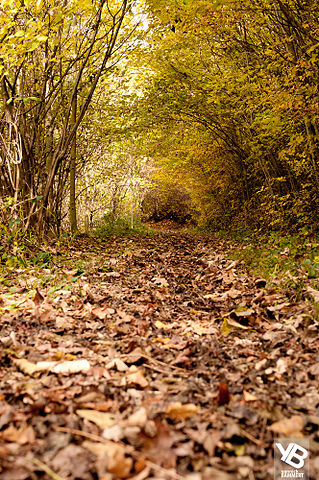
Felt like Fiction

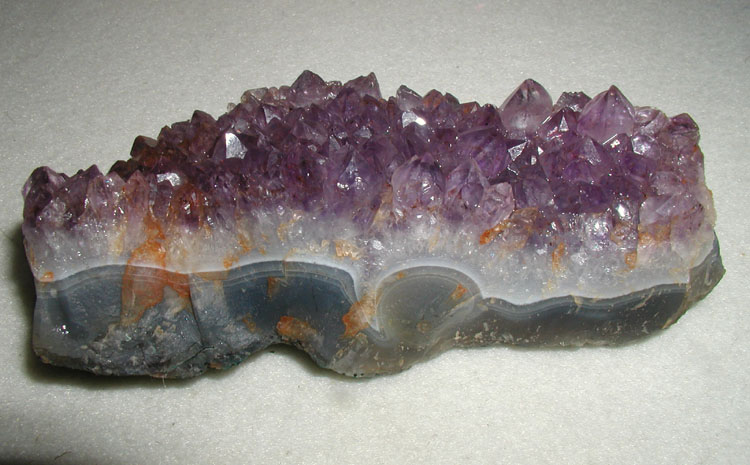
The doctor took my arm and studied it, then examined the other. Still holding my forearms lightly, without making eye contact, he asked, “How do you respond to quartz?”

This was a dermatological exam. I’d driven all the way to Silver City because there were no dermatologists in my insurance network in my vicinity. The choice was either a two-and-a-quarter hour drive to Albuquerque or the same length trip to Silver City. I picked the latter because it would be more of an adventure. I hadn’t been to Silver City for a couple of years, and my nurse practitioner in T or C had recommended the doctor there. Maybe it was that recommendation, or spaciness from getting up early and driving (I’m not a morning person), that made me react with less puzzlement to the question than a dermatologist’s patient normally would. Instead, I simply answered.

“It helps me sleep. Makes me feel grounded.”

“And amethyst?” the doctor asked.

“Intuition,” I replied.

“That makes sense.” He regarded me though his glasses. He was a Hispanic man I guessed to be in his early sixties, though his smooth brown skin—appropriately for his profession—looked youthful compared to his thick silvery hair. “We use those for the direction of the North. The ancestors. You feel protection and guidance.”

We use them? My morning brain fog somehow didn’t clear enough to let me ask who “we” were. He said something about the South being the direction of children and family, and resumed the exam, occasionally mentioning things other than the usual dermatological inquiries and slipping into Spanish a few times as if I should understand it, though he spoke English without any accent. He was into holistic health—nutrition, exercise, meditation—and I was already following a healthy lifestyle along those lines, so he had little need to give me advice. Most of his observations about my skin were identical to those my dermatologist in Virginia had made. Perfectly normal medical conversation. He discussed a new study on a nutrition-and-disease link, and then went on to ask me about having premonitions. “Yes,” I said, “I dream the future.”

He examined my hand. “You have the signs of being a sensitive.”

I knew I was. The surprise was that a medical doctor would bring these things up as if it were as normal as explaining the importance of eating right and using sunscreen. He mentioned what he’d found to be a few other indications of a sensitive and completed the exam. Nothing was wrong, and I should come back in a year.

On my way out, I noticed an intriguing work of art propped on a table, a crucifix with the Christ figure on it crafted from forks and spoons. The circle above the figure’s bowed spoon-bowl head was made from a small ponytail holder, containing a pinch of pink-red dirt under a clear cover, and the word Chimayo was engraved into the wood, following the shape of the circle. This was healing dirt from the chapel in northern New Mexico, the Lourdes of the Southwest.

“That was a gift from a patient,” said the doctor, noticing my pause to admire the artwork. “He was complaining to me about his ‘crazy aunt’ and how she claimed she could tell what was wrong with people just by …” He mimed running a hand over a human aura. “She was curandera and she had people lining up for her limpias.” This was the first time he’d slipped into Spanish that I knew what he was saying. A limpia is a healing and cleansing ritual. The doctor continued, “I explained to him about her gifts, and then told him he too had this gift. He had the signs of a sensitive. An hour later, he came back to give me this. The fork is meaningful. On those special occasions when we had dessert, Grandma would say, ‘keep your fork, the best is yet to come.’ Some people ask to be buried with a fork, because the best is yet to come. The spoon means ‘I will feed my people.’ ”

The patient had been so relieved to understand and accept his gift of healing, he had brought the doctor the gift of the fork-spoon-and-healing-dirt crucifix. I didn’t ask if the patient has made it, still too dazed by the strangeness of the whole encounter to ask questions I later wished I had.

I kept thinking about it, though, as I played tourist in Silver City, passing a sign in a window that said “Dog Grooming and Healing Center.” (You know you’re in New Mexico when you see something like that.) After strolling in a shady park, shopping at a second-hand store, and admiring murals, I followed a series of little purple pig-like outlines stenciled on the sidewalk to the most excellent and badly needed Javelina Coffee shop. After a dose of their light roast, I finally felt awake and clear-headed. And yet, still confused. Had I walked into a Mae Martin mystery or a Selkie Moon mystery? It felt like a bit of both. The doctor’s crystal questions were like something that would happen to Mae in my books, but the way he told me I was a sensitive and that his patient who gave him the unusual crucifix was also one struck as the sort of thing that happens to Virginia King’s synchronicity-prone protagonist, Selkie.

I wonder if I’ll create a curandero-dermatologist character. And what he’ll say during my check-up next year. I know I’ll be more awake and ask more questions.

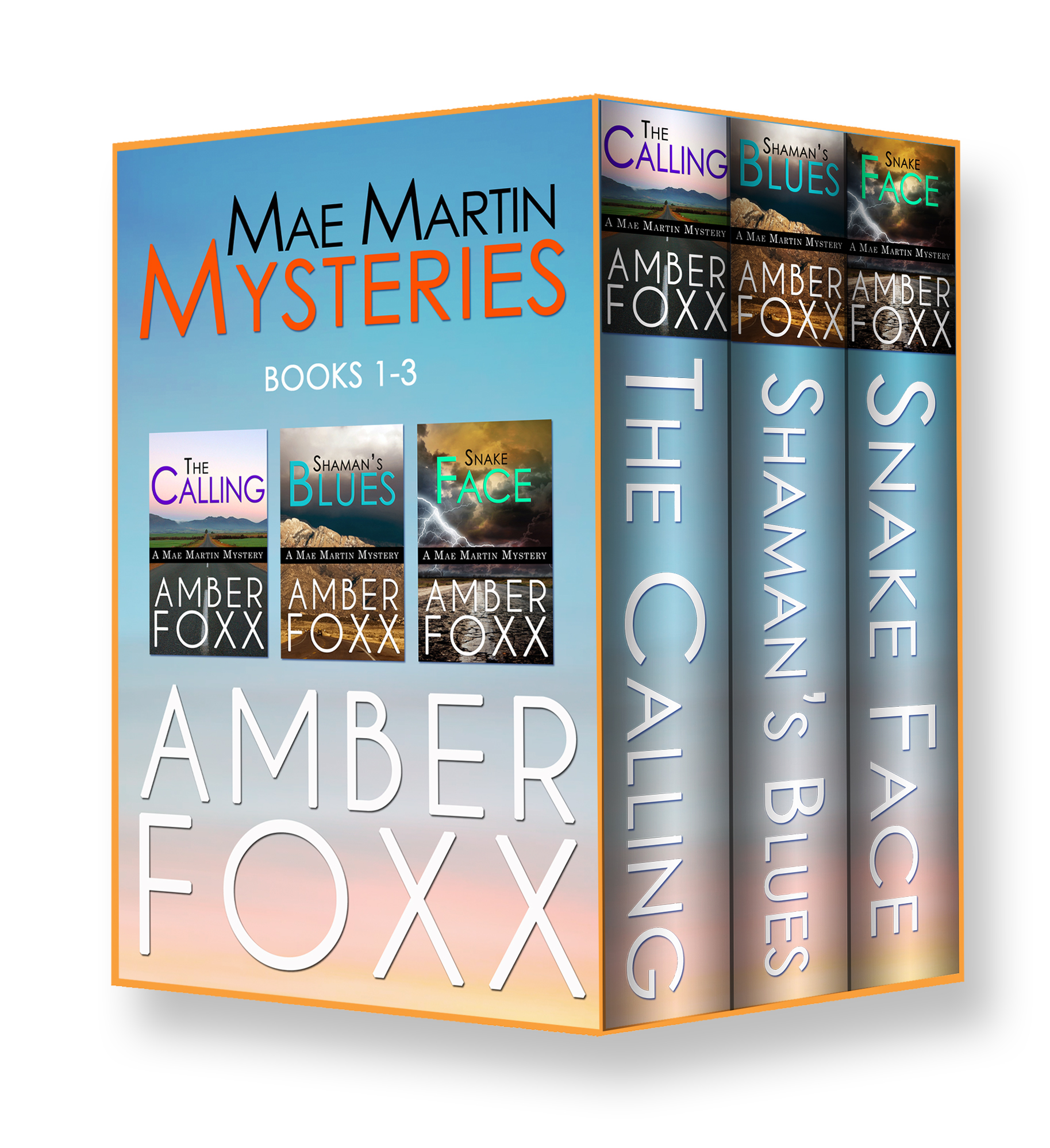
Happy Coincidences

Dear Susan,

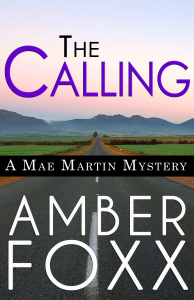
First, happy birthday. I’m honored that you wanted to treat yourself to my books to celebrate. Second. I want to thank you for telling me why. You said reading The Calling had a positive impact on your life. Writing it had a positive impact on my life, too, as I explored healing and loss, friendship and enmity, and the lessons learned from all of them. When you said the book had an effect as you were making changes in your place, working with its energy, I understood. I’m part-way through book seven in the series, which introduces a character who is a house healer, so this was an intriguing coincidence.

Your call to Black Cat Books to order the rest of the series was another synchronicity. My neighbor and I had gone there for tea and book shopping before the store takes its summer vacation. (The off-season in T or C starts after Memorial Day. It’s already in the upper nineties.) Your birthday happens to fall right before the store closes up for three months. I was just about to head out the door when I heard Rhonda, the store owner, mention my name. So I stayed and had the opportunity to talk with you and then signed the books dedicated to you.

Authors don’t often get to talk with readers. I hugely appreciate those who review or get in touch, but I don’t expect it of the majority. All I want is for them to read, enjoy, and repeat. Hearing how you connected with The Calling at a psychological and spiritual/energetic level meant a lot to me. Your input reminds to keep taking my protagonist on her healing journey, through mysteries that challenge her emotionally and ethically and require her to learn (often the hard way).

Thank you for supporting a small, independent bookstore and for making an author’s day—not only by buying my books, but re-grounding me in the reasons why I write them. Next time you visit T or C, perhaps the book with the house healer will be in Black Cat for you.

Amber

Title?

Several readers suggested I should collect some of my blog posts into a short book of reflective essays, and I’ve finished selecting the ones to polish and organize into this project. It needs a title before I can have a cover designed, but I’ve always found it hard to name things. (As an undergraduate theater and dance student, I used to choreograph a lot of pieces called “Untitled.”)

The working title on the file is Meditations from the Middle of Nowhere, because Truth or Consequences, NM is very much in the middle of nowhere. However, I wrote many of those posts when I was only a part-time resident of T or C and spent most of each year teaching at a small college in Virginia. Not quite the middle of nowhere, though perhaps that doesn’t matter. One of my blog post titles, Small Awakenings, might be a good one for the book as well.

Maybe some of you have better ideas. Suggestions?

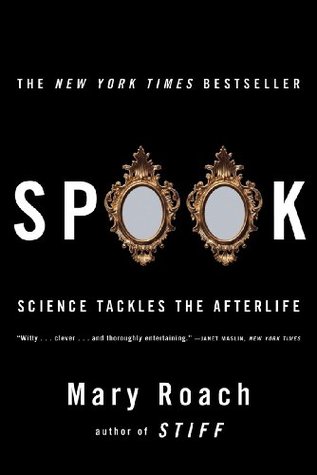
Ghosts, Mediums, and Scientists: A Review of Spook by Mary Roach

Reading Spook was one of the most enjoyable pieces of research I’ve done. My fiction often involves ghosts and other forms of contact with the dead, as well as psychic phenomena. I’ve found numerous studies of mind-to-mind communication, remote viewing, precognition, etc., but this is the first time I’ve read about scientific attempts to study the afterlife. I read a couple of books on ghost-hunting and paranormal investigation; however, the author of those books is more a professional skeptic than a solid scientist.

Mary Roach explores current science on reincarnation, soul weighing, out of body experiences, and also the history of mediums and other interactions with the spirits of the dead. She’s one of the funniest writers I’ve come across. She manages to find the strangest items in the historical record—her chapter on ectoplasm, for example. The fact that it was regarded so seriously at the time it was a popular mediumistic trick is as fascinating as the methods used to produce it.

Roach participates in a training for becoming a medium; takes part in a study on creating the perception of a ghost through infrasound; goes along on reincarnation research trips in India; visits a small North Carolina town where a ghost helped a man win a lawsuit; and more. Her inquiries are serious, but she never takes herself seriously. Much of the humor comes from her ability to laugh at herself, and to notice the workings of her own mind.

Whether or not you believe in ghosts or life after death, you can enjoy and learn from the author’s journey.

Quick and Quirky Free Fiction

I’ve only read one of these, but I plan to download a few I’ve never heard of and have some reading adventures.

The one I’ve read, Virginia King’s Laying Ghosts, is a page-turning spooky mystery that introduces Selkie Moon, the protagonist of her series. If you like my books, I think you’ll enjoy hers. They’re also unconventional mysteries with a touch of the mystical.

Ready to read something quick and quirky? Click here.

Have fun!

Flawed

At first, she didn’t show them to anyone. But she admitted to fellow artists and creative people who would understand, “I’ve been making devils.” An art therapist, she trusted her muse and followed it. The devils finally came out on gallery walls months later, small blue or red ceramic masks with a wild variety of expressions. I especially like a red one with curved horns and a crooked grin full of sharp teeth that remind me of red chiles. It’s so gleefully wicked. The little devils sell, and I can see why. We all have our shadow side, our mischievous side, our tired-of-being-perfect side. Even the weather gets devilish. I’m not talking about the New Mexico’s summer heat and monsoons—we love the storms. I’m talking about the wind. It’s already started, a couple of weeks too early, and it’s going to be blowing for months. To live with it, you learn to wear goggle-type sunglasses, even on a cloudy day, to keep the grit out of your eyes, and the constant blowing sound either gets as normal as an air conditioner in the summer—or drives you crazy. E. Christina Herr, a gifted New Mexico songwriter, sums it up in her song “Devil Wind.”  If you love New Mexico, though, you take it as it is, wind and all. It’s not perfect. Tourist images of our state don’t show visitors chasing their fly-away hats or sneezing with a face full of dust and juniper pollen, but the cowboy’s bandana was, among many other things, a dust mask. Imperfection has its charms.

In my work in progress, I’m developing an antagonist character who’s obsessed with being smarter and more capable than anyone else, which of course, makes her anything but perfect; and the antagonist character in Shaman’s Blues likes to give bizarre advice, with the assurance, “ I’m always right.” My favorite fortune cookie message: The greatest of all faults is to be conscious of none.”

I’ve been pleasantly surprised how many readers love Jamie Ellerbee, the flawed and troubled character I first introduced in Shaman’s Blues four years ago. When I wrote the book, I was experimenting with turning as many conventions of romance around as I could, while still writing about love. He’s a mess, though he struggles not to be. Not exactly a conventional romantic lead. The book’s original title as a work on progress was Samskaras, the Sanskrit word for the residue of our actions and emotions that creates new cycles of karma. One of my spiritual teachers said a good English translation for it was “Some scars.” Jamie has a lot, and he’s not skilled at hiding them. But then, hiding doesn’t bring people closer to each other. Kindness does.

Happy Valentine’s day.

*****


Shaman’s Blues is on sale for 99 cents .

New Release: Death Omen

Death Omen

The sixth Mae Martin Psychic Mystery

Trouble at a psychic healing seminar proves knowing real from fraud can mean the difference between life and death.

At an energy healing workshop in Santa Fe, Mae Martin encounters Sierra, a woman who claims she can see past lives—and warns Mae’s boyfriend he could die if he doesn’t face his karma and join her self-healing circle. Concerned for the man she loves, Mae digs into the mystery behind Sierra’s strange beliefs. Will she uncover proof of a miracle worker, or of a trickster who destroys her followers’ lives?

The Mae Martin Series

No murder, just mystery. Every life hides a secret, and love is the deepest mystery of all.

*****

To welcome new readers to the Mae Martin series, the first book, The Calling, is free through the end of November, and so is the series prequel, The Outlaw Women.  My horror short story Bearing, based on Apache myths,  is also free this month.


Disappearing Words

When I was a teenager, I read a newspaper column about a myth related to the autumn equinox. After all these years, I can still see the kitchen table where I was sitting, and see which side of which page the column was on. I remember that it was about a Germanic pagan goddess of second chances who opened a path that was only visible on the night of the autumn equinox, a path seekers could take to redo a mistake or regret in their pasts. I made an effort remember her name and wrote it down, although I was confused as to whether it was Llobrodga or Llobrogda. Having had a short story published in a teen magazine, I already thought of myself as a writer, and I knew I would have to create a story about this myth someday. An image of the goddess’s twilight path of golden leaves stayed with me. When I finally wrote the story decades later, she didn’t exist. I looked up everything I could think of about goddesses of second chances and pagan mythology and the autumn equinox and found nothing. I can’t explain this. But I hope you enjoyed A Night in Betsy Gap.

The title came about a few years ago during a training session for professors who were teaching a first-year seminar class. One of the presenters was named Betsy, and she didn’t use all her allotted time, so someone referred to the open space in our schedule as the Betsy Gap. I said it sounded like some place out near Naked Creek (a real town in that part of Virginia) and we all started joking about the way things are done in Betsy Gap. The name stuck with me as perfect for an obscure place where a traveler could get stuck. Then I saw a prompt for a short fiction contest in which the theme was crossing a line, and it had to include the word six-pack and another which I’ve forgotten. The idea for a short story about Edie had been brewing in the back of my mind for a while, since she’ll never be onstage in the Mae Martin series. Her only role is in Hubert’s past. I was surprised when Will Baca showed up in the story, but this other-world experience prepares him for the big changes he goes through about ten months later in Ghost Sickness. (Not that he remembers.)

If you read the short story before it disappeared,  you know something Mae and Hubert don’t know, since Edie cut off contact with everyone she knew in Cauwetska, intentionally making herself hard to find. Her fate won’t show up in the series for a while. But in the September before the events in Ghost Sickness, she spent a night in Betsy Gap.

*****

A Night in Betsy Gap will return eventually, either in a short story collection or here next fall, after dark on the equinox.

Review: Supernormal by Dean Radin

Some people approach the topic of psychic phenomena from a standpoint of immoveable conviction. There are those who believe psi events happen, and no science or statistics would convince them otherwise. On the other side are those who believe such things do not happen, and no evidence from even the best quality research could convince them otherwise. It’s like politics. Minds seldom change. But that doesn’t mean they never do. Science progresses through study and replication and further studies, and the word “proof” is seldom used outside of mathematics. This book should interest readers who would like to assess the evidence with an open mind.

Having said that, I think it may be useful to preface this review with the author’s credentials, taken from http://www.deanradin.com/NewWeb/bio.html:

“Dean Radin, PhD, is Chief Scientist at the Institute of Noetic Sciences (IONS). Before joining the research staff at IONS in 2001, he held appointments at AT&T Bell Labs, Princeton University, University of Edinburgh, and SRI International. He is author or coauthor of over 250 technical and popular articles, three dozen book chapters, and three books including the award-winning The Conscious Universe (HarperOne, 1997), Entangled Minds (Simon & Schuster, 2006), and the 2014 Silver Nautilus Book Award winner, Supernormal (Random House).”

The author works hard to make statistical analysis and research methodology accessible to a reader without a background in those fields. Having spent the last ten years of my academic career helping first-year college students learn to comprehend the language of scholarly journals, I have mixed feelings about this “translation.” Would it have been better to teach his readers the terminology, or was paraphrasing it the right choice? I don’t know. Sometimes he tries too hard to funny, like a professor who attempts to lighten up his lectures with strained jokes, but that’s a minor issue. Overall, I found the book well-structured and thoroughly researched. (384 sources are listed in the back, exceeding the number of pages in the book.)

Supernormal is primarily about how scientists study psychic abilities, not about spectacular events, so anyone wanting to read amazing, colorful anecdotes won’t find them here. It’s not essentially about yoga, either, though it will have more meaning to a reader who has studied yoga philosophy, and Radin has some good quotations on that subject. In yoga, the siddhis are not, as I understand it, as important as simply achieving awareness and quieting the cravings and cluttered noise of the mind. The siddhis can happen, but they are not the purpose or goal of practicing yoga. Nonetheless, in Radin’s research and in studies by other scientists, subjects with a regular meditation practice performed significantly better in experiments testing clairvoyance, precognition, and other psi abilities, so there appears to be a correlation between meditation and being psychic. An impressive number of well-designed studies support this. (My own experience fits the pattern. When I began yoga and meditation at age twelve, I began to have precognitive intuitions and dreams.)

I’d recommend this book to a reader who wants to get “down in the weeds” in the labs where these studies are done and examine the designs, the methods, and the analyses without going to the original scholarly journals. It’s a solid summary of what’s been found so far. The questions raised about the nature of reality and the nature of mind and consciousness are intriguing. How did the future find a crack into my dream and appear in perfect detail? Some of Radin’s studies address the emotional aspect of psychic material. He set up one study using long-term couples with one partner who was ill as subjects, and included the emotional bond and loving intentions as part of the design. Why does this matter? As with any other sense, we may be constantly filtering out irrelevant information and focusing on what is salient. It’s only when we dream that a friend is about to die or hear a voice warning us of something dire for a loved one that we let the psi phenomena take central focus. Otherwise, our psychic sense’s input can be ignored as background noise, the way unimportant input from our hearing often is. Perhaps if we learned to tune into this sense and trusted that it was real, we might act with more awareness and wisdom.

Much of what happens in psi is small—a sense that something is about to happen, or that one is being stared at—so we pay no attention. Radin studies all of these phenomena in minute detail, even documenting patterns of brain activity. I could go on, but that would be a spoiler, if there can be such a thing in science.

Radin almost pulls the rug out from under himself when he drifts off into a page or two of speculation on unrelated phenomena such as UFOs and crop circles that the skeptics and debunkers (some who rail against his studies) have actually already done good job explaining. Even though he doesn’t say he believes in these things, and uses them as a take-off point for ruminations about reality, they have no natural connection with psi ability and probably don’t belong in in a book on that subject. (I suspect that editors sometimes don’t tell famous authors—whether they are novelists or established scientists—to “kill your darlings.”) Nonetheless, as a yoga teacher, a long-time consumer of the scholarly literature on psi research, an individual who has occasional psychic experiences, and of course as the author of a mystery series featuring a psychic, I found this to be a worthwhile read.