Sitting

There’s good sitting and bad sitting. I’ve been working on a post for Ladies of Mystery about the bad-for-you sitting that writers have to do and how to counteract it, but here, I’m talking about the good sitting. Meditators often use the word “sit” to mean meditate.

Sitting slows down the activity of the mind—a problem when you’re trying to be creative, a benefit when you’re practicing awareness. After I cool down and stretch at the end of a run, I sit in vajrasana, lightning bolt pose. I initially started doing it to stretch the muscles on the front of my shins and ankles, and realized that it had an effect on my state of mind. After all that movement, after the ever-changing visual input and the flow of creative thought, after the more active stretches, I sit on the ground in stillness. If I’m alone at the end of the trail, it becomes a moment of pure presence. Breeze on skin. Leaves scuttling on dirt. Blue sky. Buttes and mountains across the lake. The sharp shadows of every pebble and rock in the afternoon’s brilliant light as the sun rides low in the sky for the solstice. Sitting. The drop into inner silence.

If I were to get out of my chair now and sit in that same pose, I would have to work to empty my mind. The inner quiet comes naturally after asana practice as well.  Moving my body is the prelude to quieting my mind.

*****

Note: The image is an abstract overhead view of a person sitting in meditation. I didn’t see it right away, so I thought I should point it out for anyone else who saw only a blue design.

Quack Gong

In an earlier post, I mentioned how much I love my “outdoor gym,’ the Rotary Park on the Rio Grande in T or C. Though the exercises I do there aren’t yoga but strength training with resistance bands, I still aim to bring a yogic sort of mindset to the movement, paying attention to my body and breath, and also to the world around me.

It’s amazing how busy my mind can get within a few reps of a single exercise. As a writer, I carry plots and characters in my head, and they show up and want attention. This is something I choose to invite while I run, setting a plot problem to solve in a free-flowing way, letting ideas bubble up while I turn my mind loose on the trail. With the trance-like drumbeat of running, I can get into a creative groove and stay aware of the beauty around me. There’s no steady flow during this strength workout, though, as I keep changing from one move to the next. I’m better off focusing on the scenery and on correct form in what I’m doing.

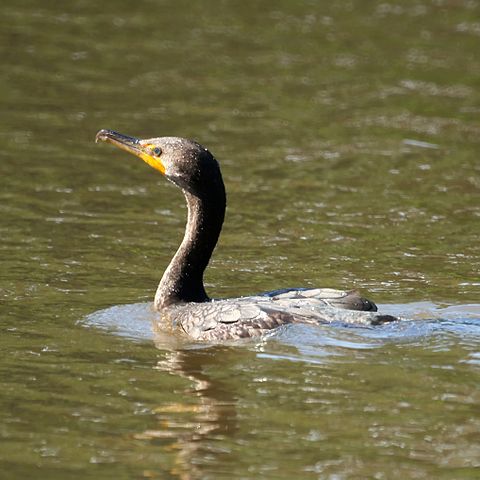
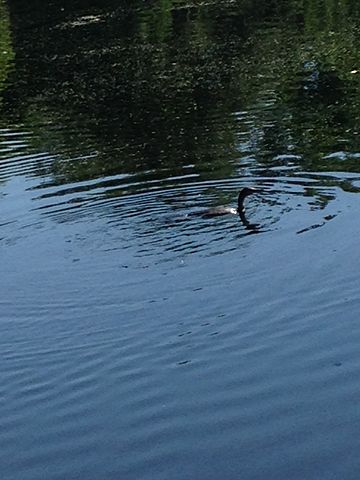
That’s where the cormorants come in. They winter here, fishing the river. Some gather on an island of matted reeds and twigs while others float. Their vocabulary is fascinating and full of surprises, from duck-like quacks to grunts, peeps, and croaks. The sounds were wild today when they announced that a blue heron had landed on their island, calling my attention to it along with each other’s. I’d been so busy inside my head that I had missed the arrival of this enormous bird.

As well as talking with each other, the cormorants dance noisily in brief arcs of foot-dragging, water-slapping flight, serving some purpose known to them but mysterious to me. I think of them as the gong in a Zen temple, interrupting my distracted mind and bringing it back to the present. The river. The mountains. A warm, sunny day and a swim of cormorants with sleek black feathers and bright yellow beaks. No need for my mind to be anywhere else.


One Step

The sun was so intense when I was out walking today, I had to lower the brim of my hat to keep from burning my face or being blinded as I turned to leave the park by the river. I couldn’t see the mountains, the river, the sky, or the two lone trees turning yellow in a world of evergreens, rocks and cacti. Just the ground at my feet. The gravel path. Then dirt with tire tracks. Then a patch of dust and weeds with a narrow path between the goatheads. Once I reached the street, I was no longer facing the sun, but my awareness had shifted.

Those steps with nothing but the view of the next step became walking meditation. I noticed the textures of each pebble, the curves of the tire tracks, and the green ground-hugging leaves and tiny yellow blossoms of the goatheads. Instead of seeing them as the foot-stabbing burrs they will become, I saw them as flowers. Walking slowly, listening, I only tilted my hat up to check for cars or snakes once in a while, then ducked back into my world of shade and single steps. Gravel-crunch. Wind-whisper. One step. Another step. The sensation of my legs moving, my feet contacting the ground. I should do this more often, even when the sun doesn’t force me into it. I used to teach walking meditation to my college students, and those were blissful classes.

Of course, I have no illusion that the rest of my job was bliss. It was work. The three-column to-do list on my desk ran into a second page most of the time. Things to do for work, to do as a writer, and to do for retirement planning. A few days ago, I went back to that system. Things to do for writing, for marketing, and my everyday life. The list is only one page, and two of the columns don’t even reach the bottom. Every day I cross one thing off, maybe two. Life isn’t about what I cross off, though. It’s a living moment. A single step.


Hot or Cold?

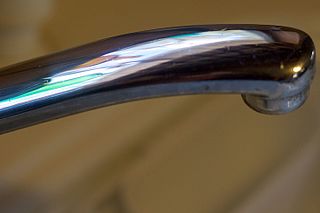
My landlady and her maintenance guy put in a long day fixing a few problems in my apartment. After all the work was done, and it was hard work which I greatly appreciated, I discovered that my new kitchen faucet knobs were reversed. The one on the left marked H produces cold water, and the one on the right marked C produces hot water. Considering the hours they had put in, I can understand how one of them made the mistake. So far, I haven’t felt the need to bother them about it. As I live with my backwards faucet knobs, they make me pay attention to a simple task, bringing mindfulness into the ordinary. They also make me think. What if we all had to stop and consider this way before speaking or acting? Hot words? Pause to check. Cold actions? Pause to check. What will happen when I turn them loose? Is that outcome what I really want?

Of course, it would take a lot of the drama—and realism—out of my fiction if my characters always took these pauses, but it would take a lot of the drama out of daily life, and off the world stage as well, if more of us did. For my own part, I’m working on it.


Centering and Balancing

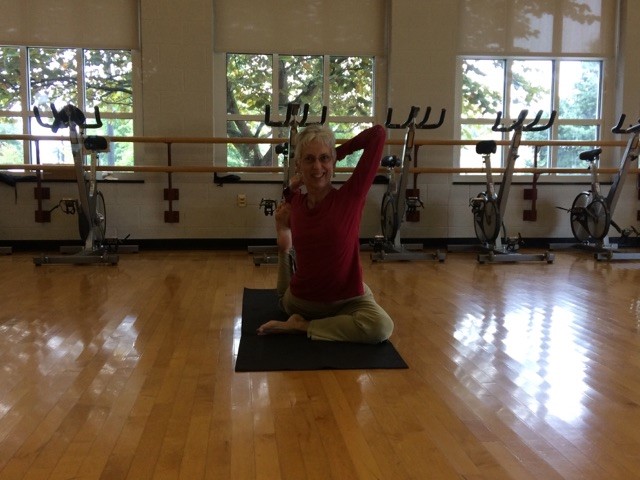
Moving and retiring is a positive disruption and it’s one that I chose. Still, I’m prone to wishing I could just get the tedious parts over with. There is no “over with.” It’s all part of my life, unique moments I am consciously living. I’m more effective when I’m present to a process, whether it’s cleaning out my desk, selling off my furniture, or going to one last department meeting. Not only more effective, but happier. Slowing down, I can get more out of each step of this change and put more into it. Be more attuned to the people around me. An attitude of rushing doesn’t speed things up. An attitude of spaciousness eases the pressure. It will all get done. It’s like yoga. Set up the pose with attention, be aware of the pose, sustain the pose, exit mindfully.

Note: the pictures were taken in the exercise studio on campus where I did my most important work: teaching yoga. At my retirement party, that’s what everyone was talking about. Yoga.

Reflection and Self-Study: Down Time Needed

On a recent trip that took me through three guest rooms in three nights, I forgot my evening meditation and journaling practice. I barely kept a journal, and what little I wrote in it was about other people. The interesting people I met at my reading and book signing. What great hosts and wonderful people I was with. Thoughts on how the friends I visited were doing. No inner work. I took time daily for asana practice in the morning and I also found time to write fiction, though only a paragraph or two, but I ended my day turned outward still. How strange. I made the commitment years ago for an evening practice and yet I simply forgot. By the time I was on my way home I realized how important that commitment was.

I stopped at a rest stop to eat a picnic supper. As I opened my car door, it lightly tapped the vehicle next to it. I saw that there was no scratch, not even a bit of paint left on the other vehicle, and proceeded to reach for my cooler. Then a male voice said, “Are you going try to pretend nothing happened?”

A young man of about nineteen stood between the two cars, blocking my exit and glaring at me. I said that nothing had happened, and showed him. My door had touched the hard plastic rim over the wheel well of his Jeep, a protective surface I suspect is there for off-road driving, though this Jeep looked new and shiny, as if it had never done what it was designed for. He demanded an apology. Something about a kid the age of my freshman students acting like an angry parent with a misbehaving child over a non-event rubbed me the wrong way and I got sarcastic with him. “Sir, I most humbly apologize that my door ever so lightly tapped your Jeep, doing no damage whatsoever.” He told me I didn’t have to be like that. I told him he hadn’t had to be a jerk. (The only common sense I had left kept me from calling him something more offensive than jerk. I noticed my inner editor canceling out the A-word.) He denied being a jerk and told me to be more careful in the future. I told him not to be so angry in the future and walked off to the picnic table. Thus the interaction ended with both people still wanting to be right. No communication.

As I set up my dinner, I could see him standing between our cars, studying mine intently. What was he looking for? Evidence of a chronic, habitual parking lot door-hitter? My car was a mess inside, full of the detritus of traveling, and I have a New Mexico habit of not wasting water washing it, so it’s got a nice coat of dirt, but it’s not full of dings or other people’s paint. Perhaps he was peering at the empty Perrier and iced tea bottles, hoping they would turn out to have contained something stronger. I didn’t ask, just watched him, and he finally drove off.

It’s possible he was driving his parents’ car and was paranoid about damaging it, and acted toward me the way they would act toward him if it got a tiny scratch. Or maybe he’d saved up for a fancy car and is anxious about it. I don’t know. What I do know is that my pause-to-check mechanism was rusty. My capacity to step back and reflect instantaneously, to recognize that his hostility was his and that I didn’t need to be reactive, was weakened by only a few days without real reflection. I could have simply acknowledged him. He seemed menacing at first, blocking my way and starting with an accusation, but that’s all the more reason I could have and should have handled the situation better. After all, he was a kid. It was my job to be the adult.

Before I drove on, I wrote a journal entry on some scratch paper, processing all my thoughts and feelings. When I got home, I appreciated the depth and value of my night’s meditation and journaling practice. I need to do all these things to keep myself on track. Yoga asanas, writing fiction, writing a journal, and meditation. I don’t function at my best without deep down time. Not distraction or entertainment time, but inner time. It doesn’t have to take long to go deep. I don’t think I’ll forget again.
Image credits: Occupy the Present, Bryan Helfrich; heart puzzle, Katarina Caspersen

Kufwasa

I discovered this beautiful concept while researching Zambian culture for my work in progress. Kufwasa is a word in the Tumbuka language that means a blend of patience, mindfulness, flow, enjoyment, and something unique to the understanding of people who live in a traditional African culture which may be hard to put into English words. My goal in reading about Zambia was to understand more about a minor character, Mwizenge Chomba, who has been in my series since book two, Shaman’s Blues, but is about to play a larger role in the book I’m writing, the seventh in the series. I wanted to make sure I got his background right, his way of seeing the world. I’m not sure I’ll find a place for describing kufwasa in the book, but it should exist in the character himself, in the world view he grew up with.

Kufwasa implies doing one thing at a time, with full concentration and a kind of serenity, or it will be neither done well nor fully experienced. My character was raised in a remote village, so his family members would have planned one major activity a day. When you get around on foot, by bicycle, or in old and unreliable vehicles, travel and errands can’t be hurried. Cooking can’t be rushed, either, using traditional methods. A society without distractions enjoys taking time to talk and laugh and tell stories over these slowly prepared meals. In the twelve hours of equatorial darkness, married couples have plenty of time for kufwasa in their relationships. (I liked coming across this idea about marriage, because my Zambian character is married to an American woman who writes romance novels.) Love thrives on kufwasa.

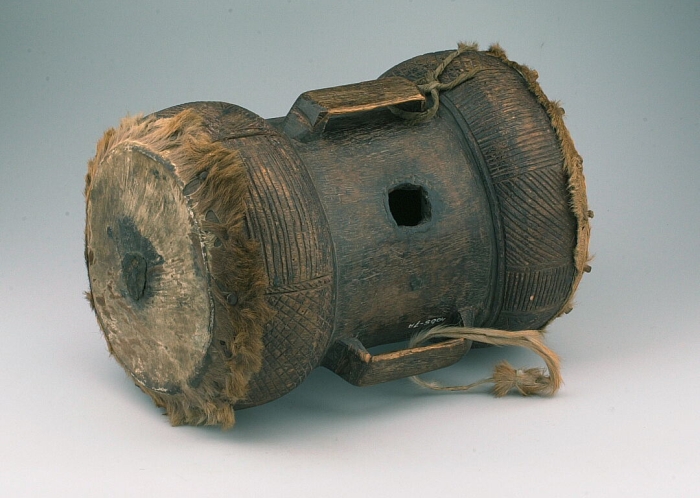
It’s funny how I can discover something about a character that makes perfect sense even though I didn’t know it at the time I introduced him. Mwizenge appears in Shaman’s Blues as a singer and drummer in a world music trio. Live music of all kinds is a big part of Santa Fe life, and I’ve enjoyed African drumming and dance groups there, so he simply showed up the way characters do as someone likely to be in Santa Fe. I understand now why he feels at home there, so far from his village. He carved his own drum with kufwasa back in Zambia and grew up with music and dancing as community events. Compared to the high-pressure lifestyles of some parts of the country, the pace in New Mexico comes a little closer to kufwasa.

Next time I find myself trying to do too much too fast, I hope I can slow down and remind myself to practice kufwasa.

Everyone is my Teacher

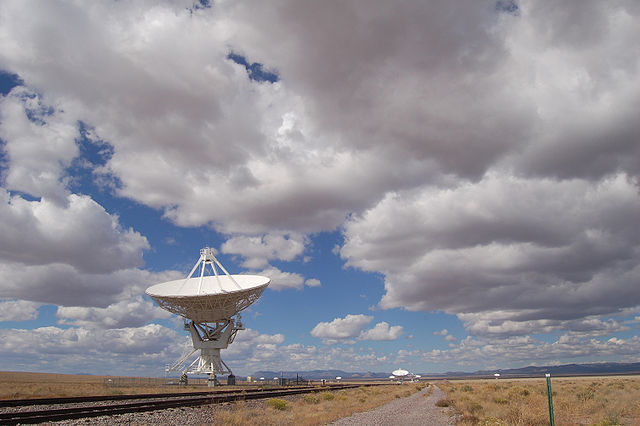
640px-very_large_array_cloudsIt’s surprising what you can have in common with someone when at first it seems there might be nothing. At a friend’s birthday dinner party, I was seated next to a graduate student in astrophysics who specializes in radio astronomy, a young man whose hobbies include ice climbing. All these things are fascinating, but far out of my realm of experience and expertise. We  managed to make conversation, though, and somehow discovered a mutual interest in meditation. I’m not sure how we got there. Perhaps from talking about his childhood in Vietnam and how he’s not a practicing Buddhist but follows the philosophy without the religion, or perhaps from talking about my work teaching yoga. “I can learn from you,” he said. “Everyone is my teacher.”

I didn’t feel as though I taught him anything. However, he did, through example, teach me. He was so enthusiastic about adopting daily meditation, so aware of its benefits in the stressful life of a Ph.D. student. I’m older and have been practicing longer, but his deep gratitude for the effects of this simple commitment reached me. Yes, I also practice daily, but how mindful has my mindfulness been? Could I take a little longer, become a little quieter?

His work in radio astronomy is listening—finding ways to hear the universe. It works for me as a metaphor for meditation and for everyone being my teacher. What subtle signals have I not yet heard?


Overfill Alarm

overfill

Taking my freshman seminar students for a mindful walking meditation excursion, I noticed things I’d never seen before. Most striking was a college van parked near the softball field, overgrown with vines. How fast did they take it over? Had the van been forgotten?

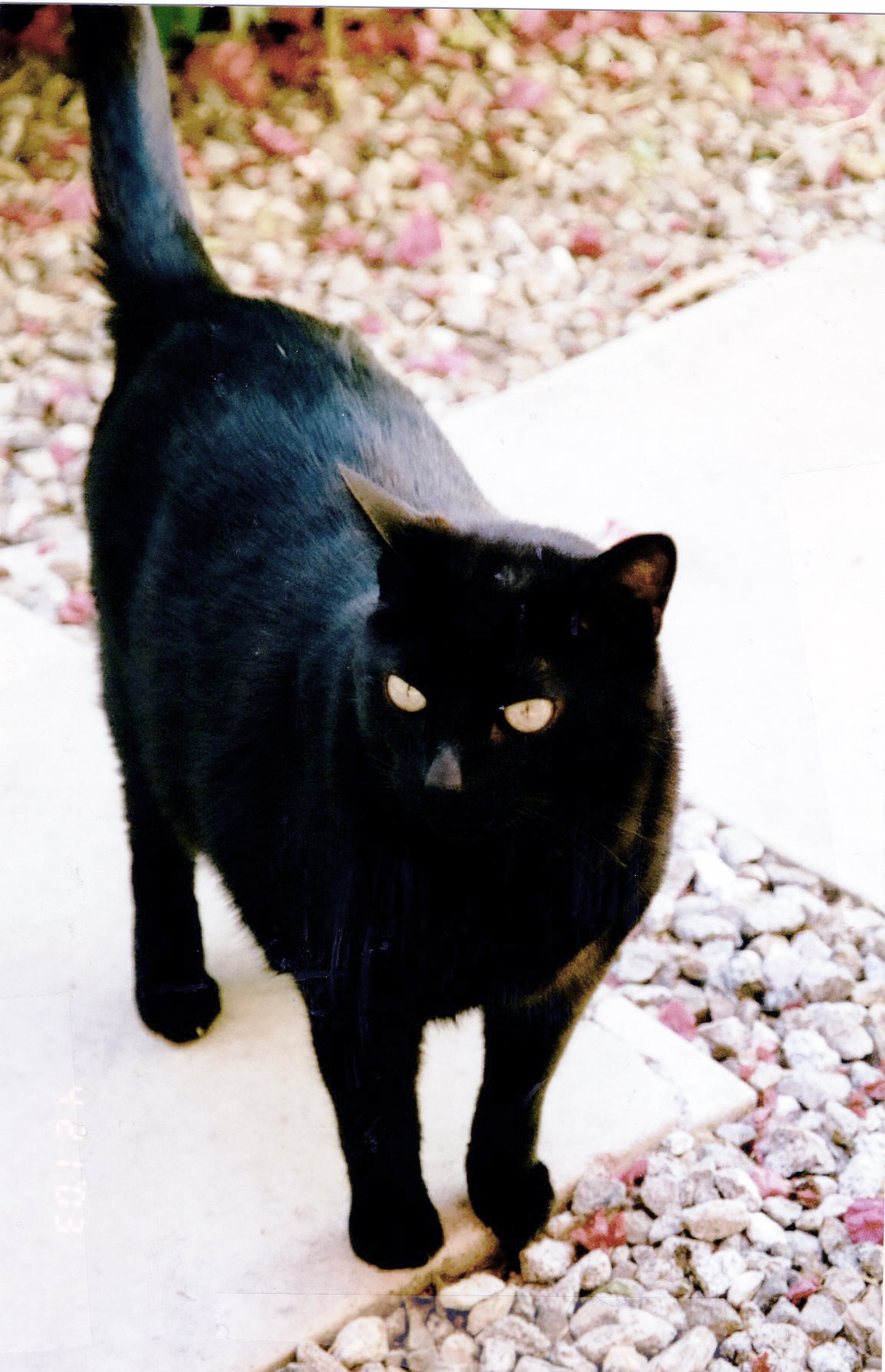
As always on such walks, I noticed the sounds: wind in leaves, the nearby river rolling softly over rocks, birds and crickets singing, and our footsteps. When we reached the park I was aiming for, one of my students found a friendly black cat and held him up. Part of the mindful condition is that we don’t talk or use phones for forty minutes. Her smile communicated all that was needed, and several of us gathered around her to pet the cat. Mindfully. Feeling the catness of the cat.felix

I watched carp in a lily pond, ducks on the river, and then crossed under a bridge to another part of the park. There, I saw a flock of birds reflected in gray water that was busy with a swarm of water-walking bugs, a moment of earth-sky-water symmetry that put my mind on pause. Pure perception uncluttered by the noise of thought.babyducks

A thin old tuxedo cat with a red collar trailed several students into a gazebo. He seemed to want human company, but unlike the black cat, he found no one to pay attention to him. When I went to pet him, the girls sitting in the gazebo were on their phones. Surrounded by nature’s beauty, free to enjoy silence, with a cat who wanted affection sitting at their feet, they were sucked into tiny screens.

On our return to campus, I stopped in front of another thing I’d never noticed before: a big yellow sign on the maintenance building that says OVERFILL ALARM. The class gathered in silence and looked at it. It was finally time to talk.

Does your brain have an overfill alarm? Do you override it and keep putting more in? What are the signs that it’s about to go off?

*****

Picture of black cat, Felix, courtesy of his owner, mystery author Sally Carpenter.

Turn it off. Turn it all off.

One of my yoga teachers in New Mexico often mentions the importance of quieting the nervous system. He doesn’t use music in his classes. I teach in places where music is expected, so I use unobtrusive, meditative music, but it’s still background sound, another level of stimulus.

Readers of this blog may have noticed I like to contemplate the effects of power outages. Today there was a brief one at the fitness center at my college. Normally, there are a few fluorescent lights in the group exercise studio that never go off, though I turn off the ones I can. These perma-lights were finally gone. So was the steady blowing of the air conditioning. Its presence has been ceaseless, so I never knew how harsh and persistent it was until it stopped. With plenty of natural light through the windows of a room that had been chilled a little too cool for yoga, the outage was wonderful. The quality of my voice softened. The clarity of my thoughts sharpened. My teaching became more precise, more aware, and I felt a matching shift in the students’ energy. When I stopped talking, there was nothing to be heard at all. Except, perhaps, each student heard his or her own breath.

Overstimulation has a subtle yet pervasive effect. Sometimes I wonder if it’s addictive. There are people who say they have to sleep with a TV on or have one running at all times when they’re home—“for the noise.” That would drive me crazy. I write in as much silence as possible and do my personal yoga practice in silence, too, either outdoors with only the sounds of birds and insects and occasional neighbors’ voices, or indoors in a quiet room. I’ve praised perfect silence in nature before, but today was the first time I’ve experienced the benefits of deep silence in my teaching.

Yoga doesn’t require stimuli that keep our minds bouncing and nerves buzzing. Yes, we can learn to do it in the midst of a barrage of sounds, but when we can choose to be free of them, it’s even better. The yoga sutras begin with a definition of yoga that can be translated as “Yoga is the stilling of the fluctuations of the mind.”